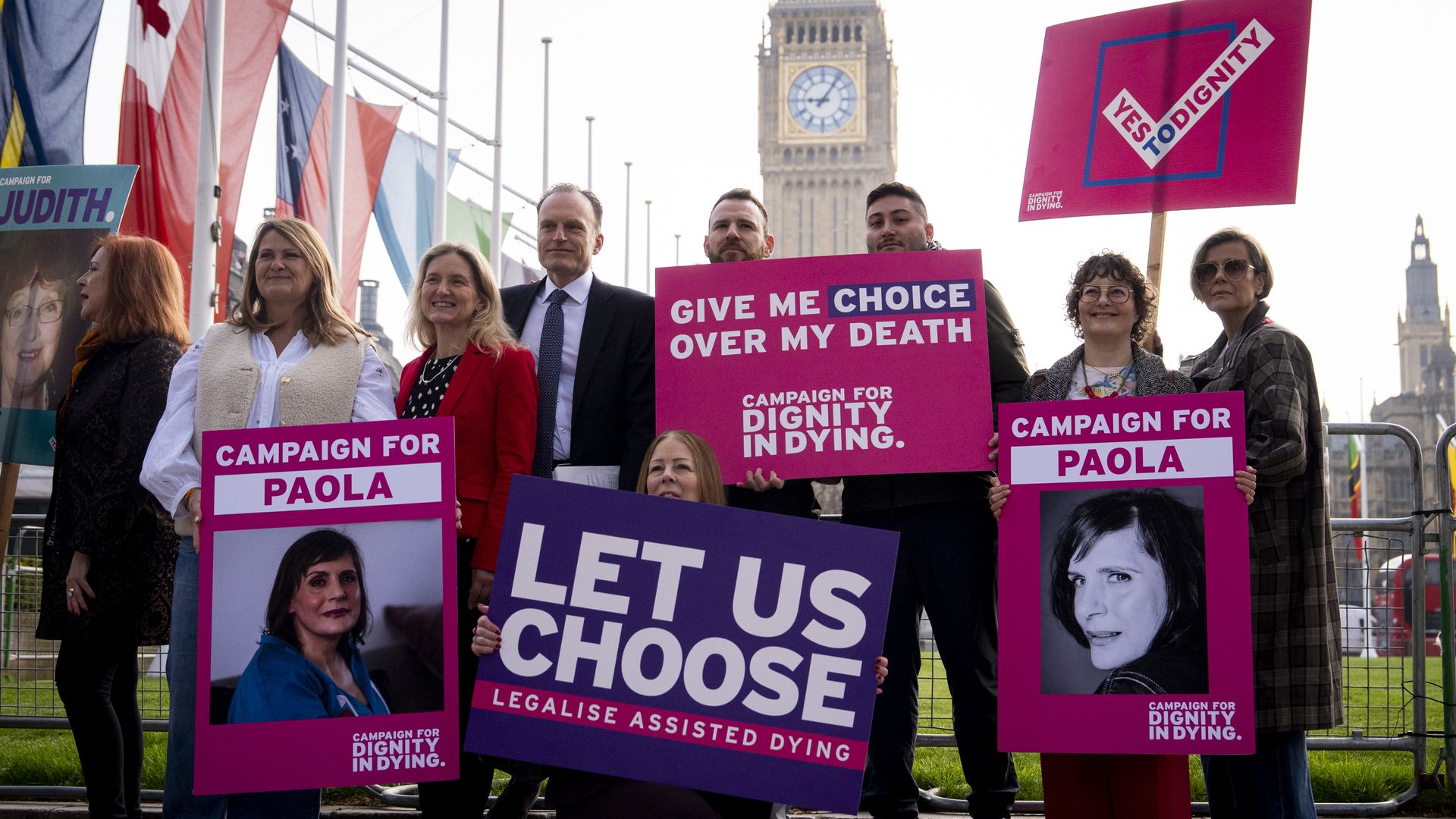
The British government is currently staring down the barrel of one of the most significant legislative shifts in a generation. At the center of this storm is the Terminally Ill Adults (End of Life) Bill, a piece of legislation that seeks to grant the right to die to those with fewer than six months to live. While the emotional weight of the debate is heavy, the tactical blueprint for how this bill might actually pass through a fractured Parliament isn't being drawn from medical journals or bioethics textbooks. Instead, strategists are looking at the 2004 Hunting Act.
Using a decades-old ban on fox hunting as a roadmap for assisted dying might seem like a stretch, but the political mechanics are identical. Both issues involve deeply entrenched moral convictions, a sharp divide between urban and rural sensibilities, and a "conscience vote" that frees Members of Parliament from the rigid constraints of party whipping. The fox hunting ban succeeded not because it won over the opposition, but because it utilized a specific parliamentary grind—a relentless, multi-year wear-down of the House of Lords that eventually forced a decision. If assisted dying is to become law, it will follow this same grueling path of attrition.
Why the Hunting Act Blueprint Matters
The 2004 ban on hunting with dogs remains one of the most contentious pieces of legislation in modern British history. It took seven years, multiple failed starts, and the eventual deployment of the Parliament Act to bypass the House of Lords. For supporters of assisted dying, the lesson is clear: moral change in the UK does not happen overnight through consensus. It happens through the brutal application of parliamentary time.
The current assisted dying bill, introduced by Kim Leadbeater, faces a remarkably similar set of hurdles. Like the fox hunting debate, this is not a government-sponsored initiative in the traditional sense. It is a Private Member’s Bill. Normally, these bills die a quiet death due to lack of time. However, when a government provides "neutral" support—essentially clearing the runway while claiming to stay out of the cockpit—the bill gains a momentum that is hard to stop.
The Mechanics of the Conscience Vote
In a standard legislative session, MPs vote the way their party leadership tells them to. If they don't, they face consequences. A conscience vote removes that safety net. This creates a volatile environment where individual lobbyists have more power than party bosses.
During the fox hunting debates, the lack of a party line allowed for a chaotic series of amendments designed to wreck the bill. We are seeing the same thing now. Opponents of assisted dying are already preparing a "death by a thousand cuts" strategy, introducing amendments on mental health assessments, the definition of terminal illness, and the specific role of judges. Their goal isn't necessarily to win the vote, but to consume so much time that the bill simply runs out of it.
The Rural and Religious Divide
One cannot ignore the demographic mirror between these two issues. The opposition to the fox hunting ban was rooted in a specific vision of rural liberty and tradition. Similarly, the most vocal critics of assisted dying are often found in religious institutions and rural constituencies where the influence of the church remains a potent force in local politics.
Critics argue that the "path forward" shown by the hunting ban is actually a warning. They point out that the Hunting Act remains one of the most ignored and difficult-to-enforce laws on the books. If assisted dying is pushed through using the same high-pressure tactics, there is a risk of creating a law that lacks broad public legitimacy, leading to a decade of legal challenges and professional non-compliance from the medical community.
The Role of the House of Lords
The House of Lords serves as the ultimate gatekeeper for socially sensitive legislation. In the early 2000s, the Lords rejected the hunting ban repeatedly, viewing it as "class warfare" disguised as animal welfare. The current makeup of the Lords is equally skeptical of assisted dying, though for different reasons. The upper chamber contains a high concentration of former medical professionals, legal experts, and bishops who view the bill as a fundamental threat to the "sanctity of life" and the safety of the vulnerable.
If the Commons passes the bill and the Lords block it, the government will have to decide if they are willing to use the Parliament Act again. This is the "nuclear option." It allows the Commons to override the Lords, but it carries a heavy political cost. Using it for a social issue like assisted dying would be unprecedented and would likely trigger a constitutional crisis regarding the role of the unelected chamber in moral matters.
The Medical Resistance and the Safeguard Trap
Proponents of the bill frequently cite the "Oregon Model" or the Canadian "MAID" system as proof that assisted dying can work. However, the UK medical establishment is far from a monolith on this issue. The British Medical Association (BMA) moved to a position of neutrality in 2021, but neutrality is not the same as endorsement.
The core of the "safeguard" debate revolves around the involvement of the High Court. The current proposal suggests that two doctors and a judge must sign off on any request for assisted death. This is intended to prevent coercion, but it creates a massive logistical bottleneck.
- The Judicial Burden: The UK court system is already backlogged. Adding hundreds, potentially thousands, of end-of-life cases per year would require a dedicated division of the court that currently does not exist.
- The Doctor’s Dilemma: Many GPs are concerned that they lack the psychiatric training to determine if a patient’s request is born of clinical depression or a "settled intent" to die.
- The Vulnerability Factor: Opponents argue that once the principle of assisted dying is established, the "eligibility" will inevitably expand, shifting from the terminally ill to the chronically ill or the elderly who feel they are a "burden" to their families.
Money and the Palliative Care Crisis
There is a cynical undercurrent to this debate that few politicians want to address: the cost of dying. The UK’s hospice system is largely funded by charity, not the NHS. Currently, hospice care is facing a funding gap that threatens to close beds across the country.
The fear among many disability rights advocates is that assisted dying will become the "cheap" alternative to high-quality palliative care. If the state offers a quick exit but fails to fund the support needed to live with dignity, the "choice" to die becomes a forced hand. This is the argument that derailed similar legislation in the past and remains the most potent weapon in the opposition’s arsenal.
The Ghost of 2004
The ghost of the Hunting Act looms large because it proves that a determined minority in the House of Commons can eventually break the back of institutional opposition if they have the stomach for a long fight. But assisted dying is not about dogs or foxes; it is about the fundamental relationship between the citizen and the state at the moment of death.
The "path forward" isn't a smooth highway. It is a muddy, contested trail through the thicket of parliamentary procedure. If the bill passes, it will be because the supporters learned the lesson of the hunting ban: persistence matters more than persuasion. They are not trying to win the argument anymore; they are trying to win the clock.
The government’s decision to remain "neutral" is a tactical masterstroke that allows the bill to proceed without the Prime Minister having to own the fallout. It creates a vacuum where the loudest and most organized voices win. Whether that leads to a landmark civil rights victory or a disastrous piece of rushed legislation depends entirely on how much the current Parliament is willing to sacrifice in terms of time and political capital.
The Tactical Shift in Public Opinion
For years, polling has shown that roughly 75% of the British public supports some form of assisted dying. However, public support is often wide but shallow. People support the idea in the abstract, but their support wavers when the specific mechanics of "how" are introduced.
The campaign for assisted dying has shifted its focus from "mercy" to "autonomy." This is a crucial distinction. By framing it as a matter of individual right rather than a medical necessity, they are appealing to a libertarian streak that cuts across traditional party lines. This was the same shift that eventually tipped the scales for marriage equality and, in a more combative way, the hunting ban.
The Shadow of the Canadian Experience
While the fox hunting ban provides the parliamentary roadmap, the Canadian experience provides the cautionary tale. Since Canada legalized Medical Assistance in Dying (MAID) in 2016, the criteria have expanded significantly. What started as a provision for those whose death was "reasonably foreseeable" has grown to include those with non-terminal disabilities and, potentially, mental health conditions.
This "slippery slope" is not a logical fallacy in the eyes of the UK opposition; it is an observable reality. They will use the Canadian data to hammer the "safeguard" argument until the bill is either unrecognizable or unworkable.
The Regulatory Nightmare
Even if the bill clears the House of Commons and survives the House of Lords, the implementation phase will be a minefield.
- Professional Regulation: The General Medical Council (GMC) would need to rewrite its entire ethical code.
- Insurance Complications: Life insurance companies would need to determine if assisted dying counts as suicide, which often voids payouts.
- The "Postcode Lottery": Just as with IVF and cancer drugs, there is a significant risk that access to assisted dying will depend on where you live and which NHS trust manages your care.
A Final Act of Attrition
The debate over assisted dying is reaching a boiling point because the political stars have finally aligned in a way they haven't in twenty years. We have a government with a massive majority that is willing to provide the time, a public that is increasingly vocal, and a legislative template in the Hunting Act that shows how to bypass traditional roadblocks.
However, the 2004 precedent also shows that winning the vote is not the same as winning the culture. The Hunting Act left a legacy of bitterness and a feeling of disenfranchisement among a significant portion of the population. If assisted dying is forced through using the same "brute force" parliamentary tactics, the victory may be hollow.
The path forward is not about finding a middle ground—there is no middle ground on the question of whether the state should help its citizens end their lives. The path forward is about which side can endure the most pain in the chamber. The "conscience" of the House is about to be tested, not by the ethics of the bill, but by the stamina of its supporters.
The vote will not be the end of the story. It will be the start of a decade of litigation, medical strikes, and constitutional friction. The lesson of the hunting ban is that you can change the law without changing the heart of the opposition, and in a matter as final as death, that lack of consensus is a dangerous foundation to build upon.
Watch the amendments. Watch the time-wasting motions. The real battle is happening in the mundane details of the parliamentary calendar, where the future of British death is being traded for hours of floor time.