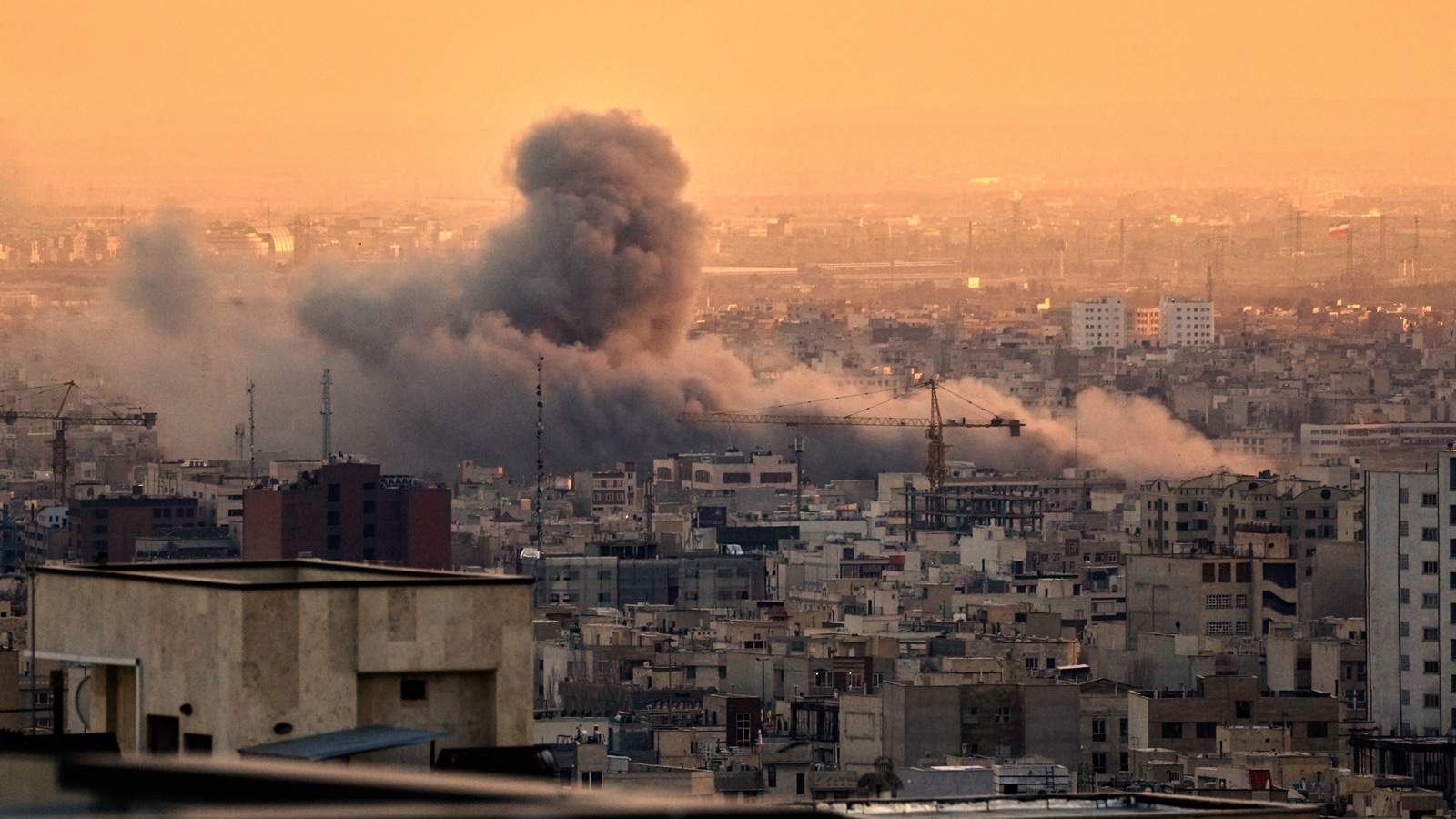
The Myth of the Hormuz Chokepoint
Every time a kinetic spark flies in the Persian Gulf, the mainstream media rolls out the exact same predictable script. A US strike occurs. Tehran issues a blistering statement about a "violated ceasefire." Pundits immediately freak out about the Strait of Hormuz being locked down, global oil supplies strangling, and crude prices spiking to $200 a barrel.
It is a tired, lazy narrative. It treats geopolitical posturing as operational reality. For a different perspective, see: this related article.
The breathless reporting surrounding the latest US strikes near the Strait misses the fundamental economic and military calculus of the region. Iran is not about to shut down the Strait of Hormuz in retaliation. They cannot afford to, they do not have the naval capacity to do it permanently, and their current leadership knows it would be an act of economic suicide. The "ceasefire" everyone is mourning was a diplomatic fiction to begin with.
Let us dismantle the panic and look at the hard mechanics of Gulf security. Related analysis on this trend has been provided by USA Today.
Iran Needs the Strait More Than the West Does
The prevailing consensus assumes the Strait of Hormuz is a weapon Iran wields against the global economy. In reality, that water is Iran’s own economic jugular vein.
Decades of analyzing energy security logistics show a glaring flaw in the "Hormuz blockade" theory: Iran's entire fiscal survival depends on the unhindered flow of maritime traffic through that exact channel.
- The Oil Dependency: Despite years of heavy international sanctions, Iran still moves millions of barrels of crude and petroleum products per day via maritime tankers, largely bound for Asian markets.
- The Import Reliance: Iran relies heavily on the Persian Gulf maritime lanes to import grain, consumer goods, and industrial equipment.
- The Destination Problem: While Saudi Arabia and the UAE have spent billions developing alternative pipelines to bypass the chokepoint—such as the East-West Pipeline to the Red Sea and the Habshan–Fujairah pipeline—Iran’s primary export terminals, like Kharg Island, sit deep inside the Persian Gulf.
If Iran blocks the Strait, they do not just blockade their neighbors; they blockade themselves. They would starve their own economy of its remaining hard currency lifelines before Western consumers even felt the pinch at the gas pump.
The Asymmetric Warfare Miscalculation
Commentators love to hype up Iran’s Islamic Revolutionary Guard Corps Navy (IRGCN) and their fleet of fast attack crafts, mine-layers, and anti-ship cruise missiles. We are told these assets can completely deny access to the United States Navy.
I have tracked naval deployments and asymmetric chokepoint exercises for years. The reality on the water is vastly different from the propaganda videos.
Mining the Strait is a One-Time Card
Could Iran dump thousands of naval mines into the shipping lanes? Absolutely. But mining international waters is a definitive act of war that instantly strips Iran of any diplomatic cover or plausible deniability.
The Clearing Operations
The US Fifth Fleet, stationed right across the water in Bahrain, alongside a coalition of international partners, possesses some of the most sophisticated mine countermeasures (MCM) platforms in existence. While sweeping a minefield takes time, the operational doctrine is clear. The moment Iran drops a mine, their coastal radar installations, missile batteries, and fast-boat bases become legitimate, high-priority targets for allied airstrikes.
Air Superiority Dominance
Iran’s air defense network, while upgraded with systems like the Bavar-373, cannot maintain a protective umbrella over the Gulf against sustained, multi-domain Western air power. Without air superiority, Iran’s surface vessels become target practice within 48 hours.
Iran's military strategy is built on the threat of disruption, not the execution of it. The threat gives them leverage. Executing the threat triggers an overwhelming conventional response that they cannot survive.
The Fiction of the "Violated Ceasefire"
The competitor headlines lament that recent US strikes "violated the ceasefire." This language implies there was a stable, mutually agreed-upon peace framework that the US arbitrarily shattered.
This is a fundamental misunderstanding of gray-zone warfare.
There was no ceasefire. There has been a continuous, low-intensity proxy conflict happening every single day. Iran uses its regional network—from the Houthis in Yemen targeting Red Sea shipping to militias in Iraq and Syria launching drone strikes—to pressure Western interests while attempting to maintain clean hands.
The US strikes near Hormuz were not a sudden escalation; they were a calibration.
When the US strikes back, it is resetting the boundaries of deterrence. Calling it a "violated ceasefire" adopts the exact rhetorical framework Tehran wants the world to buy into. It paints Iran as the victim of sudden aggression rather than a state actor managing an intricate network of proxy violence.
PAA: Dismantling the Common Panic Questions
When tension spikes, the public asks the wrong questions because they are fed the wrong premises.
Will oil prices hit $150 if Iran closes the Strait?
This question assumes a total, indefinite closure. The global energy market is far more resilient than it was during the tanker wars of the 1980s. The US is now the world's largest oil producer. Strategic Petroleum Reserves (SPR) across OECD nations are designed precisely to cushion short-term supply shocks. Furthermore, major producers like Saudi Arabia hold significant spare capacity outside the Gulf. A temporary spike would happen due to initial panic, but speculative markets correct quickly once convoy operations and mine-clearing get underway.
Can the UN or diplomacy secure the shipping lanes?
Relying on international maritime law or UN resolutions to protect commercial shipping in a hot zone is a fantasy. The only thing that secures the shipping lanes is hard naval presence. The commercial shipping industry does not change its routes because of a diplomatic statement; it changes its routes based on whether a guided-missile destroyer is escorting the convoy.
The Strategic Reality
The true danger in the Gulf is not a grand, deliberate war started by an Iranian blockade. The danger is tactical miscalculation. A rogue commander, a misdirected drone, or a panicked response during a routine intercept can spiral out of control.
But do not confuse tactical friction with strategic intent.
Iran's leadership is composed of rational survivors, not ideological martyrs. They know their limitations. They will bluster, they will conduct high-profile naval drills, and they will run their propaganda machines at full tilt to scream about broken ceasefires.
Stop buying the hysteria. The Strait of Hormuz remains open because Iran’s survival depends on it staying that way.