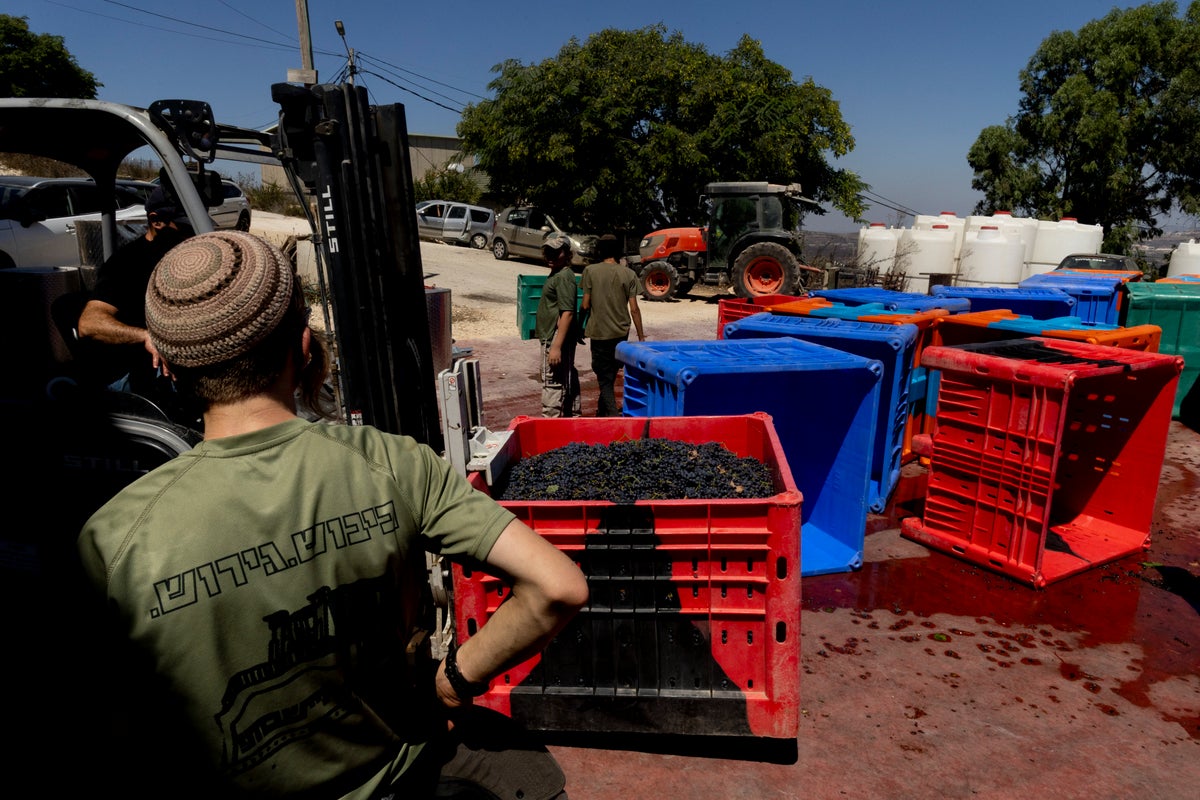
National immigration policy functions as an optimization mechanism designed to reconcile geopolitical intent, domestic constituent signaling, and fiscal constraints. The issuance of the May 21, 2026 presidential determination—which increased the United States refugee admissions ceiling by 10,000 slots to a revised total of 17,500—represents a structural shift in the application of the Refugee Act of 1980. By explicitly allocating this expanded capacity to a demographically narrow cohort—specifically white South Africans of Afrikaner ethnicity—the administration has executed a pivot from generalized humanitarian risk mitigation to a targeted, nationality-specific asylum pipeline.
This operational pivot challenges long-standing international legal precedents regarding universal vulnerability assessment metrics. Evaluating the mechanics of this policy requires stripping away ideological rhetoric to audit the structural framework of the program, calculate its fiscal capital requirements, measure its impact on alternative global refugee flows, and model its systemic consequences on bilateral trade and diplomatic stability.
The Mechanism of Targeted Asymmetry
The current refugee resettlement framework operates under a severe volume contraction juxtaposed with highly concentrated processing velocity. When the administration assumed office in January 2025, it executed an immediate baseline reset, halting standard multi-regional refugee processing and establishing a historical baseline low ceiling of 7,500 admissions for fiscal year 2026. However, processing data through the first seven months of the fiscal cycle demonstrates an unprecedented allocation density.
Between October 2025 and March 2026, the Department of State’s Bureau of Population, Refugees, and Migration oversaw the admission of 4,499 individuals. A statistical breakdown of this population reveals a near-total homogeneity:
- South African Nationals (Afrikaner Ethnicity): 4,496 individuals (99.93%)
- Alternative Global Nationalities: 3 individuals (0.07% comprised entirely of Afghan origin)
The newly executed 10,000-slot expansion brings the total authorized intake capacity to 17,500 for the fiscal year ending September 30, 2026. Structurally, the administration achieved this via a Section 207(b) emergency presidential determination, citing an "emergency refugee situation" caused by escalating friction between the South African state apparatus and the localized U.S. processing infrastructure. The core justification centers on institutional and political rhetoric inside South Africa, alongside a December 2025 administrative raid by South African authorities on a U.S. refugee processing center in Pretoria—an incident the South African government defended as a domestic labor law enforcement action targeting undocumented regional workers.
This operational strategy creates an asymmetric dual-track system. Standard international refugee protocols utilize localized field assessments managed by the United Nations High Commissioner for Refugees (UNHCR) to establish a well-founded fear of persecution based on race, religion, nationality, political opinion, or membership in a particular social group. The current U.S. mechanism circumvents this decentralized pipeline by utilizing an expedited, centralized domestic intake model under "Mission South Africa," which effectively automates group-level qualification criteria for the target demographic.
Capital Allocation and Resettlement Cost Functions
Expanding a specialized refugee pipeline requires immediate, non-dilutive capital deployment to absorb the logistical overhead of international transit, medical clearance, and domestic placement. According to official State Department notifications transmitted to Congress, the budgetary cost function for the 10,000-person expansion is fixed at $100 million. This yields a standardized marginal cost of $10,000 per individual refugee unit.
$$\text{Marginal Cost Per Capita} = \frac{\text{Total Expansion Appropriation}}{\text{Volume of Admitted Units}} = \frac{$100,000,000}{10,000} = $10,000$$
This capital allocation is distributed across three operational phases:
- Primary Processing and Logistics (25%): Covers the fixed costs of operating the expedited processing centers, biometric validation, security vetting by domestic intelligence agencies, and chartered commercial air transport from South Africa to primary U.S. entry hubs, predominantly Dulles International Airport.
- Immediate Resettlement Capital (45%): Disbursed to domestic resettlement networks to secure short-term housing, English-language baseline assessments, and initial integration support.
- Secondary State-Level Absorption (30%): Transferred to municipal and state agencies to offset localized infrastructure impacts, particularly within geographic clusters showing high natural absorption capacity.
Geographic distribution patterns indicate a strong preference for specific domestic labor markets. Data from the initial cohort of 4,499 arrivals shows that over 450 individuals (approximately 10%) were concentrated within the state of Texas. This regional clustering is driven by two operational variables: the presence of large-scale agricultural and industrial management sectors that align with the incoming cohort's historical skill profiles, and state-level political alignment that facilitates local resource allocation without legislative bottlenecks.
The long-term economic efficacy of this capital deployment remains subject to integration friction. Field reports regarding the initial 2025 cohorts indicate that despite high English literacy rates and existing familial connections for roughly 33% of arrivals, structural barriers in professional credential recognition and specialized agricultural adaptation have slowed immediate self-sufficiency metrics. This creates an extended dependency tail on localized private philanthropy, especially as established denominational resettlement entities, such as the Episcopal Church, have formally declined participation in the program based on systemic equity objections.
Geopolitical Friction and Trade Vulnerabilities
The allocation of humanitarian priority carries immediate consequences for bilateral economic agreements and macroeconomic stability. By codifying an emergency determination predicated on "government-sponsored race-based discrimination," U.S. foreign policy has established a direct adversarial posture toward Pretoria.
This friction directly threatens South Africa’s inclusion in preferential trade frameworks, most notably the African Growth and Opportunity Act (AGOA). AGOA eligibility requires beneficiary nations to continuously demonstrate progress toward establishing a market-based economy, the rule of law, and the elimination of barriers to U.S. trade and investment. The formal branding of the South African state as an active facilitator of systemic persecution creates a structural contradiction that makes the continuation of AGOA benefits legally fragile.
The economic downside risks of a trade disruption are sharply asymmetrical:
- Export Vulnerability: South Africa leverages AGOA to export high-value manufacturing and agricultural outputs—specifically automobiles, wine, and citrus fruits—to the U.S. market duty-free. The loss of this access would compress profit margins across South Africa's secondary and tertiary sectors, exacerbating an official domestic unemployment rate that exceeds 32%.
- Capital Flight Repercussions: The diplomatic escalation has already triggered corporate de-risking strategies. Offshore institutional investors liquidated a net positive volume of South African sovereign bonds and equities during the first half of 2026. This capital flight puts downward pressure on the South African Rand, driving localized import inflation risks.
- Multilateral Alignment Shifts: In response to U.S. diplomatic boycotts, including the cancellation of South Africa’s invitation to the G20 summit hosted at a private executive property in Miami, Pretoria has accelerated its economic and security integration with the BRICS+ bloc. This structural realignment weakens Western leverage over strategic mineral supply chains, specifically platinum group metals and manganese, which are critical inputs for advanced technological manufacturing.
Demographic Realities Versus Policy Assumptions
The strategic rationale underpinning the refugee expansion relies on a specific assessment of demographic vulnerability within South Africa. The administration’s policy documents assert that the white Afrikaner farming minority faces an existential crisis characterized by systemic, racially motivated violence. An empirical evaluation of South African domestic security data reveals a highly complex, multi-variable crime risk landscape that diverges from a singular model of state-backed targeting.
Actuarial and criminological data compiled over multi-year periods demonstrate that rural estate security breaches—commonly categorized as "farm attacks"—occur within a broader matrix of generalized high-velocity violent crime. For example, verified historical tallies of fatalities resulting from farm incursions show that a substantial proportion of the casualties are Black agricultural laborers rather than white landowners. Between 2020 and 2024, an audit of 225 fatalities recorded during agricultural property crimes identified 101 victims as Black workers, while 53 were white landowners or operators.
| Demographic Cohort within Agricultural Fatalities | Total Recorded Casualties (2020-2024) | Percentage of Total Sample |
|---|---|---|
| Black Agricultural Laborers | 101 | 44.89% |
| White Landowners / Operators | 53 | 23.56% |
| Unclassified / Other Nationalities | 71 | 31.55% |
These metrics indicate that the primary driver of rural violence is economic asset targeting rather than state-orchestrated liquidation. South Africa's agricultural sector retains a highly skewed wealth and asset distribution model: the white minority, which comprises approximately 7% of the aggregate population, retains ownership of roughly half of the country's commercial agricultural acreage. Because rural farms represent isolated nodes of high-value physical capital, liquid currency, and firearms, they become high-priority targets for organized criminal syndicates operating in environments with low police deployment density.
Consequently, the policy framework of "Mission South Africa" operates on a selective interpretation of regional risk. While real vulnerabilities exist regarding violent crime and political rhetoric from fringe populist factions—such as the Economic Freedom Fighters' use of historical anti-apartheid mobilization chants—the formal classification of this environment as an active "genocide" lacks empirical validation from international monitoring bodies.
Systemic Opportunity Costs in Global Resettlement
The re-engineering of the U.S. refugee pipeline introduces an extreme opportunity cost within the broader architecture of global humanitarian management. Because the total operational capacity and processing bandwidth of the federal resettlement apparatus are finite resources, the prioritization of one specific demographic group necessitates the functional abandonment of others.
The historical baseline before the 2025 policy shift saw the United States admitting over 100,000 refugees annually, drawn from highly volatile conflict zones including Afghanistan, the Democratic Republic of the Congo, South Sudan, and Syria. The contraction of the global ceiling to 7,500, followed by its exclusive expansion to 17,500 units explicitly earmarked for South African processing, effectively closes the statutory asylum pipeline for millions of displaced persons globally.
This operational exclusion manifests as a two-fold bottleneck:
- Logistical Bandwidth Saturation: The assignment of consular officers, security screeners, and biometric verification units exclusively to the Pretoria and Cape Town processing sectors starves multi-regional hubs of the personnel required to clear backlogged back-end applications.
- Resettlement Network Atrophy: The pivot toward a highly literate, English-speaking refugee cohort changes the operational requirements of domestic resettlement agencies. Infrastructure designed for complex integration—such as intensive language training, multi-layered trauma care, and non-Western cultural orientation—is being defunded or dismantled to match the low-friction profile of the incoming Afrikaner population.
This structural re-alignment permanently alters the role of the United States within the international refugee protection framework, shifting it from a needs-based safety valve for global conflict zones to an instrument of selective, ideologically aligned demographic extraction.
Strategic Forecast and Policy Trajectory
The expansion of the refugee ceiling to 17,500 slots sets a precedent for how the executive branch can utilize emergency immigration powers to bypass legislative oversight. Over the remaining quarters of 2026, the program will face critical operational thresholds. The initial surplus of highly capitalized or mobile applicants will deplete, forcing the pipeline to process lower-income rural cohorts who possess fewer transferable assets. This shift will increase the marginal cost of domestic absorption, straining the $100 million budget allocation and requiring either supplemental congressional appropriations or a deceleration of intake velocity.
Concurrently, the diplomatic standoff between Washington and Pretoria will likely solidify into institutional decoupling. Expect the South African state to escalate its regulatory oversight of foreign non-governmental organizations and embassy processing operations within its borders. This will generate secondary logistical constraints for the State Department, slowing down the processing time per capita.
Corporate entities and asset managers operating within the U.S.-South Africa corridor must prepare for a structural transition away from AGOA benefits. Supply chains tied to South African industrial components or agricultural imports should immediately run sensitivity analyses based on standard Most-Favored-Nation tariff rates. The baseline assumption for corporate strategy must be that bilateral trade will be governed by reciprocal economic friction for the foreseeable future, as the administration prioritizes domestic constituent signaling over market access stability.