Warner Bros. Discovery is chasing a ghost.
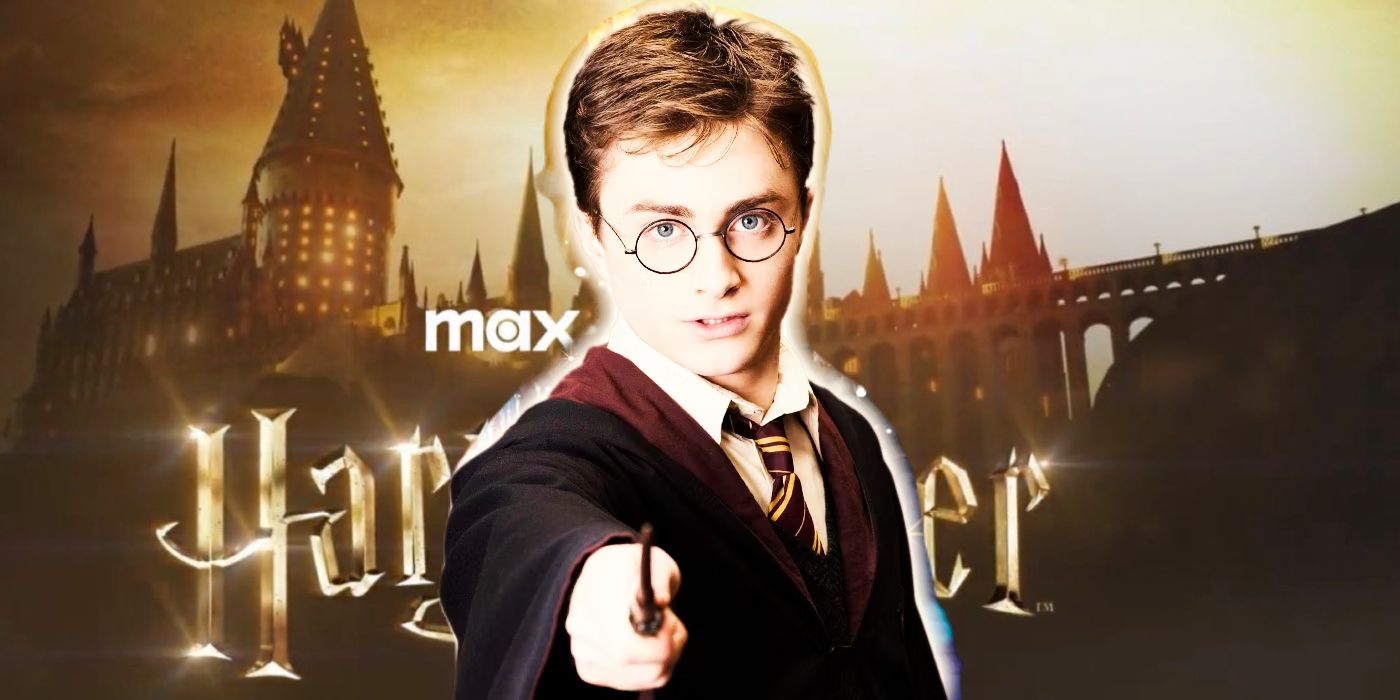
The announcement of a faithful, decade-long television adaptation of Harry Potter isn't a "magical return" to Hogwarts. It is a desperate, forensic extraction of value from a carcass that has already given everything it had. While the trades fawn over "unseen details" and "book-accurate Peeves," they are missing the systemic rot at the heart of the prestige TV era: the replacement of cultural expansion with safe, repetitive iteration.
I have watched studios burn through nine-figure budgets trying to catch lightning in a second bottle. It never works. Not because the source material is bad, but because the context that made it a phenomenon has evaporated.
The industry consensus says this is a "sure thing" because the IP has 100% brand awareness. That is exactly why it will fail to define the next generation of culture.
The Myth of the Definitive Adaptation
The core argument for this series is "fidelity." Fans complain that the movies cut S.P.E.W. or shortened the Maze in Goblet of Fire. The new show promises to put it all back in.
This is a fundamental misunderstanding of how narrative medium works.
Literature is internal. Film is external. Television is durational. When you stretch a 300-page book like The Sorcerer’s Stone into ten hours of television, you aren't being "faithful." You are bloating. You are adding "vibe" and "filler" to satisfy a runtime. The pacing that made the novels page-turners will be sacrificed at the altar of "prestige" slow-burn cinematography.
Look at the data from the last five years of streaming reboots. The Rings of Power had the Tolkien estate’s blessing and more money than some sovereign nations. It failed to capture the zeitgeist because it tried to compete with a visual language already perfected by Peter Jackson.
The Harry Potter films are not just movies; they are the visual shorthand for an entire generation's imagination. You cannot "out-cast" Maggie Smith. You cannot "re-imagine" John Williams’ score without it feeling like a cheap imitation or a jarring departure. By attempting a 1:1 remake, Warner Bros. is forcing the audience to spend ten years playing "spot the difference" instead of getting lost in a story.
The Cannibalization of Legacy
The business logic here is centered on "Subscriber Retention." Max needs a reason for people not to hit "cancel" after The Last of Us ends.
But there is a high cost to "Legacy Cannibalization."
When you remake a franchise while the original stars are still in their physical prime and the original films are still legally and commercially available on the same platform, you devalue the original. You tell the audience that the 2001-2011 cycle was just a "draft."
"I’ve seen studios spend $200 million to fix something that wasn't broken, only to realize they've split their own fan base in half."
This isn't Batman or Spider-Man, characters who have existed for 60-80 years through dozens of iterations in comics. Harry Potter is a singular narrative arc. It has a beginning, a middle, and an end. It is not a "multiverse."
By resetting the clock to Year One, the studio is admitting they have no idea how to grow the "Wizarding World" outward. Fantastic Beasts was a tonal disaster, yes, but at least it attempted to expand the geography and history of the setting. Retreating to the dormitories of Hogwarts is a white flag. It is creative surrender.
The Technical Trap of Prestige TV
We need to talk about the "Netflix-ification" of visual effects.
The original films used a massive amount of practical sets. Leavesden Studios was a physical location you could feel. Modern high-end TV relies heavily on "The Volume" or massive LED walls. While efficient, it creates a flat, sterile aesthetic that lacks the grit and "lived-in" quality of the early films.
Expect the new series to look "cleaner" and "sharper," which is exactly what a story about ancient stone castles and dusty magic shouldn't be.
- Over-reliance on CGI: Because it’s a TV schedule, the VFX houses will be squeezed. We will see more magical creatures, but they will have less weight.
- The "Prestige" Color Palette: Expect the vibrant colors of the early films to be replaced by the muddy, desaturated gries and blues that dominate modern streaming.
- The Soundtrack Void: Without the iconic motifs, the show will struggle to find an identity. If they use the old music, they prove they are a cover band. If they don't, it won't feel like Harry Potter.
The Demographic Delusion
The "People Also Ask" columns are filled with questions about whether the original cast will return. They won't. And that’s the problem.
The target audience for this show is supposedly "a new generation." But the new generation already has the movies. They are on TikTok, they are at Universal Studios, and they are playing Hogwarts Legacy.
The actual target audience is the 35-year-old millennial parent who wants to relive their childhood through their kids. This is "Nostalgia Bait" in its purest form. The problem with nostalgia bait is that it has a very short half-life. Once the novelty of seeing a new kid with a lightning bolt scar wears off—usually by episode three—the show has to stand on its own merits.
And what are those merits? A story we already know. Beats we’ve already seen. A twist ending that was spoiled twenty years ago.
The Opportunity Cost
Imagine a scenario where Warner Bros. took that $150 million-per-season budget and applied it to new magic.
The "Wizarding World" is supposed to be a world. Where is the high-budget political thriller about the founding of the Ministry? Where is the horror-tinged series about the rise of the Founders? Where is the international story set in Uagadou or Castelobruxo?
By sticking to the seven books, they are staying in the shallow end of the pool. They are choosing the safety of a known commodity over the risk of actual world-building. This is the "Disney Strategy"—remake the classics in live-action to bridge a gap in the quarterly earnings report. It works for a few years, then it creates "Brand Fatigue."
We are already seeing it. The audience didn't show up for Indiana Jones 5. They didn't show up for The Marvels. The era of "IP for IP's sake" is hitting a wall. People don't want the same story told slightly differently; they want the feeling they had when they saw the original for the first time. You cannot manufacture that feeling with a remake.
The Social Minefield
We cannot ignore the cultural climate. The creator of the series is now a polarizing figure. By doubling down on the original text, Warner Bros. is tethering itself to a decade of potential PR fires.
Every casting choice will be a battleground. Every cut scene will be a scandal. The production will be under a microscope that no creative team can survive unscathed. This isn't just about "magic"; it's about navigating a fragmented, hyper-partisan media environment with a property that is no longer universally beloved.
In a world of infinite content, the most valuable thing isn't a known name—it's attention. You get attention by being bold, by being new, or by being the best. This reboot is none of those. It is an echo.
The "magical trailer" isn't a promise of a new era. It’s the sound of a studio playing its last big card because it’s too afraid to deal a new hand.
Stop asking for "book-accurate" remakes. You’re asking for a museum, not a story.
Go read a new book. Max should try producing one.