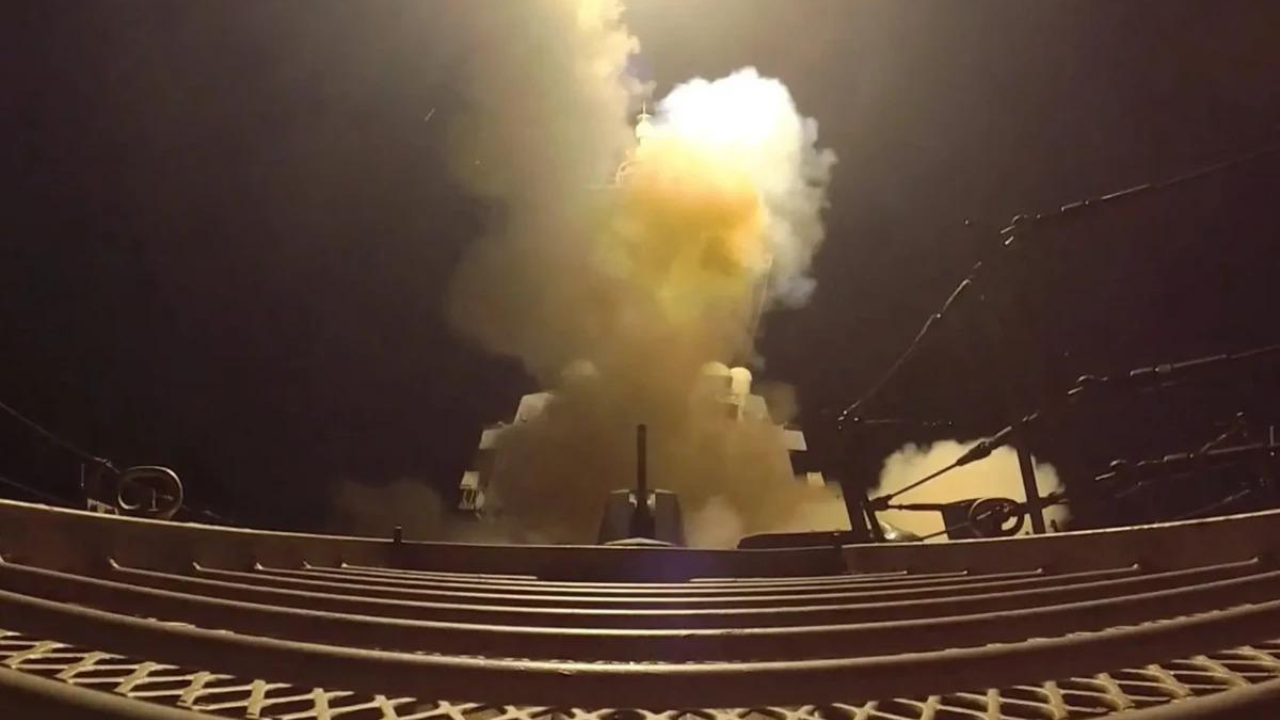
The air inside the Pentagon briefing room is always cold, a sterile chill designed to keep tired planners awake. On the projector screen, a map of a distant valley glows in sharp blues and greens. Icons representing satellite feeds, drone orbits, and armored columns flicker in real time. It looks like a pristine, high-stakes game of chess, a masterclass in technological supremacy.
But thousands of miles away, in a valley that looks exactly like the one on the screen, a platoon leader named Marcus is not thinking about chess. He is listening to the wet, rhythmic thump of a generator dying in the heat. He is looking at a local elder who is nodding politely, smiling, and lying straight to his face. Marcus’s unit has the power to level the mountain they are standing on. Yet, they cannot seem to convince the village at its base that the government in the capital—a city most of the villagers have never seen—is worth fighting for. You might also find this connected article interesting: Why Expecting Geopolitical Wisdom From Looksmaxxers Is Unhinged.
This is where the world’s most formidable military power repeatedly stumbles. It is not a failure of courage, nor is it a lack of firepower. It is a fundamental, recurring tragedy of translation.
The Illusion of the Perfect Hammer
For nearly a century, the American way of war has relied on a simple, comforting assumption: overwhelming force and unmatched technology can solve any security dilemma. We built a machine designed to fight other machines. We wanted a clear enemy, a recognizable uniform, and a decisive treaty signed on the deck of a battleship. As extensively documented in detailed articles by The Washington Post, the implications are notable.
When the enemy obliges, the system works with terrifying efficiency. The 1991 Gulf War was the textbook execution of this doctrine. A massive, conventional army stood in the desert; the American military apparatus dismantled it in mere weeks. It was clean. It was measurable.
But history rarely repeats the easy chapters.
Most conflicts of the modern era do not feature neat frontlines. Instead, they are messy, protracted struggles fought in the spaces between the people. When the United States enters these arenas, it often brings a sledgehammer to perform brain surgery.
Consider the sheer scale of the mismatch. The American defense budget is larger than those of the next ten countries combined. We possess stealth fighters that can slip through radar undetected and smart bombs that can find a specific window from miles away. But a smart bomb cannot build a functioning judicial system. A drone strike cannot convince a farmer that a corrupt local police chief is better than the insurgent shadow court that actually resolves land disputes.
The military analyst and retired Army officer H.R. McMaster once noted that the U.S. military often suffers from "strategic narcissism"—the belief that the outcome of a conflict is determined almost entirely by our own actions, plans, and technologies. We treat the enemy as a static variable, a math problem to be solved through logistics and firepower.
The enemy, however, always gets a vote.
When Victory Has No Definition
To understand why winning has become so elusive, we have to look at how we define the finish line.
In a conventional war, the goal is simple: destroy the enemy's capacity to fight until they surrender. But in places like Vietnam, Afghanistan, or Iraq, the objective shifted from defeating an army to building a nation. This is where the gears of the war machine begin to grind against one another until they shear.
Imagine trying to build a house where the architects change every two years, the funding is subject to the whims of a distant committee, and the neighbors occasionally throw hand grenades through the windows.
Because the American political system runs on two- and four-year cycles, strategic patience is a luxury we rarely possess. A general deployed to a combat zone wants to show progress during their twelve-month tour. They need metrics. So, they measure what can be counted: patrol hours, kilometers of road paved, caches of weapons seized, body counts.
These numbers are fed back up the chain of command, painting a picture of progress. But they are empty calories. They do not capture the underlying political reality.
While the American military is busy clearing a valley of insurgents for the third time, the insurgent strategy is entirely different. They do not need to win battles. They do not need to control the skies. They only need to survive. They know that eventually, the clock will run out. The Americans will get tired, the political will at home will evaporate, and the troops will go back across the ocean.
Time is the ultimate asymmetric weapon. For a local insurgent, the war is an existential struggle for their home. For the superpower, it is a policy choice. When the survival of your society is not at stake, the cost of endless conflict eventually becomes too high to bear.
The Human Disconnect
There is a quiet, devastating moment that occurs in every counterinsurgency campaign. It happens when a young lieutenant, eager to do good, realizes that the culture of the people he is trying to protect is an impenetrable wall.
During the height of the war in Afghanistan, millions of dollars were poured into building state-of-the-art schools and clinics. On paper, it was a triumph of humanitarian intervention. But many of these buildings sat empty. Some were used to store hay; others were stripped of their wiring.
The planners in Washington had asked, What do they need? and answered with their own values: modern infrastructure. They had not asked, Who do they trust?
If the local teacher is appointed by a distant, corrupt ministry rather than vetted by the village elders, the village will not send their children. If the clinic is guarded by soldiers who do not speak the local dialect and search women at checkpoints, the locals will avoid it.
We see the world through a lens of rational institutions. We assume that because we have created a parliament, a constitution, and a national army, the population will naturally rally behind them. But in many parts of the world, loyalty is personal, tribal, and highly localized. It is promised to the person who can guarantee safety today, not the government that promises a school next year.
When we try to force foreign societies into Western-style institutional boxes, we do not create stability. We create vacuum chambers. And in those vacuums, extremist movements thrive because they offer something the artificial government cannot: predictability.
The Weight of the Mirror
This is not a criticism of the men and women sent to fight these wars. They are asked to be soldiers, diplomats, engineers, judges, and aid workers all at once. It is an impossible ask.
The tragedy is that the lessons are rarely learned. After Vietnam, the U.S. military explicitly tried to purge the lessons of counterinsurgency from its doctrine, declaring that it would never fight that kind of war again. We turned our focus back to big, conventional threats.
Then came 2001, and we had to relearn the exact same lessons at an excruciating cost in blood and treasure.
If we are to break this cycle, we must first have the humility to recognize the limits of military power. Force can disrupt a terrorist network. It can depose a tyrant. But it cannot force a society to agree on how it should be governed.
The next time a crisis flares, the temptation will be to look at the satellite maps, to count the carrier strike groups, and to calculate the raw destructive capacity at our disposal. But we must remember Marcus, standing in the dust, trying to talk to an elder who is looking past him, waiting for the giant to get tired and leave.
We must realize that the most critical terrain in any conflict cannot be seen from a satellite. It is the fragile, unpredictable landscape of the human heart. Until we understand that, we will continue to build the most expensive, sophisticated keys in human history, only to find that the locks have changed.