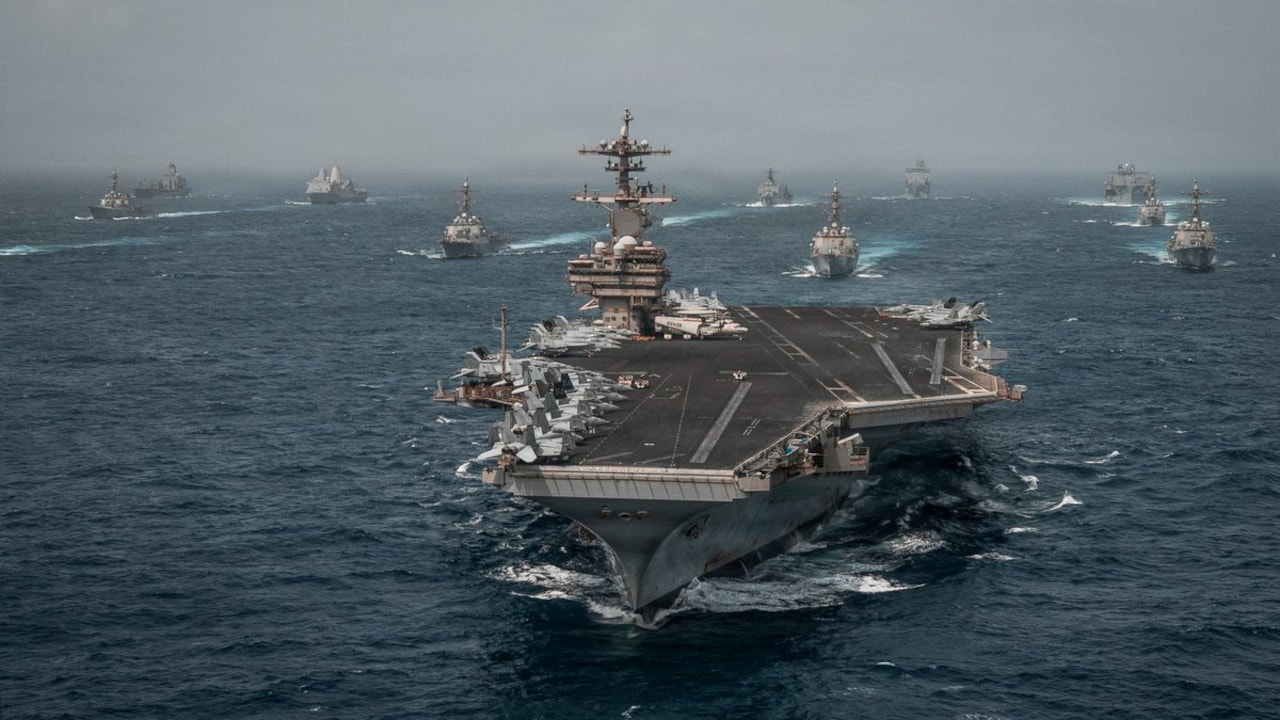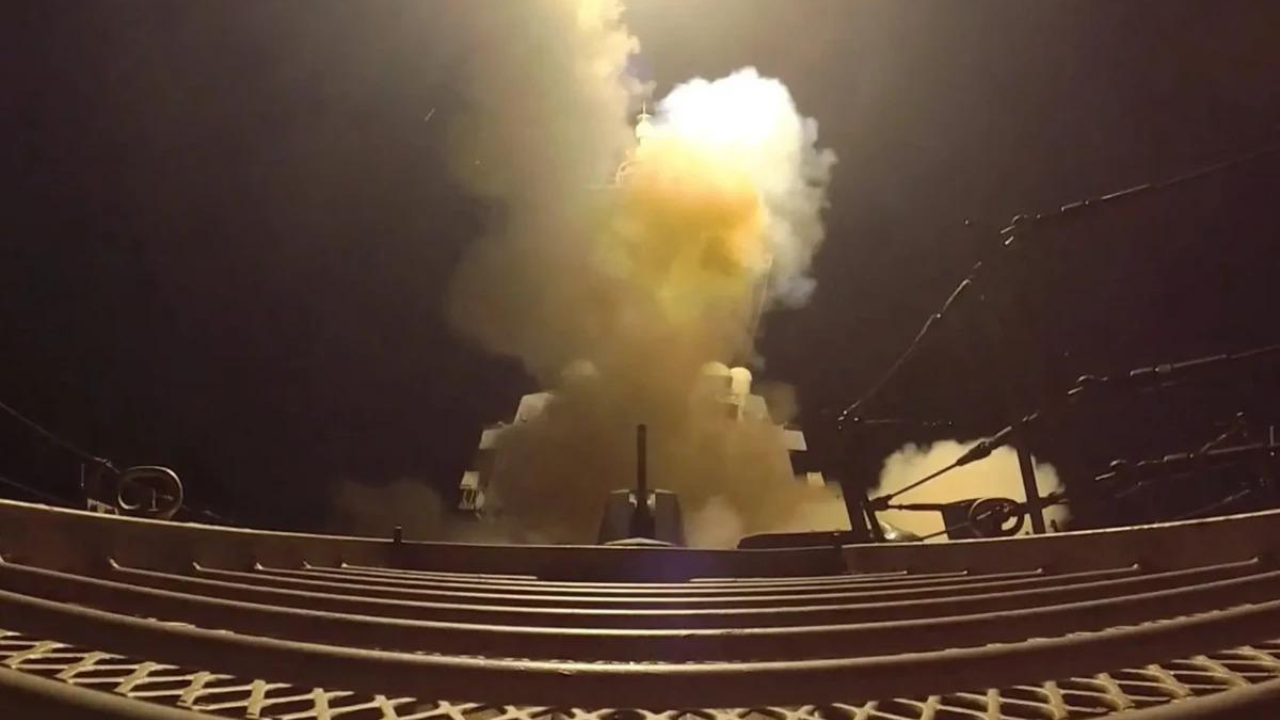
The collapse of the U.S.-Iran interim peace deal has rapidly shifted from diplomatic friction to active kinetic warfare. As the United States enters its fifth consecutive day of airstrikes against Iranian military targets, the conflict has moved beyond punitive retaliation. It has transformed into a highly calculated, structural campaign designed to degrade Iran's anti-access/area-denial (A2/AD) capabilities in the Strait of Hormuz. By pairing intense daylight airstrikes with a reintroduced naval blockade, Washington is attempting to alter the economic and operational incentives of the Iranian state.
This systematic degradation strategy, however, operates under severe structural constraints. It faces a high-friction environment where tactical military success does not automatically yield strategic victory. Assessing this escalation requires dissecting the operational frameworks, the economic feedback loops, and the strategic bottlenecks defining this confrontation.
The Degradation Framework: Dissecting the A2/AD Cost Function
To neutralize Iran's ability to choke off the Strait of Hormuz—through which roughly 20% of global oil and gas trade passes during peacetime—U.S. Central Command (CENTCOM) is executing a targeted, multi-layered attrition strategy. This strategy focuses on destroying specific physical assets that make up Iran's "arch defense" network. The military utility of these strikes can be mapped through three distinct operational pillars:
- Pillar 1: Coastal Defense and Anti-Ship Cruise Missile (ASCM) Silos. The primary threat to commercial shipping and U.S. naval assets is Iran’s mobile and fixed-site ASCM inventory. CENTCOM's 90-minute daylight strikes on Greater Tunb Island—a highly strategic outpost in the Persian Gulf—specifically targeted these cruise missile storage and launch facilities. By hitting these fixed defense systems, the U.S. forces a reduction in the volume of simultaneous salvos Iran can fire, lowering the probability of overwhelming U.S. ship-borne Aegis defense systems.
- Pillar 2: Command, Control, and Reconnaissance Infrastructure. An ASCM is only as effective as its targeting data. The strikes targeting positions near Bandar Abbas, Chabahar, and Ahvaz serve a dual purpose. They degrade physical radar installations and communication links, blinding coastal batteries and disrupting the real-time kill chain required to strike moving maritime targets.
- Pillar 3: Force Projection and Logistics. Targeting army barracks, such as the mechanized brigade in Sistan and Balochistan, targets the regional logistics networks that supply forward operating bases along the coast.
This degradation campaign operates on a classic asymmetric cost function:
$$C_{\text{US}} \ll C_{\text{Iran}}$$
where $C_{\text{US}}$ represents the marginal cost of precision munitions and fuel, and $C_{\text{Iran}}$ represents the replacement cost of highly specialized, sanction-restricted radar, missile components, and elite personnel. While Washington claims that Iran's drone, missile, and manufacturing capabilities have been depleted by up to 90%, the remaining 10% still retains lethal operational utility in a narrow maritime bottleneck.
The Blockade Bottleneck: Economics of Sea-Control
On July 14, 2026, the Trump administration reinstituted a full naval blockade on Iranian ports, introducing an aggressive economic component to the military campaign. The blockade operates on a strict compliance mechanism. Within the first 24 hours of enforcement, CENTCOM reported intercepting and redirecting two compliant commercial vessels while disabling a non-compliant vessel heading toward Kharg Island—Iran’s primary crude oil export terminal.
The reintroduction of the blockade reveals the underlying economic gravity of the conflict:
[U.S. Naval Blockade Reimposed]
       │
       ▼
[Halts Iranian Crude Exports via Kharg Island] ──► [Loss of Sovereign Revenue]
       │
       ▼
[Iran Threatens Global Energy Corridor]
       │
       ├─► Retaliatory Strikes on Gulf Allies (Kuwait, Bahrain)
       └─► Threat to Leverage Red Sea Proxies (Houthis / Bab el-Mandeb)
This structural loop exposes the limits of a purely naval blockade. Iran’s immediate strategic response to losing its own export capabilities is to threaten the export capabilities of every other producer in the region.
By launching retaliatory drone and missile strikes against U.S. bases and host nations like Kuwait and Bahrain, Tehran signals that regional stability is inextricably linked to Iranian economic survival. Furthermore, the threat from the Islamic Revolutionary Guard Corps (IRGC) to close "all other export corridors" points to a potential horizontal escalation. If Iran leverages its Houthi allies in Yemen to close the Bab el-Mandeb Strait, it would effectively bottleneck both the Persian Gulf and the Red Sea, creating an unprecedented global maritime logistics crisis.
Strategic Friction Points and Policy Trade-offs
The current escalatory spiral highlights critical friction points within U.S. foreign policy and military doctrine. These constraints restrict the strategic choices available to decision-makers in Washington:
1. The Ground Invasion Constraint
The Trump administration, via Vice President JD Vance, has explicitly ruled out a ground campaign to force regime change, stating, "We’re not in that business anymore". This self-imposed constraint significantly alters Iran's risk calculations. Knowing that a land invasion is off the table allows Tehran to absorb high levels of aerial bombardment while preserving its core command structure. The strategic objective for Iran is not to win a conventional conflict, but to outlast the political will of the U.S. administration.
2. The Diplomacy-Force Paradox
President Trump has publicly emphasized that the intense military pressure is designed to force Iran back to the negotiating table, claiming that Iranian officials "always want to meet". However, this coercive diplomacy creates a paradox. The scale of the overnight and daylight strikes, coupled with high casualty counts reported by Iranian officials, raises the political cost of concession for Tehran's leadership. In a regime where survival is tied to anti-imperialist legitimacy, capitulating under active bombardment risks internal destabilization. The designation of the conflict by Iranian Parliament Speaker Mohammad Baqer Qalibaf as an "existential war" suggests that the regime is framing the conflict internally in terms that make diplomatic compromise highly difficult.
3. Global Market Volatility
The conflict has already driven Brent crude prices above $85 a barrel, representing a 13% increase in a single week.
| Metric | Pre-Escalation (June 2026) | Current Level (July 15, 2026) | Trend Impact |
|---|---|---|---|
| Brent Crude Price (per Barrel) | ~$69 | $84.95 | +23% increase, driving global inflationary pressure |
| Strait of Hormuz Daily Transit | ~20.5 Million Barrels | Near Zero (Commercial) | Complete diversion to longer, high-cost African routes |
| U.S. Strategic Reserve Margin | Moderately Drawndown | Highly Restricted | Diminishing cushion to absorb sustained energy shocks |
The strategic space for the U.S. to tolerate high energy prices is much tighter than in previous decades. Continued airstrikes that threaten to completely halt Persian Gulf transit will inevitably trigger a self-inflicted economic drag on Western economies, creating a firm operational runway for how long the U.S. can sustain active operations.
Tactical Path Forward
The escalation has reached a point of diminishing returns for purely aerial bombardment. To resolve the crisis without triggering an all-out regional war, the U.S. must transition from an escalatory attrition posture to a targeted containment and stabilization framework.
First, the administration must prioritize hard defense over offensive escalation. Rather than expanding the target set to non-military infrastructure like bridges and power plants—which would harden Iranian resolve and unite the population behind the regime—U.S. forces should focus exclusively on maintaining the blockade and establishing convoy escorts for non-aligned commercial vessels.
Second, the U.S. must utilize the diplomatic leverage of regional partners. Since Gulf Arab states are bearing the brunt of Iranian retaliatory strikes, Washington should coordinate with Saudi Arabia and the UAE to open quiet backchannels. These channels must offer structured sanctions relief specifically tied to verifiable de-escalation in the Strait of Hormuz, separating maritime security from broader, more complex regional proxy issues.
Finally, the administration must leverage recent diplomatic signals, such as Iran's release of a detained U.S. citizen, as an off-ramp. Proceeding with threats to strike highly fortified, politically sensitive targets like "Pickaxe Mountain" will likely trigger the very regional energy blockade the U.S. is trying to prevent. The optimal move is to freeze offensive actions at the current level of degradation, lock in the maritime blockade as a stable bargaining chip, and transition immediately to closed-door negotiations before market panic triggers a global economic shock.