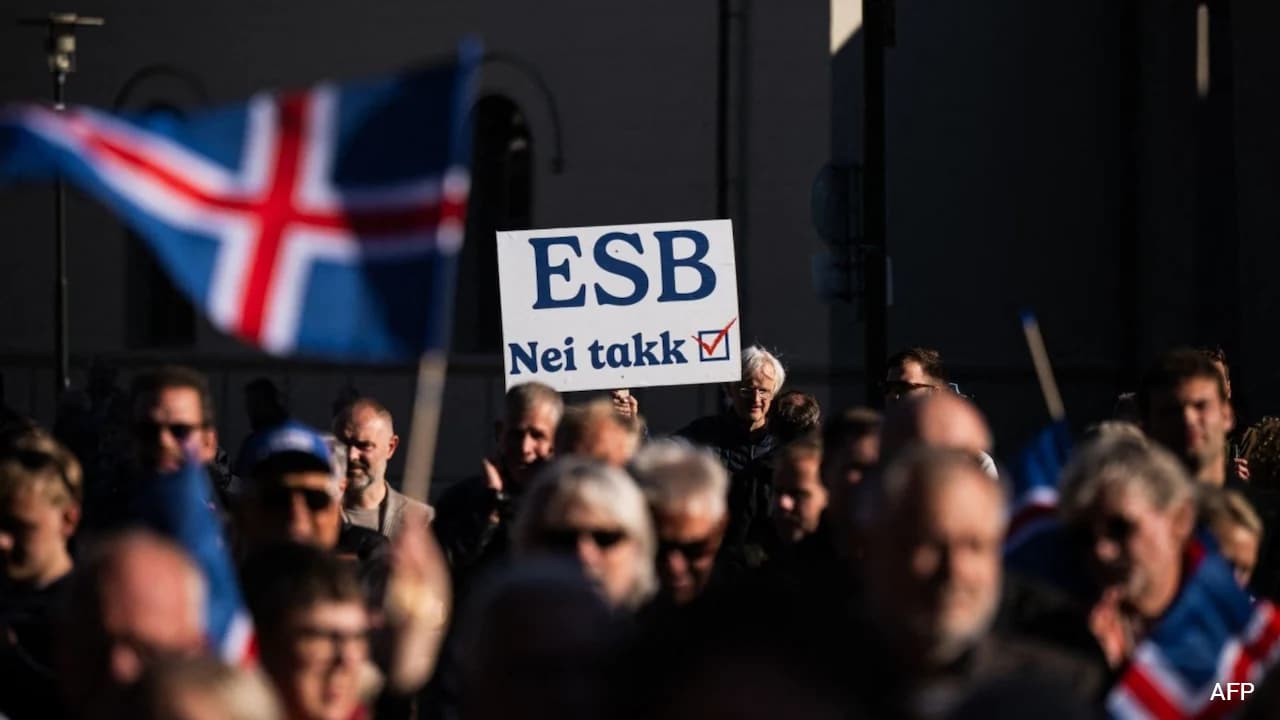
The lazy consensus across global newsrooms is clear: Iceland’s recent referendum rejection of European Union accession talks is a triumph for national sovereignty and a defense of local fishing grounds. Pundits from London to Brussels love a neat narrative. They look at the 52.8 percent "No" vote, point to the ghosts of the Cod Wars, and declare that the North Atlantic island has firmly slammed the door on Brussels to protect its iconic national identity.
It is a comforting story. It is also entirely superficial.
Iceland did not reject the European Union this weekend. Iceland rejected a bureaucratic ghost story that its political class used to dodge hard domestic realities. The referendum was never about fish, and it was certainly never about the grand geopolitics of the Arctic. It was a domestic safety valve designed to relieve pressure on a fractured coalition government by letting voters crush an abstract question so politicians could avoid making actual economic choices.
To understand why the mainstream take is broken, you have to look past the political theater and examine the structural reality of how Iceland actually interacts with Europe every single day.
The Great Illusion of Independence
The core argument of the anti-accession camp relies on a fundamental misconception of Iceland’s current geopolitical standing: the fantasy that the country is somehow operating as an independent economic fortress.
Look at the mechanics. Through the European Economic Area agreement, Iceland already participates in the EU’s single market. It adopts Brussels-mandated regulations wholesale, complies with the Schengen free-travel zone, and funnels financial contributions into EU cohesion funds. Iceland is already inside the European engine room; it just lacks a steering wheel.
When opponents argued that full membership would compromise national sovereignty, they ignored the daily truth of being a micro-state in a globalized economy. Sovereignty without leverage is just administrative isolation. By choosing not to sit at the negotiating table, Reykjavik didn't protect its rulemaking power—it permanently outsourced it to a room where its chair is empty.
The Real Driver: Misplaced Economic Fear
Let’s address the elephant in the room: the fishing industry. According to data from pre-vote tracking like Gallup polls, roughly 90 percent of commercial fishing enterprises opposed membership, terrified of the EU’s Common Fisheries Policy.
The fear is visceral. Fishing is foundational to Iceland's national mythos. But treating the Common Fisheries Policy as an existential boogeyman ignores modern fisheries management realities. Quotas in the system are heavily weighted toward historical catches. Because foreign fleets hadn't operated in Icelandic waters for decades, a negotiated entry would have likely locked in dominant domestic control anyway.
Instead of evaluating this with cold, hard economic data, voters bought into emotional talking points. The "No" campaign successfully framed the vote around cultural preservation, weaponizing historical anxieties while ignoring the macro-economic bleeding happening at home.
The Cost of Volatility
Pro-accession forces argued that joining the bloc and eventually ditching the volatile Icelandic króna for the euro would crush the country's stubborn inflation and high interest rates. They were right on the economics, but completely tone-deaf on political timing.
Imagine a scenario where a small island nation with a floating currency tries to absorb global market shocks while its citizens watch housing costs soar and borrowing rates remain punishingly high. That is everyday life in Reykjavik. Yet, instead of tackling structural domestic reforms, the left-leaning coalition government threw the EU question into a plebiscite as a Hail Mary pass.
Voters saw through the deflection. They didn't vote against European stability because they hate low inflation; they voted against a government trying to outsource its domestic policy failures to Brussels.
What Actually Happens Next
The international press will move on, declaring the matter dead until at least 2028. That is lazy analysis. The structural pressures forcing small, open economies to reconsider regional integration have not vanished just because a referendum failed by a few thousand votes.
Climate change, shifting Arctic trade routes, and the sheer inefficiency of managing monetary policy with a niche currency do not care about national pride. Iceland can keep pretending it stands entirely alone on its volcanic rock, but economic gravity always wins in the end.
Stop treating this vote as a permanent ideological settlement. It was a tactical timeout.
The next time external shocks rattle the North Atlantic, the conversation will return. And next time, the myth of complete isolation won't survive contact with reality.