Low-cost tactical pressure alters strategic calculus far beyond its material footprint. When non-state actors deploy incendiary kites, low-altitude balloons, and improvised payload delivery devices against a technologically asymmetric adversary, they bypass conventional deterrence architectures. This dynamic changes the operational environment not through brute-force destruction, but by imposing continuous friction on an integrated state apparatus. The kinetic response from a heavily armed military—typically executed via precision airstrikes—creates a feedback loop where tactical provocation meets disproportionate kinetic retaliation, escalating regional volatility without resolving the underlying structural imbalance.
To analyze this phenomenon, one must deconstruct the operational mechanics, the economic asymmetry, and the systemic response loops that govern border skirmishes in high-density urban theaters.
The Mechanics of Low-Tech Asymmetry
Conventional military doctrine assumes a linear cost-benefit ratio for offensive capabilities. State actors invest heavily in advanced radar, interceptor arrays, and supersonic delivery systems, pricing their defense mechanisms against high-value threats such as ballistic missiles or armed unmanned aerial vehicles.
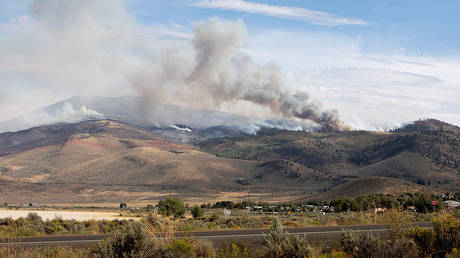
Incendiary balloons and tethered kites completely upend this pricing model. Constructed from household materials and commercial-grade lighter-than-gas cylinders, these devices operate at marginal costs close to zero. They exploit local wind patterns to cross heavily fortified barriers, carrying simple chemical or thermal incendiary payloads designed to ignite agricultural land, dry brush, and civilian infrastructure on the opposing side.
This operational model achieves three distinct objectives for the launching entity:
- Resource Asymmetry: The defending state must deploy sophisticated airspace monitoring, thermal tracking, and interception assets to counter threats that cost pennies to manufacture. The defensive expenditure ratio frequently exceeds one thousand to one.
- Psychological Persistence: Unlike ballistic rocket fire, which triggers immediate sirens and defensive launches followed by relative quiet, low-altitude incendiary devices inflict continuous, low-grade environmental and economic anxiety. Agricultural acreage burns over hours, forcing a prolonged civil protection response.
- Escalation Control: Because these vectors are technically ambiguous—often falling between civilian hobbycraft and hostile ordinance—they test the thresholds of the defending state's rules of engagement. The defender is forced into a binary choice: absorb the cumulative economic damage of persistent environmental sabotage or escalate the conflict via kinetic airstrikes, risking international condemnation over proportionality.
The Response Function and Kinetic Escalation
When state forces respond to low-tech incursions with high-yield airstrikes targeting suspected launch sites or staging infrastructure, they operate within a rigid escalation framework. This response is driven by the internal political demand for credible deterrence. A government facing domestic pressure cannot tolerate ongoing territorial infiltration, regardless of the physical scale of the damage.
However, executing precision airstrikes against decentralized, mobile actors operating within densely populated civilian zones produces predictable structural outcomes:
- Collateral Amplification: High-explosive munitions deployed in urban proximity risk civilian casualties, regardless of target selection accuracy. The loss of non-combatant life—particularly children—shifts the international information warfare landscape rapidly against the striking state.
- Radicalization Velocity: Kinetic retaliation destroys physical infrastructure while hardening community resolve on the receiving end. The cost of conflict is absorbed by the civilian population, which diminishes the social cost of future provocations and deepens popular support for asymmetric tactics.
- Strategic Stalemate: Airstrikes do not dismantle the manufacturing capacity of kites or balloons because the supply chain consists of ubiquitous domestic goods. Consequently, the strike achieves a temporary tactical interdiction while leaving the structural capability intact.
[Low-Cost Incursion]
       │
       ▼
[Defensive Security Dilemma] (Absorb Loss vs. Escalate)
       │
       ▼
[High-Yield Kinetic Strike]
       │
       ├─► Tactical Interdiction (Temporary)
       └─► Civilian Casualties & Radicalization (Permanent)
The Information Warfare Vector
The physical confrontation at the border is simultaneously an information operation. Asymmetric actors recognize that the optics of a state military utilizing advanced fighter jets or combat drones against low-tech provocations creates a stark visual imbalance.
This asymmetry of imagery influences diplomatic leverage, international bodies, and public opinion. The media framing shifts away from the initial provocation—arson attacks on agricultural land—toward the final outcome: structural destruction and casualties resulting from state-level kinetic force.
State commands attempt to counter this by releasing intelligence briefs detailing the military use of civilian covers, claiming that balloons and kites are utilized to transport explosive charges or reconnaissance optics. Yet, in the theater of perception, the visual contrast between an aerial bombardment and a paper kite heavily favors the underdog narrative, constraining the operational freedom of the defending military over the long term.
The Strategic Horizon
Managing low-tech asymmetric pressure requires a fundamental pivot from kinetic deterrence to technological adaptation. Traditional airstrikes are blunt instruments ill-suited for surgical containment of ubiquitous, low-cost threats.
If defense planners rely solely on escalation dominance, they validate the adversary's strategy: transforming minor border disruptions into strategic crises that degrade the state's international standing and exhaust its intelligence apparatus. The path forward demands the deployment of non-kinetic interception systems—such as directed-energy localized lasers, acoustic disruption arrays, and rapid counter-UAS net-capture technologies—that neutralize the threat vector without generating the collateral escalation required to justify a kinetic airstrike. Until the marginal cost of defense matches the marginal cost of the provocation, the cycle of low-tech friction and high-yield retaliation will persist.