The ledger didn't lie, but it didn't tell the whole truth either.
For five years, a red line ran through the balance sheets of thousands of American enterprises. It wasn't a line born of poor management, declining demand, or inferior products. It was a tax, levied in the heat of a geopolitical trade war, collected at the ports, and paid in silent desperation by businesses that had spent decades building their supply chains.
Now, the money is coming back. All eighty-one billion dollars of it.
To understand what a sum like $81,000,000,000 means, you have to look past the federal treasury buildings in Washington. You have to travel to places like Elkhart, Indiana, or the industrial parks outside Charlotte, North Carolina. You have to look at the dust on the factory floors and the gray hairs on the heads of supply chain managers who spent half a decade playing a game where the rules changed with every midnight tweet.
Consider a hypothetical composite of these business owners. We will call him Robert. For thirty years, Robert’s company manufactured specialized industrial valves. His steel came from domestic suppliers when possible, but certain precision components were only forged in specific regions of Asia. When the Trump administration enacted sweeping tariffs under Section 301 of the Trade Act, targeting billions in foreign imports, Robert didn’t see a grand strategy to protect American manufacturing. He saw a 25 percent tax increase on his essential raw materials arrive on a Tuesday morning.
He couldn't pass the full cost onto his customers without losing them to European competitors who weren't subject to the same penalties. So, he absorbed it. He delayed upgrading the factory's ventilation system. He froze hiring. He spent his weekends staring at spreadsheets, wondering how an abstract policy debate in a television studio had transformed into a concrete threat to his family’s survival.
Robert’s story wasn't unique. It was the standard operating reality for thousands of importers, retailers, and manufacturers across the United States.
The Inflexible Machinery of Statecraft
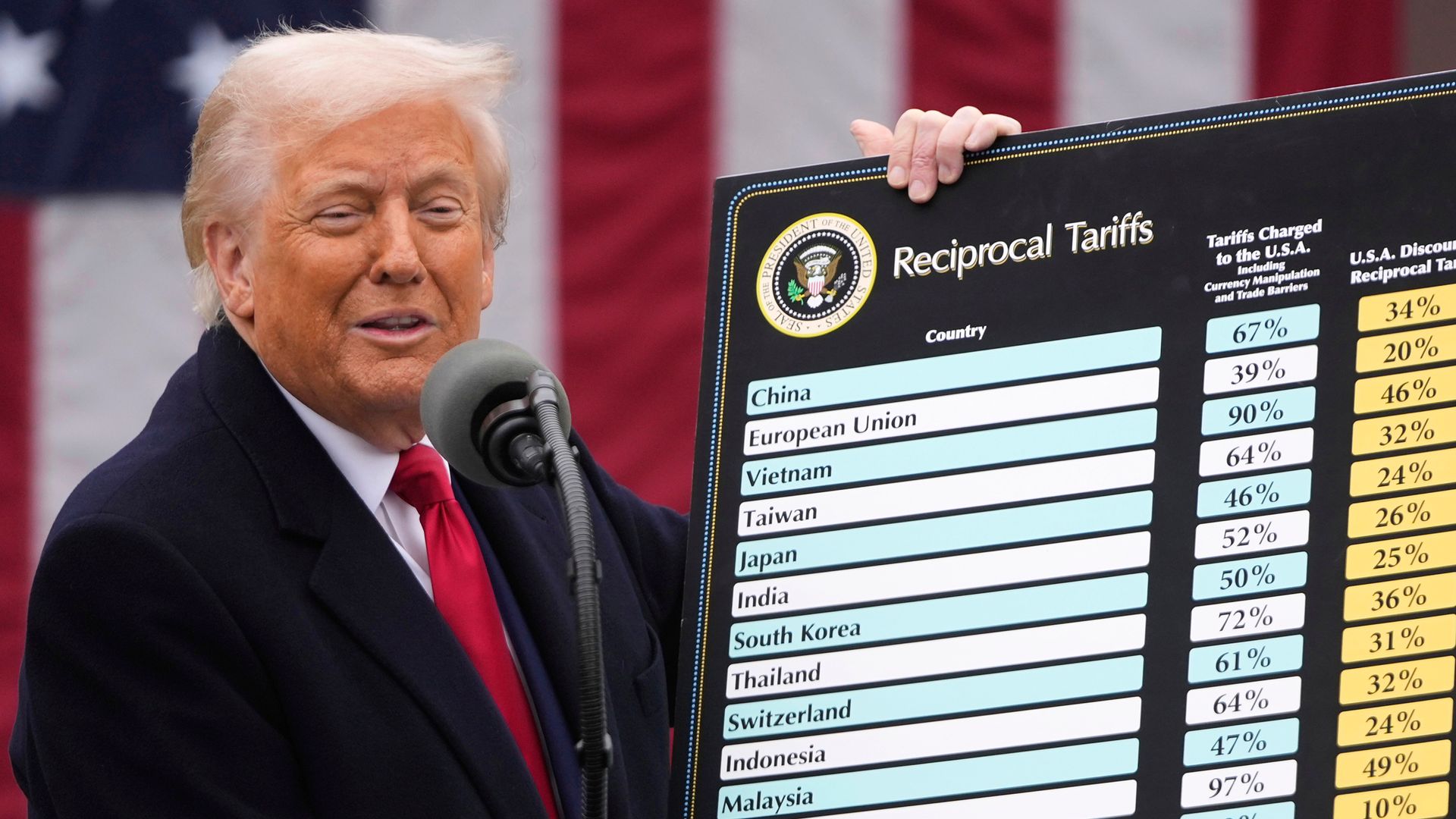
Trade policy is often debated as if it were a game of chess played on a pristine board. In reality, it is a blunt instrument. When the federal government imposed those initial tariffs, the goal was to apply economic pressure to trading partners, specifically China, to force structural changes in intellectual property and market access.
The immediate casualty, however, was the American importer. Under customs law, the company bringing the goods across the border pays the tariff. The foreign exporter doesn't write a check to the US Treasury; the American business owner does.
For years, a coalition of trade groups, massive retail conglomerates, and small family operations fought back through the only channel available to them: the legal system. They argued that the administration had exceeded its authority under the Trade Act, failing to follow proper administrative procedures and ignoring the thousands of public comments warning of domestic economic damage.
The wheels of justice turn with an agonizing slowness that matches the speed of international shipping vessels. While the lawyers argued in the U.S. Court of International Trade, the money kept flowing out of corporate bank accounts and into government coffers. It became a sunk cost. Companies adjusted. Some went under. Others shifted their manufacturing to countries like Vietnam or Cambodia, incurring massive relocation expenses just to bypass the tariff walls.
Then came the ruling.
The courts determined that significant portions of the tariff expansions were legally flawed. The administration had failed to adequately justify the massive retaliation and had skipped essential statutory steps. The mechanism used to collect those billions was declared invalid.
The legal victory was absolute, but it brought a strange kind of vertigo. What happens when the government collects eighty-one billion dollars illegally?
It has to give it back.
The Ghost in the Machine
Returning eighty-one billion dollars to the private sector is not as simple as cutting a giant check. It is an administrative nightmare that will take years to fully untangle.
Think about the complexity of the modern supply chain. A single consumer electronics device contains parts from dozens of suppliers, shipped in separate containers, entering through different ports of entry over a multi-year period. To claim a refund, a company must produce meticulous documentation for every single shipment, proving the exact tariff code applied, the amount paid, and the legality of the specific entry.
For major corporations, this is a task for armies of forensic accountants and trade attorneys. For the Roberts of the business world, it means more late nights at the desk.
The money returning to these balance sheets is a ghost. It represents capital that should have been spent on research and development in 2019. It represents wages that were never paid to workers who were laid off in 2020. It represents the missed opportunity of half a decade of economic growth.
The psychological impact of this reversal is profound. Business thrives on predictability. Entrepreneurs are willing to take risks on consumer tastes, technological shifts, and market competition. They can calculate those variables. What they cannot calculate is a regulatory environment that shifts by executive fiat, extracts billions of dollars under legal pretense, and then hands it back years later with a bureaucratic shrug.
The refund check cannot buy back time.
The Cost of the Long Detour
Defenders of the original tariff policy argue that despite the legal setbacks and the massive payout, the strategy succeeded in shifting the conversation on global trade. They point to the permanent realignment of supply chains away from adversarial nations as proof that the economic pain was a necessary sacrifice.
But that argument looks very different depending on where you sit.
From the perspective of an economist looking at macro data, a shift in trade volume is a line graph moving a few centimeters to the left. From the perspective of a logistics manager, that shift required abandoning trusted partnerships built over twenty years, vetting new suppliers in unfamiliar jurisdictions, and navigating a global shipping crunch that sent freight rates to historic highs.
The eighty-one billion dollars is a measure of the friction introduced into the American economy. Every dollar paid in tariffs was a dollar removed from circulation, a dollar that couldn't be used to build a new warehouse, buy a more efficient piece of machinery, or offer health benefits to a warehouse crew.
Consider what happens next: the sudden influx of cash back into the corporate ecosystem.
In an economy still grappling with the lingering ripples of inflation and shifting consumer demand, eighty-one billion dollars is a significant sum. Some companies will use the windfall to pay down debts incurred during the lean years. Others will finally execute the capital investments they put on ice when the trade war began. Some will simply distribute it to shareholders as a delayed dividend for their patience.
Yet, the return of the money highlights an uncomfortable truth about modern governance. The executive branch possesses immense power to disrupt economic systems overnight. The checks and balances designed to restrain that power operate on a delay measured in years, not days. By the time the judiciary corrects a policy error, the structural damage to the market has already hardened.
The Unmarked Path
The legal battle over the Section 301 tariffs will be studied in law schools for generations as a definitive case study on the limits of executive authority over commerce. But the true legacy of this period won't be found in legal briefs.
It will be found in the permanent cynicism of the business community.
Before the trade war, there was a general assumption that while tax rates might fluctuate and regulations might tighten, the fundamental architecture of international trade was relatively stable. A business could sign a five-year contract with a foreign supplier with a reasonable expectation that the cost structure wouldn't be upended by a sudden administrative decree.
That innocence is gone.
Today, every major corporation and mid-sized manufacturing plant operates with a permanent premium for political risk. They know that what was ruled illegal today can be re-engineered under a different legal justification tomorrow. They know that the government can take eighty-one billion dollars out of the economy, hold it for years, and return it only after a relentless, exhausting legal siege.
The factories are still running. The ships are still docking at the ports of Long Beach and Newark. The valves that Robert’s company makes are still holding back pressure in pipelines across the continent.
But the confidence that underpins all that activity has been altered. The eighty-one billion dollars is flowing back into the accounts, but the belief in a predictable, rules-based trading system cannot be so easily refunded. The money is real, but the scar left on the American economy is permanent.