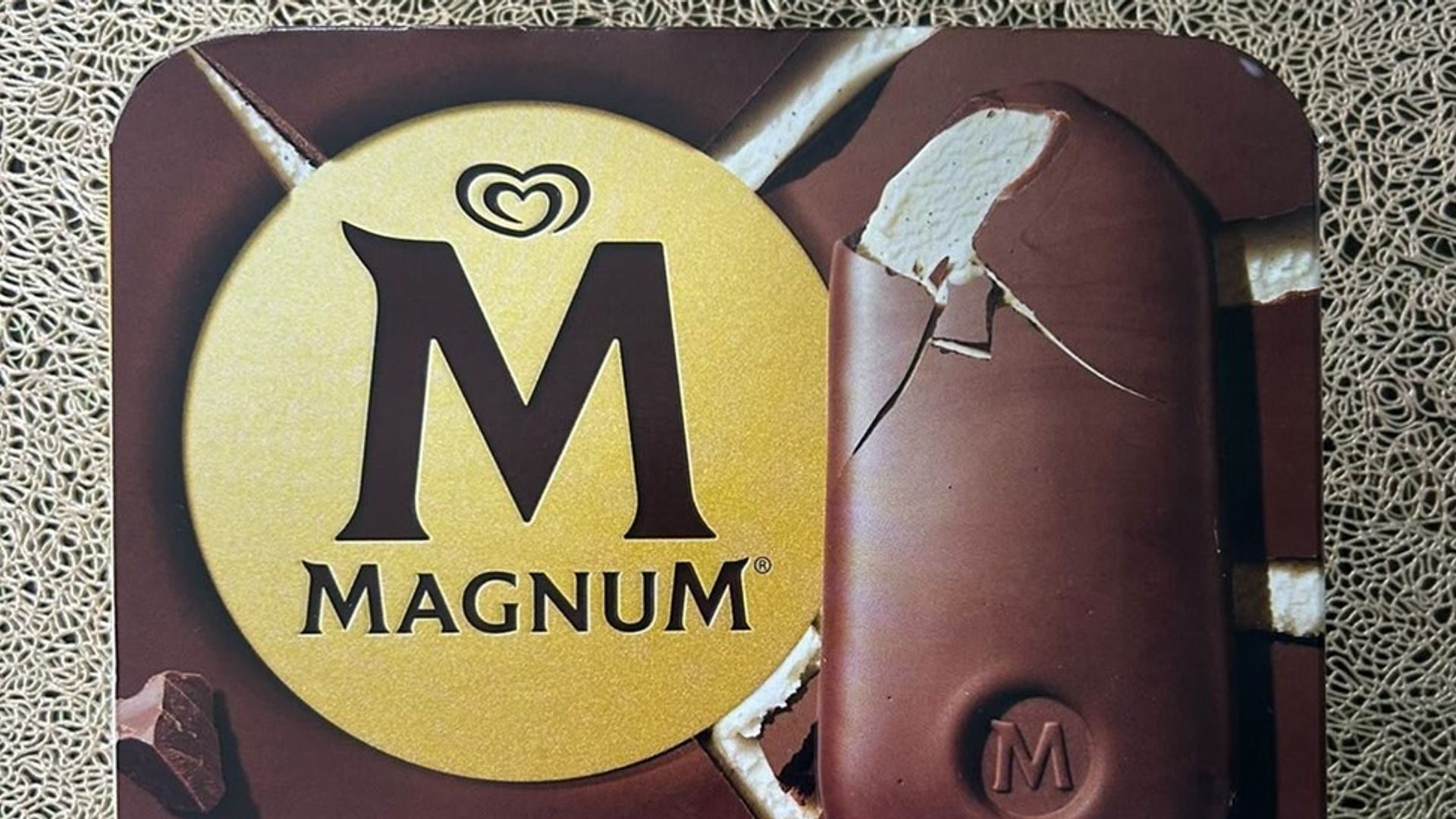
The market dominance of Unilever’s Magnum brand relies heavily on perceived premium value, but structural changes in the brand's production and packaging strategy reveal a vulnerability to lower-cost, higher-spec competitors. When an incumbent brand encounters severe macroeconomic headwinds—such as escalating dairy fat, sugar, and cocoa solids costs—it typically responds via one of two margin-preservation mechanisms: direct price appreciation or stealth volumetric reduction (shrinkflation). Unilever's systematic down-sizing of the flagship Magnum product exposes the limits of brand equity when matched against supermarket private-label alternatives that leverage aggressive cost structures and superior raw-material allocation.
To evaluate whether the market leader retains an objective product advantage, one must look past subjective taste preferences and deconstruct the product into its core physical and economic components: mass-to-volume ratios, structural lipid chemistry, and structural packaging efficiency.
The Economics of Shrinkflation and the Pack-Size Discrepancy
The structural degradation of the Magnum value proposition is driven by a two-stage operational retreat designed to protect operating margins.
- Phase 1: Volumetric Reduction (2022). Unilever reduced individual unit volume by 9.1%, compressing the product from 110ml down to 100ml.
- Phase 2: Multi-Pack Compression (2023). Standard retail cartons were stripped of 25% of their total volume, transitioning from a four-stick format to a three-stick format.
Unilever defended these moves by citing volatile raw material inputs and arguing that the adjustment provides a pack size suited to varying consumer budgets. However, a fundamental market arbitrage occurs when private-label manufacturers refuse to mirror this retreat.
Consider the unit-cost dynamics between the downsized Magnum and private-label premium alternatives manufactured for discount retailers like Lidl and Marks & Spencer. At retail equilibrium, a three-pack of branded Magnums frequently retails at a baseline that yields an individual unit cost of approximately 66p, assuming promotional pricing. In contrast, Lidl’s equivalent product provides 120ml per unit—a 20% volumetric advantage per stick over the modern Magnum—packaged in a six-stick configuration for £3.19, which translates to a unit cost of 53p.
This creates a structural cost bottleneck for the branded option. The consumer who buys the branded product pays a 24.5% premium per stick while receiving 16.7% less physical product volume. For brand equity to justify this premium, the physical composition of the branded product must exhibit clear engineering superiority in its raw material composition.
Rheology and Chemical Engineering of the Enrobed Shell
An ice cream stick's consumer appeal depends on the physical breakdown of the outer chocolate shell upon impact—a phenomenon known as the "snap." This property is governed by the crystallization state of the lipids within the coating and the total percentage of cocoa solids.
UK food regulations mandate a baseline of 20% cocoa solids for an enrobing layer to be legally classified as milk chocolate. The standard Magnum milk chocolate shell operates near this regulatory floor, containing 28% cocoa solids. Because cocoa butter is one of the most expensive inputs in the global supply chain, minimizing its presence while remaining compliant with food labeling laws is an effective way to lower manufacturing costs.
The physical consequence of a lower cocoa solid profile is a softer shell with a lower melting threshold, which reduces the auditory and tactile snap of the first bite. Private-label engineering has capitalized on this specific variable:
[Lidl Premium Alternative] -> 30% Cocoa Solids -> Higher Crystallization Density -> Rigid Snap
[M&S Premium Alternative]   -> 30% Cocoa Solids -> Ground Vanilla Pod Integration -> Enhanced Aroma
[Magnum Classic Branded]   -> 28% Cocoa Solids -> Lower Lipid Threshold -> Reduced Shell Rigidity
By elevating cocoa solids to 30%, private-label competitors like Lidl and Marks & Spencer achieve a more rigid crystalline network within the solid chocolate shell. This 200-basis-point increase in cocoa content alters the fracture dynamics of the chocolate, producing a cleaner snap and a prolonged melt profile that contrasts effectively against the rapid thermal dissipation of the inner ice cream core.
Overrun Ratios and Thermodynamic Stabilization
The critical operational metric in ice cream manufacturing is overrun—the percentage of air injected into the liquid mix during the freezing process. Overrun dictates both production margins and sensory performance, following a specific volumetric equation:
$$% \text{ Overrun} = \frac{\text{Volume of Finished Ice Cream} - \text{Volume of Liquid Mix Used}}{\text{Volume of Liquid Mix Used}} \times 100$$
Air is a zero-cost raw material. Industrial manufacturers use high-pressure continuous freezers to achieve overrun levels often exceeding 80% to 100% in standard mass-market products, effectively doubling the volume of the liquid mix.
A high overrun level lowers production costs but compromises the structural stability of the product. When overrun is pushed too high, the ice cream loses its dense, velvety texture and becomes foamy, accelerating its melt rate when exposed to ambient room temperatures.
The primary structural flaw identified in lower-tier supermarket alternatives (such as Asda and Tesco house brands) is poor overrun optimization and suboptimal stabilization chemistry. Testers frequently note an "icy" initial texture and a thin, rapidly melting core in these lower-priced options. This occurs because the manufacturers have failed to control recrystallization.
Without premium emulsifiers and precise temperature management during distribution, free water molecules within a high-air, high-water mix migrate and freeze into macro-ice crystals. This process damages the smooth emulsion and leaves a gritty, cold sensation on the tongue.
Magnum preserves its defensive moat by maintaining a lower, premium overrun profile, which produces a dense, smooth dairy emulsion with a slow melt rate. However, this technical advantage is no longer exclusive to the major brand. Premium private-label tiers, particularly M&S, utilize authentic dairy fats and natural stabilizers like ground vanilla pod to mimic this heavy matrix. This approach yields a matching velvet texture without the premium brand's accompanying price tag.
Flavor Extraction Profiles and Retronasal Aromatics
The sensory experience of eating an enrobed ice cream bar depends on the balance between sweetness and aromatic depth. Magnum utilizes Madagascan vanilla extract within its formulation. The interaction between the vanilla profile and the sweet chocolate coating creates a distinct flavor signature. However, analytical testing reveals a significant design flaw: a bitter aftertaste that lingers once the dairy fats have cleared the palate.
This bitterness is an artifact of the stabilization and sweetener systems used to balance out the high-sugar formulation. When sugar levels are elevated to mask a lower cream fat content, the sweetness can overwhelm the volatile flavor compounds of the vanilla.
Competitor benchmarking highlights how private-label brands have corrected this balance:
- Lidl: Achieves optimal sensory balance by pairing a 30% cocoa shell with a vanilla cream core that relies on clean dairy sweetness rather than added sugar, avoiding a bitter aftertaste.
- Marks & Spencer: Incorporates visible ground vanilla pods directly into the mix. This physical inclusion ensures a steady release of natural vanillin compounds during chewing, which balance out the heavy lipids in the 30% chocolate coating.
Tactical Strategic Playbook
The data indicates that the branded incumbent's market position is highly vulnerable. For consumers seeking optimal asset allocation within their grocery spend, the purchasing strategy is straightforward:
- Ditch the Branded Premium: Cease purchasing branded Magnums at standard retail pricing. The combination of a 100ml volume limit and a 28% cocoa solid shell represents an inefficient price-to-volume ratio.
- Optimize for Structural Execution: Shift procurement to Lidl’s premium private-label alternative. It delivers a 20% volume advantage per unit, superior shell fracture dynamics via 30% cocoa solids, and avoids the formulation imbalances that cause a bitter aftertaste.
- Optimize for Ingredient Integrity: For an elevated sensory experience, choose the Marks & Spencer alternative. Its use of ground vanilla pods and high cocoa solid metrics matches or exceeds the branded benchmark's material performance.
Unilever's reliance on shrinkflation to preserve its margins has created an opening for agile private-label manufacturers. By offering larger portions and higher ingredient specs at a lower cost, these alternatives have broken the market leader's monopoly on premium quality.
To see these product comparisons evaluated under rigorous real-world conditions, analyzing this ice cream taste test and value review provides an in-depth breakdown of how supermarket alternatives perform against the market leader.