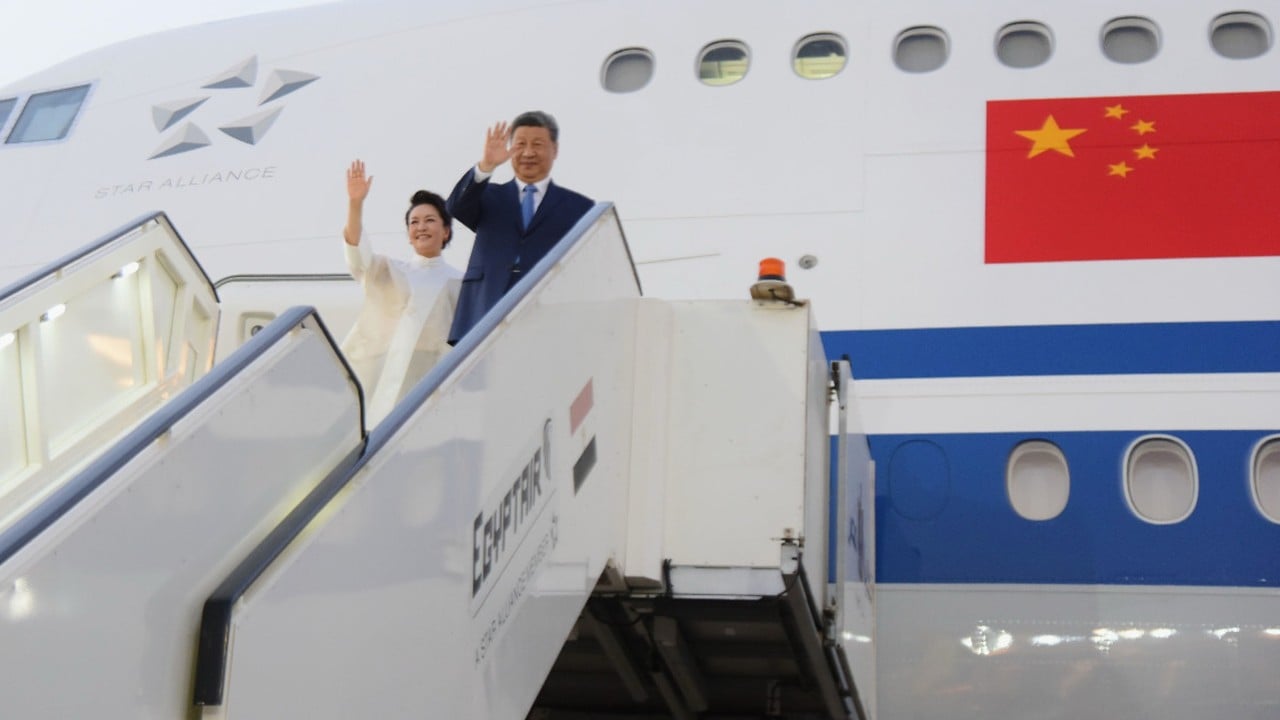
Every few months, aviation geeks and defense journalists lock themselves in a self-inflicted trance. They publish glossy photo-spreads and breathless commentary pitting the American president’s flying fortress against Beijing’s primary state transport. They argue over square footage, private staterooms, conference facilities, and tail numbers. They treat international head-of-state transport like a high-altitude real estate comparison.
It is an intellectually lazy parlor game.
When you ask how Xi Jinping’s special plane compares to Air Force One, you are asking the wrong question entirely. You are staring at the furniture while the entire geopolitical and industrial foundation beneath your feet is shifting. The differences between these two aircraft programs do not lie in how plush the upholstery is or how many flat-screen monitors are bolted to the bulkhead. They are symptoms of two entirely divergent models of statecraft, defense procurement, and logistical execution. One is a monument to bureaucratic bloat and industrial-complex capture. The other is a masterclass in civil-military fusion and operational pragmatism.
The Myth of the Bespoke White Elephant
Let us begin by detonating the first major misconception: the idea that Air Force One represents peak American engineering supremacy.
For decades, the VC-25A fleet served as an undisputed symbol of executive power. But the attempt to replace it with the next-generation VC-25B program has devolved into a multi-billion-dollar cautionary tale. Boeing has absorbed over three billion dollars in out-of-pocket losses on a fixed-price contract that turned into a financial black hole. The delivery schedule has slipped years past its original target, pushing operational readiness deep into the late 2020s. By the time these heavily modified Boeing 747-8s finally enter regular service, portions of their secure communications suites risk becoming obsolete before their maiden voyage, forcing the Pentagon to scramble for hundreds of millions in additional upgrades.
This is what happens when you turn an airplane into a politically radioactive sacred cow. Every single custom requirement—from specialized electronic countermeasures to complex in-flight refueling capabilities—turns the manufacturing line into a bespoke artisan workshop. Supply chain bottlenecks, shortages of basic components like specialized windshields, and endless bureaucratic sign-offs paralyze the process. The result is an astronomical price tag exceeding six billion dollars of taxpayer money for a fleet of two planes.
Now look across the Pacific. China does not maintain a permanently dedicated, custom-militarized fleet of white-and-blue presidential jets built from scratch under crushing regulatory weights. Instead, they utilize aircraft drawn directly from the national flag carrier’s commercial inventory—specifically, the Boeing 747-8 Intercontinental (such as registration B-2479).
Mainstream commentators love to frame this by saying, "Xi Jinping flies commercial." That is a superficial exaggeration designed to generate clicks. These aircraft are routinely requisitioned from Air China, pulled out of rotation, subjected to a temporary multi-zone VIP cabin retrofit for state visits, and then restored to civilian or backup status when the tour concludes.
This approach is not born of poverty or a lack of ambition. It is an intentional structural choice.
The Industrial Logic of Civil-Military Fusion
To understand why Beijing’s method is fundamentally different, you have to look at how authoritarian states leverage state capitalism.
Air China is state-owned. The maintenance crews, the flight deck officers, the logistics chain, and the aircraft frames themselves exist within a unified command structure. When Beijing needs a long-haul executive transport, it does not have to negotiate a decade-long, politically volatile defense contract with a commercial contractor that holds all the leverage. It simply taps into its national aviation asset pool.
This model eliminates the staggering administrative overhead that plagues Western defense procurement. There are no congressional oversight hearings grilling executives over billions in cost overruns on a specialized cabin door. There is no frantic search for niche subcontractors who went out of business five years ago.
Furthermore, operating a modified commercial airliner provides a distinct psychological and logistical posture. When a standard-liveried Air China 747 touches down at foreign airports, it projects an aura of normalized global integration. It carries the visual branding of a commercial carrier, subtly reinforcing the narrative of a rising trade power rather than an overt military projection. While western analysts obsess over whether the Chinese state plane has identical electronic hardening to an American command post, they ignore the core advantage: flexibility. If a mechanical issue arises, the entire state apparatus has immediate access to an identical wide-body ecosystem, backed by state-directed maintenance infrastructure that operates without commercial friction.
Dismantling the Security and Capability Fetish
The defenders of the American model will immediately point to defensive countermeasures. They will tell you that Air Force One is a flying nuclear command center equipped with advanced missile defense systems, electromagnetic pulse hardening, and secure broadcast equipment capable of running a global war from thirty thousand feet.
That is true. But let us inject a dose of hard reality into that narrative.
A plane like Air Force One is an enormous, glowing electromagnetic beacon. Its very existence requires a sprawling, hyper-expensive security footprint wherever it goes. Because it is a dedicated military asset, its arrival signals a massive, unignorable footprint of foreign military logistics, advance security teams, and specialized ground equipment. It is a high-visibility symbol that carries immense symbolic target value.
Conversely, the Chinese approach relies on a different calculus. Beijing recognizes that against a peer adversary with modern satellite surveillance and integrated air defense networks, a presidential aircraft—regardless of whether it has decoy dispensers or secure satellite uplinks—is fundamentally vulnerable in a hot conflict. No amount of onboard counter-measures turns a commercial wide-body airframe into an invisible stealth fighter.
Therefore, safety for a head of state on an overseas tour relies less on turning a civilian jet into an armored tank and more on strict operational compartmentalization, advance intelligence coordination, counter-surveillance protocols, and diplomatic risk mitigation. The Chinese special plane carries encrypted communication nodes and secure data links tailored for state leadership, but it does so without the multi-billion-dollar defense-contractor markup that turns every bolt into a fiscal scandal.
The Fallacy of the PAA Questions
If you search for public inquiries regarding these two aircraft, you find a predictable loop of superficial questions. Let us dismantle them with brutal honesty.
Does Xi Jinping fly commercial?
No. Repeating this claim reveals a fundamental misunderstanding of aviation logistics. While the airframes belong to Air China's commercial registry, they are pulled from standard rotation, heavily modified internally with partitioned executive zones for ministers, staff, and security, and flown by elite state-vetted crews. It is a chartered state transport disguised in civilian clothing—a brilliant exercise in optical positioning that allows state media to project an image of sober, workmanlike leadership while maintaining absolute executive luxury behind closed doors.
Which plane has a better interior?
This is the question that keeps interior designers awake at night and adds zero value to national security discussions. Western reports love to speculate on gold trim, private bathrooms, and master suites on both sides. The truth is that neither Beijing nor Washington publishes official blueprints of their presidential suites for obvious security reasons. Speculating on whether the American president or the Chinese leader has a wider bed at thirty-five thousand feet is tabloid journalism masquerading as geopolitics.
Why is the US replacement program so catastrophically delayed?
Because the United States has allowed its defense acquisition process to become risk-averse, hyper-regulated, and financially captured. When you couple fixed-price development contracts with ballooning requirements and a hollowed-out domestic manufacturing base for heavy airframes, failure is mathematically guaranteed. Boeing’s multi-billion-dollar bloodbath on the VC-25B program is not an anomaly; it is the natural endpoint of a broken procurement lifecycle.
The Uncomfortable Truth About Superpower Logistics
When you strip away the aviation enthusiast jargon and the partisan flag-waving, the comparison between Air Force One and Beijing's flag-carrier transports boils down to a stark contrast in institutional competence.
The United States builds magnificent, hyper-specialized military tools, but it does so at a financial and bureaucratic cost that is rapidly becoming unsustainable. It wraps executive travel in a cocoon of multi-billion-dollar defense-industrial pageantry, only to watch the program stumble through endless delays, obsolete technology integration, and crushing corporate losses.
China takes a pragmatic, utilitarian shortcut. It harnesses state-directed civil aviation assets, avoids the trap of building a completely bespoke military fleet from scratch, and maintains a flexible, low-overhead capability that gets the job done without bankrupting the national treasury on custom windshield development.
Stop worrying about which jet has more legroom or a fancier conference table. Look at the balance sheets, look at the delivery schedules, and look at how each nation converts its industrial base into diplomatic leverage. One model is bogged down by its own weight. The other moves with calculated, ruthless efficiency.
The next time you see photos of two jumbo jets parked nose-to-nose on an tarmac during a high-stakes summit, remember what you are actually looking at: a clash between monumental bureaucratic excess and streamlined state capitalism.
And right now, the accountants are winning.