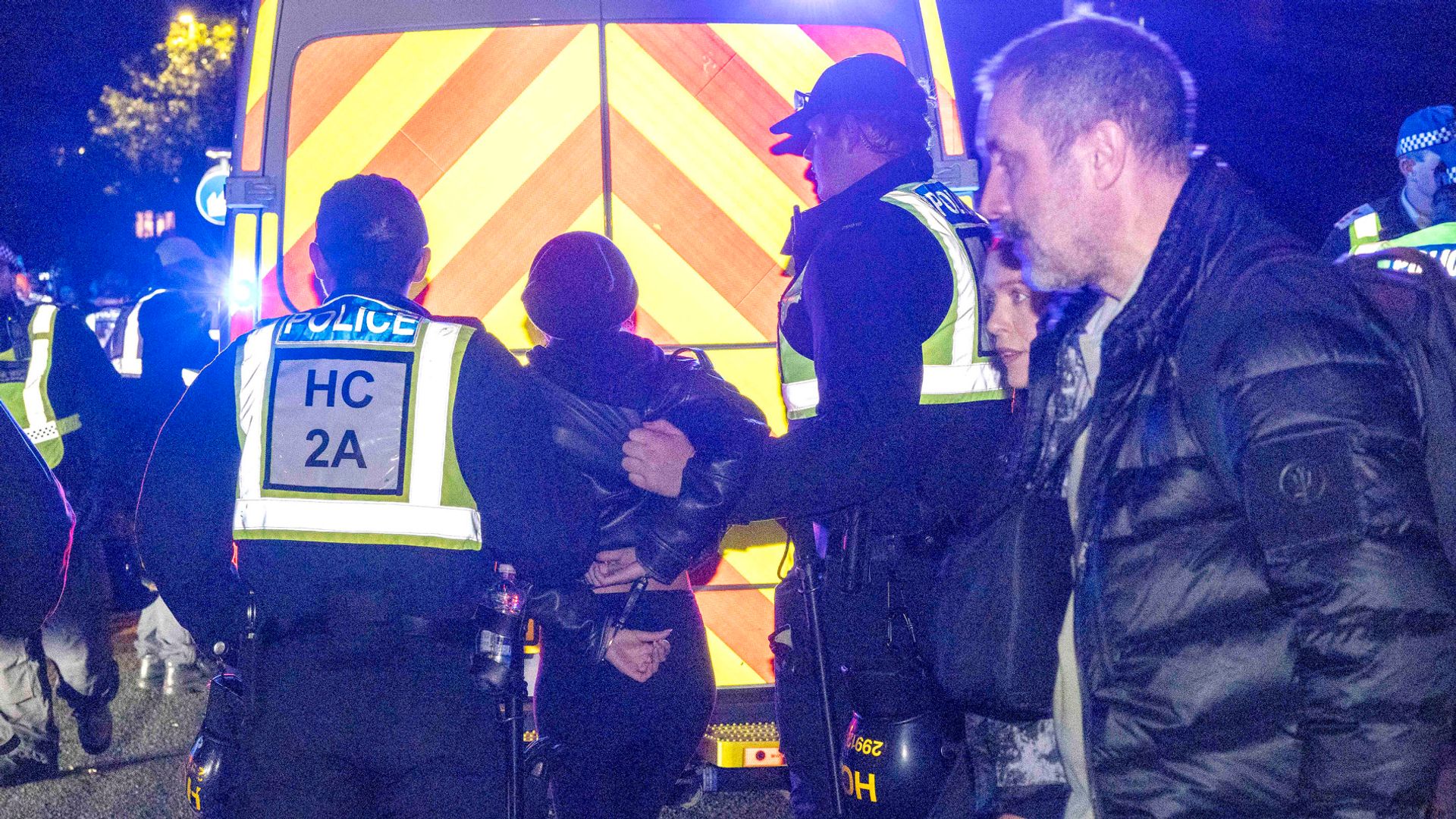
Six people wearing handcuffs do not make a policy. They make a snapshot. When the authorities hauled six protesters away in Dover last week while a vessel carrying migrants who had spent thirty-six hours adrift at sea finally docked, the national conversation fractured along its usual, predictable fault lines. On one side stood the hardliners, pointing to the arrests as proof of law and order holding the line. On the other stood the humanitarian advocates, emphasizing the thirty-six hours of exposure, dehydration, and sheer terror in the English Channel.
Both narratives miss the machinery underneath. Recently making news recently: Inside the Grangetown House Fire Trial Where Accused Pleads Not Guilty.
For anyone who has spent years covering the maritime corridors of Northern Europe, the Dover arrivals are neither a sudden invasion nor a simple humanitarian rescue mission. They are the predictable output of a broken system that trades human lives for political theater. Thirty-six hours at sea on a makeshift craft is not an anomaly; it is a stress test of endurance engineered by deterrence-only border policies that push desperate people into increasingly lethal crossings.
The Geography of Desperation
To understand why a crossing takes thirty-six hours—a timeframe that turns a perilous maritime sprint into a grueling endurance trial—you have to look past the white cliffs and examine the shifting geography of enforcement. More information into this topic are covered by NBC News.
Years ago, departures concentrated around Calais and immediate French coastal points. Heavy policing, surveillance tech, and barbed wire altered the calculus. Smugglers adapted by pushing further up the coast, launching from more remote beaches in Normandy and Belgium. That extra distance changes everything. A longer route means more fuel burned, more exposure to unpredictable tides, and a higher probability of structural failure in overloaded rubber dinghies.
When a boat stays afloat for a day and a half in some of the busiest shipping lanes in the world, it is not because the passengers chose a scenic detour. It is because engine failures, overcrowding, and interception evasions stall progress.
The British government's stated aim has been simple: stop the boats. Yet every iteration of stricter border controls has produced a perverse market adaptation. When crossing becomes harder, smugglers charge more for larger, flimsier vessels designed to carry dozens of people at once. When enforcement increases patrols near the French shore, launches happen further out, lengthening the journey and increasing the window of exposure to hypothermia and dehydration.
The Economics of Enforcement
Follow the money, and the rhetoric dissolves. Smuggling syndicates operating out of Northern Europe are resilient business entities. They do not operate out of ideological conviction; they operate on a high-margin, high-risk model.
Every time a major crackdown hits the headlines, smuggling prices fluctuate, but demand remains sticky. Why? Because the push factors in countries torn apart by conflict, economic collapse, or political persecution outweigh the risk of drowning in the English Channel. When a person has already survived the Sahara, extortion in Libya, and detention camps, thirty-six hours in an inflatable raft is viewed as the final, terrible toll of a journey already paid for in full.
Governments spend billions on hardware, radar, and offshore agreements designed to intercept vessels before they reach British territorial waters. Yet this focus on interdiction treats the symptom while fueling the disease. Each successful interception does not deter the next boat; it forces the network to refine its logistics, swap routes, and utilize younger, more desperate pilots who have no maritime experience.
The Human Toll and the Political Theater
Back on the shore in Dover, the theater plays out with wearying familiarity. Police clear protesters. Media cameras capture the orange life jackets. Politicians step up to microphones to declare that the borders are being secured or, conversely, that humanity is being abandoned.
Meanwhile, the people who endured thirty-six hours at sea are processed through an administrative apparatus that treats them as legal anomalies rather than human beings in acute shock. Dehydration, salt-water sores, and severe psychological trauma are standard-issue upon arrival.
The arrest of six protesters on the docks is a symptom of this fevered climate. Public exhaustion has reached a boiling point. Citizens angry at housing shortages, strained public services, and political stagnation project their frustrations onto the visible manifestation of global migration: the arrivals at the port. Protesters clash with counter-protesters, each side convinced they are fighting for the soul of the nation, while the underlying crisis continues untouched by the noise.
Solving maritime migration requires moving past the fantasy of an airtight border. No amount of razor wire or naval posturing will seal a fifty-mile stretch of water flanked by major international shipping lanes. Until policymakers address the lack of safe, legal processing channels and dismantle the economic incentives driving the smuggling networks, boats will keep launching.
Thirty-six hours at sea will remain a terrifying reality for the desperate, and Dover will remain a theater for everyone else.