The financial press has fallen in love with a comfortable, lazy consensus. Walk through the research desks of any major investment bank today, and you will hear the exact same refrain: "China is not Japan."
The narrative is comforting. Analysts point out that China’s per capita GDP is much lower than Japan's was in 1990, meaning it has more room to grow. They note that China’s banks are state-owned, preventing a sudden, chaotic Lehman-style collapse. They argue that Beijing has watched Tokyo's "Lost Decades" like a hawk and possesses the autocratic tools to engineer a soft landing.
They are dead wrong.
To say China is not Japan is technically true, but profoundly misleading. China is actually facing a structural trap that is vastly more complex, deeply rooted, and difficult to manage than the asset bubble Japan popped thirty-five years ago. The structural headwind isn't a carbon copy of Japan's balance sheet recession; it is a compounding math problem that Beijing cannot build or spend its way out of.
The Western consensus is looking at the wrong metrics. They are comparing interest rate policies and banking structures when they should be looking at demographic velocity, total factor productivity, and local government debt structures. Here is the uncomfortable reality that global markets refuse to price in.
The Myth of the Catch-Up Growth Runway
The most common defense of China's economic trajectory is the "catch-up" argument. When Japan’s Nikkei peaked in December 1989, its per capita GDP was already neck-and-neck with the United States. China’s per capita GDP sits at roughly $13,000. Economists look at this and assume a massive runway for productivity gains.
This view ignores the middle-income trap.
Japan became rich before it became old. China is doing the exact opposite. Japan’s working-age population peaked in 1995, years after its asset bubble burst. China's working-age population actually peaked around 2015.
This is a massive structural divergence. China is entering an era of rapid demographic contraction at a fraction of the wealth level Japan enjoyed. When your workforce shrinks while your social safety net liabilities explode, the math for sustained GDP growth falls apart. You cannot achieve catch-up growth when the labor input variable in your production function is in a structural tailspin.
Furthermore, Japan possessed world-class, globally dominant private brands—Sony, Toyota, Nintendo, Honda—that generated massive export revenues even while the domestic economy stagnated. China's corporate ecosystem is heavily weighted toward state-owned enterprises (SOEs) that swallow capital and yield dismal returns on equity, alongside a tech sector that has been systematically reined in to prioritize state control over market-driven innovation.
The Local Government Debt Mirage
People ask: "Can't the Chinese central government just absorb the bad debts of the property sector?"
This question completely misunderstands how capital flows in China. In Japan, the bubble was concentrated on the balance sheets of commercial banks and private corporations. When the music stopped, the Bank of Japan and the Ministry of Finance could eventually coordinate a slow, albeit agonizing, cleanup of non-performing loans because the lines of authority and liabilities were clear.
China’s debt problem is fundamentally different because it is hidden in plain sight through Local Government Financing Vehicles (LGFVs). For decades, local municipalities funded infrastructure and social spending by selling land to property developers. To turbocharge growth, they set up LGFVs—off-balance-sheet entities that borrowed trillions from the shadow banking sector, using future land sales as implicit collateral.
Now, land sales have plummeted. The collateral is gone, but the debt remains.
Imagine a scenario where a provincial city built a six-lane highway to an empty industrial park. The debt used to build that highway is rolling over at 6% interest, but the economic return on that infrastructure is effectively 0%. Multiply this across thousands of townships, and you get a debt service burden that eats up an astronomical share of regional economic output.
The central government cannot simply nationalize this debt without destroying the fiscal autonomy of its provinces and triggering massive moral hazard. If Beijing bails out every insolvent municipality, it destroys the value of the yuan and fuels runaway inflation. If it doesn't, local public services break down. This is not a clean corporate restructuring; it is a systemic fiscal quagmire.
Why a Balance Sheet Recession is a Best-Case Scenario
Economist Richard Koo coined the term "balance sheet recession" to describe Japan's post-bubble era, where companies stopped maximizing profit and started minimizing debt. Even with interest rates at zero, nobody wanted to borrow. Everyone was paying down liabilities, draining demand from the economy.
Wall Street keeps wondering when China will face its "Richard Koo moment."
The truth is worse: China is suffering from something far more stubborn than a balance sheet recession. It is suffering from a structural misallocation of capital that has run unchecked for two decades.
Japan overbuilt commercial real estate in Tokyo, but its manufacturing sector remained highly efficient. China overbuilt its entire nation. It consumed more concrete between 2011 and 2013 than the United States did during the entire 20th century. You cannot fix a country that has built enough housing inventory to shelter three times its current population by simply lowering interest rates.
When an economy spends decades allocating capital based on political GDP targets rather than economic returns, it destroys wealth on a systemic scale. Lowering interest rates in China doesn't incentivize a private entrepreneur to build a factory; that entrepreneur already looks at massive overcapacity across every sector and realizes there is no profit margin left to capture.
The Total Factor Productivity Illusion
Let's address the counter-argument that everyone brings up: green technology.
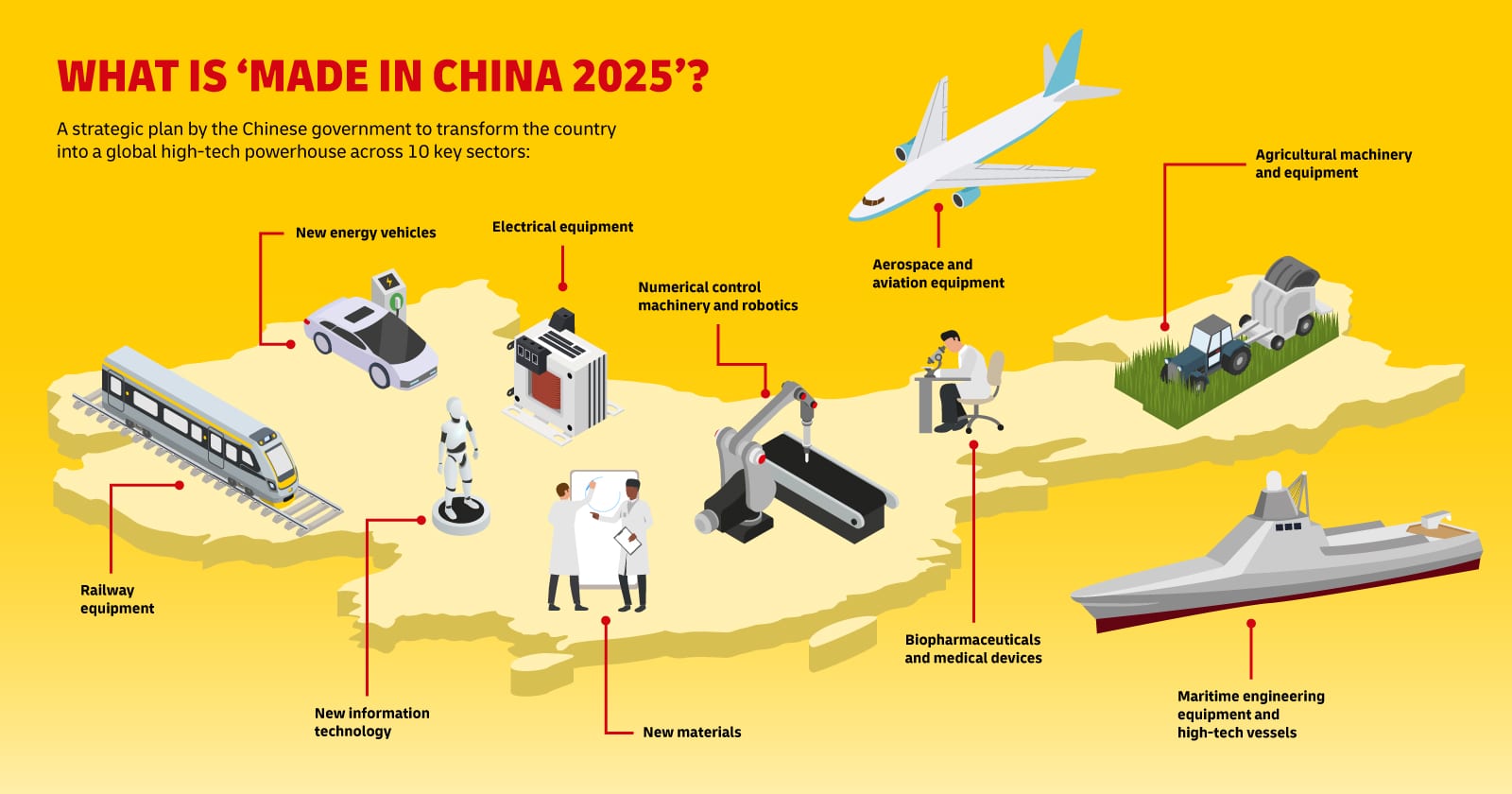
Optimists point to China’s absolute dominance in electric vehicles (EVs), lithium-ion batteries, and solar panels. They claim that this high-tech manufacturing boom will replace the old property-driven growth engine.
This is a fundamental misunderstanding of economic scale.
The property and infrastructure sectors historically accounted for roughly 25% to 30% of China’s GDP. The entire global market for EVs and solar panels is a drop in the bucket compared to that massive domestic engine. More importantly, China’s industrial policy has created immense overcapacity in these green sectors as well. When dozens of state-subsidized companies rush into the same industry, profit margins collapse to zero.
We are seeing this play out in real time. Chinese EV manufacturers are locked in a brutal price war domestically, selling vehicles at razor-thin margins or outright losses, while facing mounting tariff walls in Europe and North America. You cannot drive aggregate national growth when your most innovative sectors are legally or economically blocked from exporting their overcapacity, and your domestic consumers are too terrified of the property crash to spend money at home.
The Actionable Reality for Global Investors
Stop looking for the bottom.
In Japan, the market spent twenty years trying to call the turn, losing trillions of dollars in "value trap" equities. The global investment community is repeating this exact mistake with Chinese equities today, pointing to low price-to-earnings ratios as a sign of deep value.
A low valuation is not a buy signal when the underlying return on capital is structurally deteriorating. If you are allocating capital based on the assumption that Beijing will unleash a massive, bazooka-style consumer stimulus package, you are misreading the entire ideological framework of the current leadership. Beijing views consumer handouts as wasteful welfarism; it prefers to direct capital into industrial production, which only exacerbates the global overcapacity problem.
If you must find exposure, look entirely outside the domestic demand ecosystem. The only entities that will survive this structural transition are those that possess completely insulated global supply chains and do not rely on the domestic Chinese consumer or local government procurement. Everything else is a melting ice cube.
The comparison to Japan isn't just flawed; it is dangerous. It breeds a false sense of security that the path forward will be a orderly, predictable stagnation marked by tidy corporate restructurings and mild deflationary pressures. China's economic scale, its geopolitical friction points, and its deeply embedded fiscal contradictions ensure that its adjustment period will be far more volatile, disruptive, and unforgiving than anything witnessed in Tokyo. The consensus is looking for a Japanese-style stagnation, completely blind to the reality that the math points to something far more severe.