The water does not care about borders. It is cold, indifferent, and entirely blind to the invisible lines drawn on maps by men in distant capitals. When you stand on the shoreline of Ceuta, staring across the narrow strip of the Mediterranean toward the coast of Morocco, the sea looks deceptive. Calm. Blue. Almost welcoming.
Until the bodies wash ashore.
I remember the salt sting in the air, the heavy weight of silence that falls over the Spanish enclave when the sea claims another life. We live with the constant, quiet hum of tragedy here. It is a place where two worlds collide, separated by a security fence, a stretch of ocean, and an abysmal failure of human empathy.
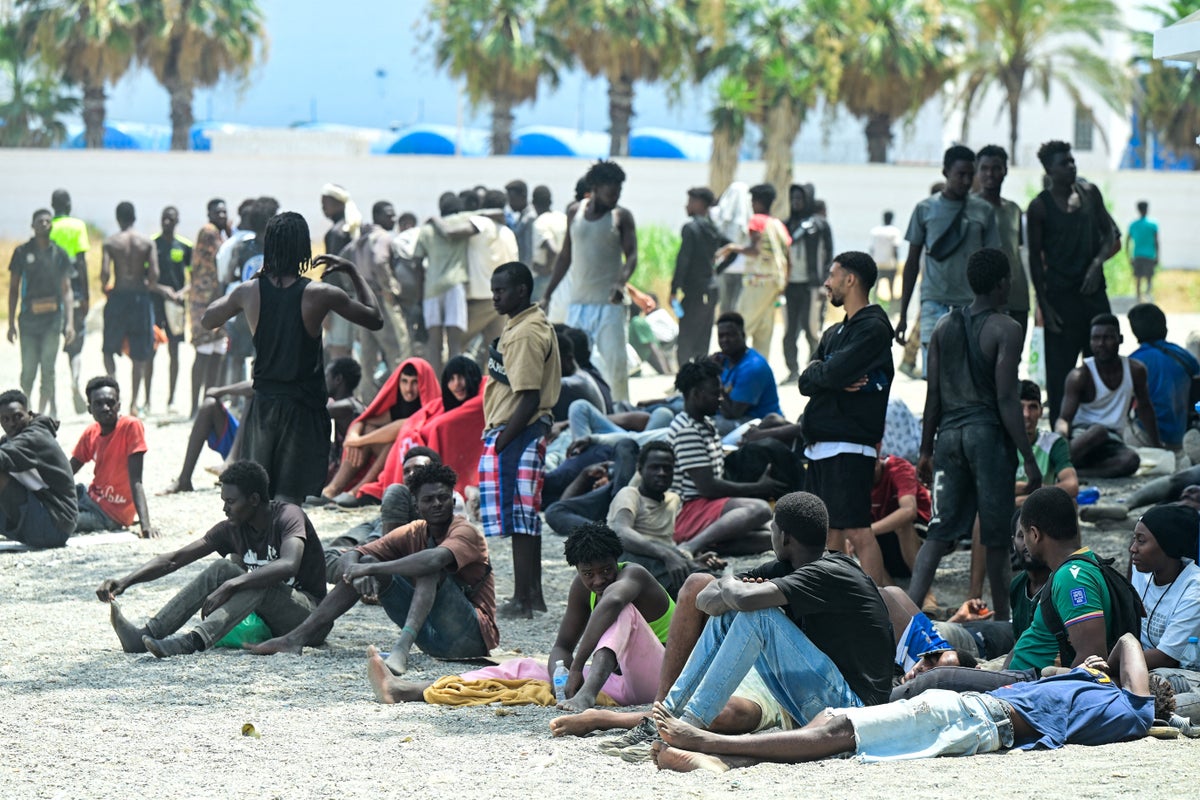
When thousands of migrants suddenly swam across the border into Ceuta, desperate for a foothold in Europe, the response from the continent's elite was not solidarity. It was silence. Then, condemnation. Spain called the reaction of its European Union neighbors what it truly was: selfish.
Cold. Calculated. Cruel.
Consider what happens next when solidarity dissolves into political theater.
Ceuta is a tiny Spanish territory on the North African coast. For most people in Brussels, Paris, or Berlin, it is a geographic footnote, a tiny pinprick on a distant map. But for the people living there, and for the young men and women swimming through the dark waters with their hopes tied to plastic bottles, it is the razor-thin edge between survival and erasure.
When the surge happened, local volunteers waded into the surf with blankets and shaking hands. They pulled shivering teenagers from the water. They wrapped thermal sheets around mothers whose eyes held the vacant stare of absolute exhaustion. They did what human beings are supposed to do when they see another drowning.
They reached out a hand.
Contrast that immediate, visceral humanity with the halls of power thousands of kilometers away. In the high-ceilinged conference rooms of the European Union, the crisis was handled not as a humanitarian emergency, but as a public relations problem. Bureaucrats adjusted their ties, debated legal frameworks, and weaponized euphemisms. They talked about migration flows, border security protocols, and strategic containment.
They did not talk about the children. They did not talk about the graves.
This is the fundamental disconnect of our modern geopolitical reality. We have built systems that prioritize the abstraction of stability over the reality of suffering. When a nation faces an unprecedented influx of human need, the immediate instinct of a unified union should be shared burden and shared grace. Instead, Spain found itself standing largely alone at the edge of the continent, holding up a mirror to a union that refused to look at its own reflection.
The death toll rose. That is a sterile statistic. Let us translate it into reality.
Imagine a family fleeing a life so devoid of possibility, so crushed by poverty or violence, that the open sea looks safer than staying put. Imagine packing a single waterproof bag with whatever documents or memories matter most. Imagine stepping into the black water at midnight, knowing how many have vanished beneath those exact waves.
Now, imagine reaching the shore, exhausted, salt-crusted, and shaking, only to find that the continent you believed was a beacon of freedom views you as a political threat.
That is not just a policy failure. It is a moral collapse.
Spain's leaders used the word "selfish" because no other term fit. When neighboring nations close their checkbooks, shut their borders to relocation quotas, and treat a humanitarian crisis as someone else's domestic inconvenience, they betray the very ideals they claim to champion. If a community can only afford its values when things are easy, those values are worthless.
We talk endlessly about human rights as long as they are comfortable. We write treaties, sign declarations, and broadcast pious speeches about dignity and respect. But the true measure of a society is never revealed in its best moments. It is exposed at the margins. It is tested at the borderlands, where the theory of our laws meets the reality of our actions.
The sea keeps coming. The tides rise and fall with the ancient, unyielding rhythm of the earth. The border fences remain, bristling with razor wire and watched by cameras.
Down on the sand, the footprint washes away with the next wave. But the stain of indifference remains, written in the cold silence of a continent that looked away when it mattered most.