The ink on the ledger is dry, but the weight of it is crushing a thousand miles away. In the high-ceilinged offices of Manhattan, figures dance across spreadsheets—billions of dollars in arrears, a staggering sum that feels like a mere abstraction. But for a peacekeeper standing on a dusty ridge in South Sudan or a health worker racing to contain a fever in a remote village, those numbers are not abstract. They are the difference between a radio that works and a radio that stays silent. They are the difference between a mission that saves a life and one that watches it slip away.
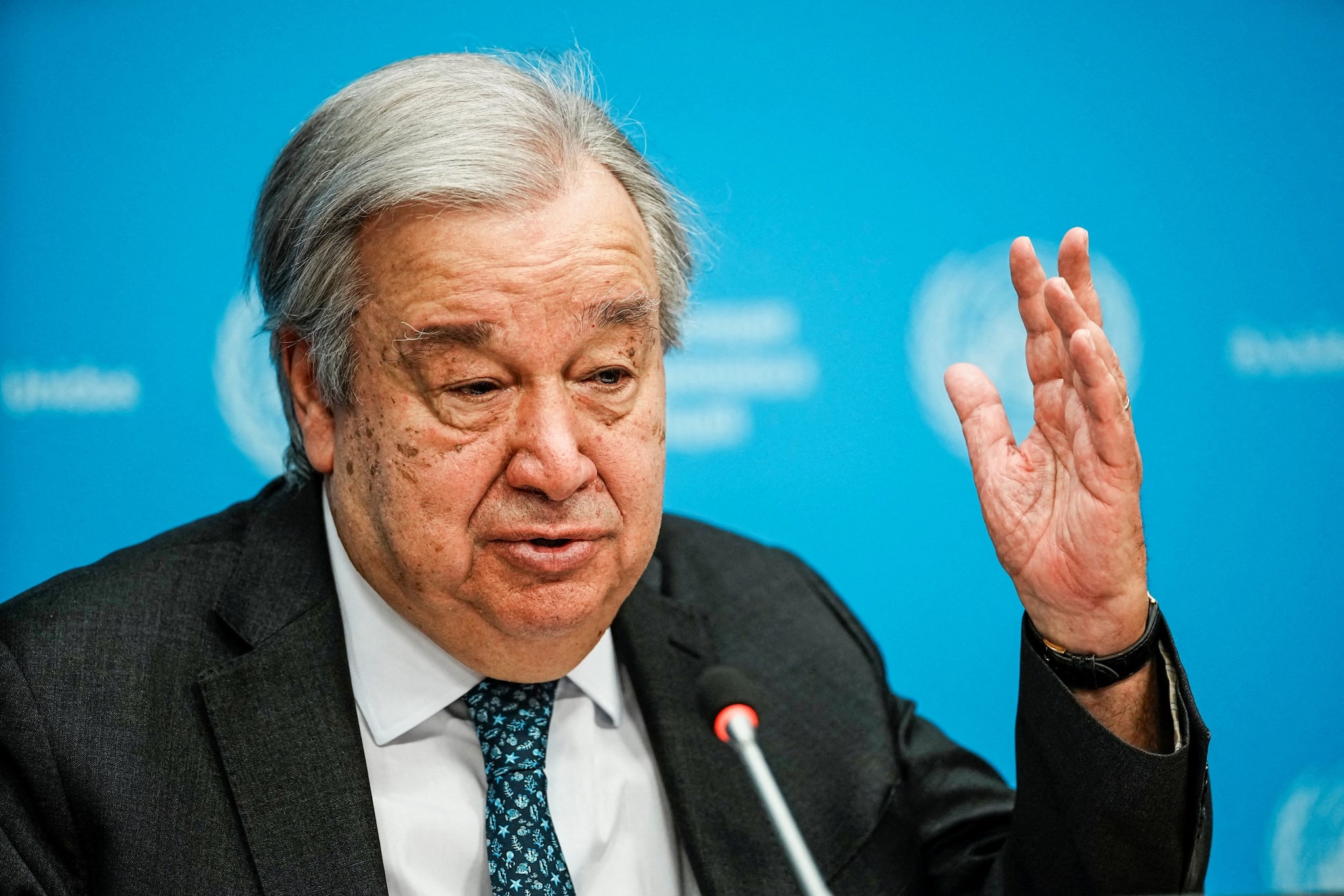
Antonio Guterres, a man whose job often requires him to be the world’s most polite solicitor, has finally stopped asking nicely. The UN Secretary-General recently made it clear: the money the United States owes the United Nations is not a suggestion. It is a debt. It is, in his words, non-negotiable.
When the world’s most powerful nation stops paying its bills, the machinery of global order begins to grind and groan. It is easy to view the UN as a bloated bureaucracy of diplomats and cocktail parties. That image is convenient for those who want to justify withholding funds. The reality is far grittier. The UN is a logistics company for the desperate. It is a shield for the vulnerable. When the funds dry up, the shield thins.
The Architect and the Debt
Imagine a man named Elias. He is a hypothetical composite of the thousands of field officers who keep the UN’s heart beating. Elias doesn’t care about the geopolitical posturing in Washington D.C. He cares about the fact that his team’s vehicles are running on fumes because the procurement budget has been slashed. He cares about the local staff members who haven't been paid in three months.
Elias represents the human cost of a political stalemate. When the United States—the UN's largest contributor—withholds hundreds of millions of dollars in regular budget and peacekeeping dues, it isn't just sticking it to "the bureaucrats." It is pulling the rug out from under Elias.
The United States has a complicated relationship with the UN. It was a primary architect of the institution after the smoke of World War II cleared, yet it has spent decades treating its membership fees like a cable subscription it keeps trying to cancel. At the heart of the current friction is a long-standing cap on how much the U.S. pays toward peacekeeping. While the UN assessment says the U.S. should cover roughly 27 percent of the peacekeeping budget, U.S. law caps that contribution at 25 percent.
Two percent. It sounds small. In a global economy, it’s a rounding error. But in the context of the UN's total budget, that gap has ballooned into a debt that totals over $1 billion.
A House Built on Credit
The UN operates on a shoestring that is constantly being frayed. Unlike a corporation, it cannot borrow money from a bank. It cannot issue bonds. It relies entirely on the checks sent by its member states. When the biggest check in the pile is missing a few zeros, the entire system enters a state of controlled panic.
Guterres has spent the last few years performing a fiscal miracle, moving money from one pocket to another just to keep the lights on. He has frozen hiring. He has canceled meetings. He has told departments to stop printing documents. These are the small, visible cuts. The invisible cuts are deeper.
Consider the "liquidity crisis." This is a dry term for a terrifying reality: the UN is frequently on the verge of running out of cash entirely. When cash reserves hit zero, the organization can’t pay its vendors. It can’t reimburse the countries—often developing nations like Bangladesh or Rwanda—that provide the actual boots on the ground for peacekeeping missions.
These nations are essentially lending money to the United States. They send their soldiers into harm's way, expecting the UN to cover the costs, only to be told that the check is stuck in the mail because a subcommittee in a distant capital is making a point about "efficiency."
The Power of the Purse as a Weapon
The argument often heard in the halls of Congress is that the UN is inefficient and biased. There is some truth to the claim that any organization of that scale has waste. However, withholding the budget is a blunt instrument that hits the wrong targets. It doesn't fire the person at the desk; it stops the person in the field.
The Secretary-General’s stance marks a shift from diplomacy to desperation. By calling the debt non-negotiable, he is pointing to the UN Charter—a treaty the U.S. signed and ratified. In the world of international law, these aren't donations. They are legal obligations.
If a citizen refuses to pay their taxes because they disagree with how the local school board spends money, the government doesn't congratulate them on their principled stance. It sends a notice. It adds interest. Eventually, it takes action. Guterres is sending the world’s most public notice.
The danger isn't just financial; it is existential. If the most powerful member of the club decides the rules don't apply to its wallet, why should any other country follow the rules regarding human rights, borders, or trade? The debt is a crack in the foundation.
The Ghost in the Machine
We often talk about "The UN" as if it were a sentient being, a giant blue entity that hovers over the globe. It isn't. It is a mirror. It reflects the collective will—or the collective apathy—of the nations that comprise it.
When the U.S. creates a shortfall, it creates a power vacuum. Other nations are more than happy to step in and fill the void, often with agendas that don't align with democratic values. By withholding funds, the U.S. doesn't gain leverage; it loses its seat at the head of the table. You cannot lead an organization you refuse to fund.
There is a certain irony in the fact that the money owed is often less than the cost of a single high-tech fighter jet program. For the price of a few planes that may never see combat, the U.S. could clear its ledger and revitalize the primary mechanism for preventing combat in the first place.
The Silence of the Unpaid
Back on that dusty ridge, the radio finally dies. The battery is spent, and there are no replacements in the supply room. The peacekeeper looks at the device, then at the horizon.
The silence that follows is the true sound of a budget crisis. It isn't the sound of a debate in a wood-paneled room. It is the absence of a warning. It is the gap where a negotiation should have happened. It is the void left behind when a promise is treated as a line item that can be deleted.
The billions of dollars are a mountain of paper, but the shadows they cast are human-shaped. Guterres isn't just fighting for a balanced ledger; he is fighting for the integrity of a handshake. If the word of the world's most powerful nation is only as good as its latest budget cycle, then the marble halls in New York are little more than a beautiful, empty tomb for an ideal we once believed in.
The debt remains. The clock keeps ticking. Somewhere, a door that should have been held open by a UN guard is swinging shut because there was no one left to pay for the hinge.