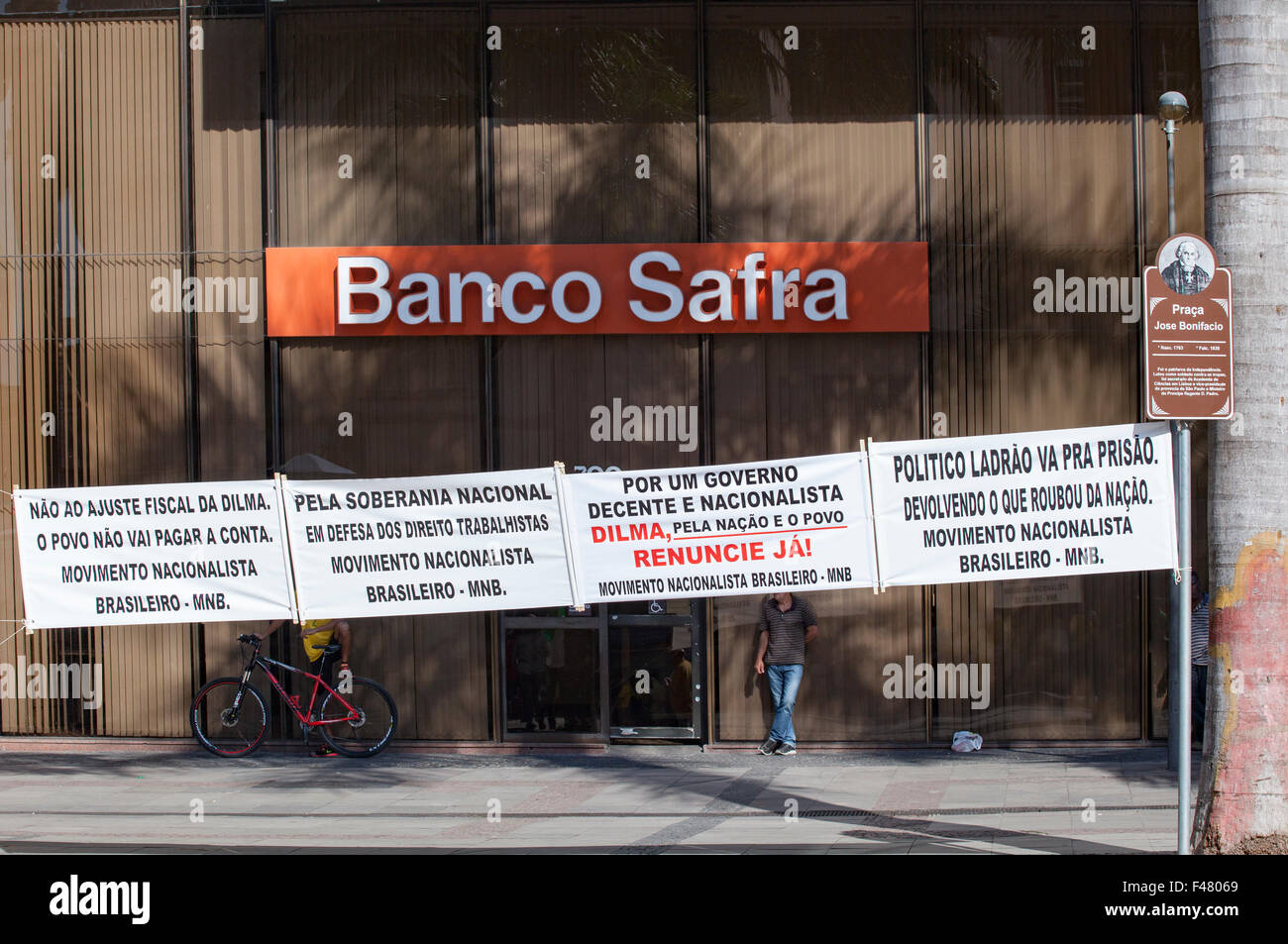
The financial press is currently drowning in a sea of predictable, copy-pasted hysteria. Every major outlet is running some variation of the same panicked headline: a massive corruption probe into Brazil’s top financial institutions is about to crash the markets, destroy investor confidence, and inevitably topple the sitting president in the upcoming election.
It is a beautiful, dramatic narrative. It is also completely wrong. Discover more on a related topic: this related article.
Mainstream analysts are looking at the smoke and assuming the palace is burning down. They fail to realize that in Brazilian politics, smoke is frequently a manufactured byproduct of the legislative engine. This scandal is not the harbinger of a political coup. It is the ultimate insurance policy for the incumbent administration.
To understand why, you have to stop viewing Latin American political economy through a sterilized, Western-centric lens. Political survival in Brasilia does not operate on the squeaky-clean principles of corporate governance. It operates on leverage, liquidity, and the strategic distribution of pressure. Further reporting by Associated Press explores related perspectives on this issue.
The Lazy Consensus: What the Pundits Get Wrong
The prevailing theory among market commentators goes like this: prosecutors uncover billions in illicit transactions stretching from private boardrooms to state-backed lenders. The public gets furious. The opposition capitalizes on the outrage. The stock market plunges, capital flees the country, and the president gets crushed at the ballot box.
This thesis assumes that voters punish corruption predictably and that elites are helpless against judicial overreach.
History proves the exact opposite. Look at the mechanics of previous Latin American anti-corruption campaigns, such as the sprawling Lava Jato (Operation Car Wash) probe. While it initially shattered the political establishment, the ultimate structural outcome was not a pristine, corruption-free utopia. It created a power vacuum that was rapidly filled by even more transactional political actors.
The current panic misses three fundamental realities of the Brazilian system:
- The Compromat Equilibrium: In a highly fragmented congress, a banking scandal does not isolate the president; it compromises everyone simultaneously. When everyone is guilty, the person holding the levers of state power possesses the ultimate shield.
- The Credit Illusion: Voters do not cast ballots based on balance-sheet integrity. They vote based on purchasing power. If the administration forces these same embattled banks to open the credit spigots to save their own skins, the short-term economic boost will easily outweigh the abstract moral outrage of a financial scandal.
- The Nationalist Deflection: A crisis in the banking sector allows the populist playbook to be deployed with devastating efficiency. The presidency can instantly pivot, branding the banks as predatory elites and positioning the administration as the defender of the working class.
Dismantling the "People Also Ask" Fallacies
If you search for insights on this crisis, the internet serves up a collection of deeply flawed questions built on shaky premises. Let us dismantle them one by one.
Will the banking crisis cause a catastrophic flight of foreign capital?
No. Wall Street possesses a notoriously short memory and a high tolerance for chaos if the yields are juicy enough. I have watched institutional investors publicly wring their hands over emerging market instability, only to quietly double down on high-yielding domestic debt behind closed doors.
Money does not care about ethics; it cares about risk-adjusted returns. Brazil’s central bank maintains some of the highest real interest rates in the world. As long as those rates remain elevated, the macro funds will stay. They view political theater as noise. The sophisticated players know that a banking system under regulatory fire is a banking system that is about to offer deeply discounted assets.
Can the opposition use this scandal to easily impeach the president?
They can try, but they will fail because they lack the structural leverage. To impeach a president in Brazil, you need the backing of the Centrão—the big, ideological-free bloc of centrist parties in Congress that effectively trades votes for pork-barrel spending and cabinet positions.
A banking scandal makes the Centrão more powerful, not less. The president will simply hand over control of regional banks or state-owned enterprises to buy their loyalty. The opposition cannot match that currency. The scandal actually increases the value of the president’s patronage network, locking in the very votes needed to kill any impeachment motion before it hits the floor.
The Mechanic of Captured Reform
Let us look at how this actually plays out in the real world. Imagine a scenario where a mid-sized private lender is caught laundering money for infrastructure bidding cartels. In a vacuum, that bank faces liquidation.
In reality, the executive branch steps in under the guise of "protecting systemic stability." The central bank orchestrates a bailout or a forced merger with a larger, state-aligned institution. In exchange for survival, the executives of that bank become entirely subservient to the finance ministry's policy goals.
Suddenly, that bank is extending low-interest agricultural loans to key electoral districts. It is funding municipal infrastructure projects in cities governed by swing-vote mayors. The scandal stops being a liability and becomes a subsidized campaign apparatus.
This is not a hypothetical theory. I have spent two decades analyzing corporate restructuring and sovereign risk across emerging markets. I have seen administrations use regulatory investigations to bludgeon defiant corporate executives into line, transforming corporate enemies into eager financiers of the state's political agenda.
The downside to this contrarian view? It is deeply cynical, and it means structural economic reform is dead for the next four years. Inflation will likely tick up as productivity takes a back seat to political survival. But if your goal is predicting who wins the next election, cynicism is the only reliable analytical framework.
Stop Looking at Ethics; Look at Liquidity
The fatal flaw of mainstream financial journalism is the tendency to moralize. Analysts write about what should happen in a textbook democracy instead of tracking where the actual capital flows.
[Mainstream View]  -> Scandal -> Public Outrage -> Political Collapse
[Realistic View]   -> Scandal -> State Leverage  -> Cheap Credit -> Electoral Victory
When a banking sector faces an existential regulatory threat, its priority shifts from maximizing shareholder value to purchasing political immunity. How do banks buy immunity? By keeping the domestic economy afloat during an election year. They buy government bonds. They roll over bad consumer debt to prevent a spike in unemployment. They fund the very social programs the president is campaigning on.
The president does not need to clean up the banking sector to win the election. The president just needs to keep the banks terrified enough to keep funding the illusion of prosperity until election day.
The smart money is not shorting Brazilian equities right now. The smart money is waiting for the panic to peak, buying up distressed corporate bonds, and positioning for the inevitable post-election liquidity surge that always occurs once the political theater concludes.
Turn off the cable news pundits weeping over the rule of law. The establishment is not collapsing. It is merely rewriting the terms of its survival.