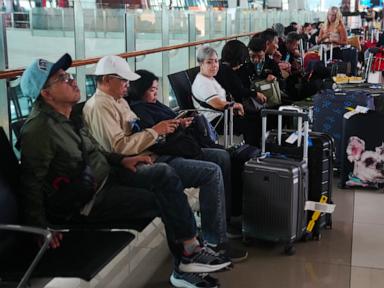
The media wants you to hyperventilate over a scrambled flight schedule. When an Amazon-contracted cargo jet overran a runway at Miami International Airport, killing five people and triggering an immediate Federal Aviation Administration ground stop, the mainstream travel press defaulted to its favorite panic script. Headlines wailed about frantic vacationers, snarled terminals, and cascading delays across the eastern seaboard.
This narrative is a comforting fairy tale. It lets passengers blame an isolated tragedy for their own systemic incompetence.
If a single runway excursion throws your entire itinerary into total chaos, the crash is not your primary problem. Your fragile logistics are. Professional travelers do not get trapped by local ground stops because they never build schedules with zero margin for error.
The Myth Of The Resilient Hub
Standard travel journalism treats major airports like self-healing organisms. The lazy consensus goes like this: when an unexpected disaster strikes a critical node like Miami, the system momentarily buckles, airlines scramble, and patient passengers merely endure an inconvenient weather-like delay until normal service resumes.
This view misunderstands modern aviation economics entirely.
Commercial aviation operates on hyper-lean asset utilization. Planes fly up to eighteen hours a day. Crews hit maximum legal duty limits down to the minute. Gate turns are squeezed into thirty-minute windows. When a major transit hub experiences a sudden closure, the resulting gridlock does not dissipate on its own; it amplifies geometrically down the line.
Yet, pointing at a catastrophe and crying foul ignores the core reality of systemic risk. Airports are high-throughput industrial zones, not calm public transit lounges. Runway overruns, mechanical groundings, and sudden airspace restrictions are recurring operational certainties. Pretending they are black swan events allows airlines and passengers alike to ignore structural fragility.
How To Stop Relying On Hope
Amateur travelers treat flying like a bus ride. They book tight connections, pick the absolute last flight of the evening to save fifty bucks, and assume that every link in the chain will hold firm. When a disruption hits, they crowd customer service desks, demanding miracles from gate agents who control zero inventory.
Real operational security requires a different playbook altogether.
- Build artificial redundancy: Never book a connection under ninety minutes at a major hub. If you are traveling for a high-stakes event, arrive twenty-four hours early. Treat your schedule like a military deployment, not a casual suggestion.
- Ditch legacy hub-and-spoke dependencies: If a route requires flying through a chronically congested mega-airport during peak storm or traffic seasons, look for point-to-point alternatives on smaller regional carriers, even if it costs slightly more upfront.
- Own your data: Do not wait for an airline app to push a notification twenty minutes after a gate change or ground stop goes live. Monitor live tracking tools and flight paths independently to secure rebooking options before the line at the counter forms.
The Brutal Truth About Systemic Failure
The human cost of the Miami disaster is devastating. Families are mourning, investigators are sifting through wreckage, and local infrastructure is reeling. Treating this human tragedy as a mere inconvenience for your weekend getaway is deeply narcissistic.
Conflating five deaths and severe structural damage with your inability to reach a resort on time is peak consumer entitlement. The aviation network did not break down because you were unlucky; it behaved exactly as an over-leveraged, hyper-optimized system behaves when it meets reality.
Stop expecting a flawless machine. Build your own margin, or accept that you are gambling with your time.