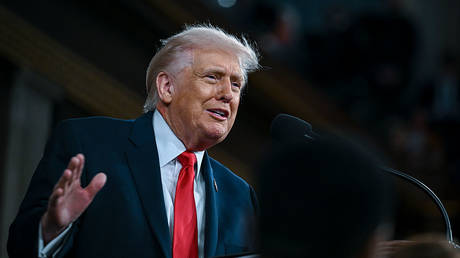
The 2026 State of the Union address, the longest in United States history at 108 minutes, served as a formal codification of the "Golden Age" doctrine. Beyond the populist rhetoric, the address outlined a systematic restructuring of federal power, fiscal policy, and international trade relations. This analysis deconstructs the administration's strategic framework, moving past the surface-level highlights to examine the underlying mechanisms of the current executive agenda.
The Tri-Pillar Economic Framework
The administration's economic strategy relies on three distinct levers: aggressive deregulation, targeted tax exemptions, and the weaponization of tariffs. This "One Big Beautiful Bill Act" (OBBBA) serves as the primary vehicle for these shifts.
1. Fiscal Incentive Reengineering
The OBBBA transitions from broad-based tax cuts to specific behavioral incentives. By exempting tipped income, overtime pay, and Social Security from federal taxation, the administration is attempting to increase the labor participation rate among low-to-mid-income brackets and seniors. The introduction of "Trump Accounts" (Section 530A) represents a shift toward privatized social safety nets, utilizing a $1,000 federal seed to incentivize long-term private capital accumulation for minors.
2. The Tariff-Tax Substitution Theory
A central, yet unproven, hypothesis presented was the potential for tariff revenue to eventually replace the federal income tax system. While the Supreme Court recently invalidated the use of the International Emergency Economic Powers Act (IEEPA) for broad tariff application, the executive strategy has pivoted to "alternative legal authorities." The administration views tariffs not merely as trade protection but as a primary revenue stream intended to decouple the federal budget from domestic productivity taxes.
3. Energy-Driven Deflation
The administration attributes the reported cooling of inflation—citing a 1.7% rate in the final quarter of 2025—to a supply-side surge in energy production. By increasing oil output by 600,000 barrels per day and removing regulatory barriers to pipeline construction, the strategy seeks to lower the "energy tax" on the supply chain. This is coupled with a mandate for technology firms to provide their own electricity for data centers, offloading the grid demand created by the AI sector to prevent a spike in consumer utility costs.
Border Sovereignty and the Zero-Admission Mandate
The administration's immigration policy has shifted from a management model to an absolute deterrence model. The "Zero-Admission" claim—stating no illegal entries in nine months—relies on a specific operational definition of admission, likely excluding those immediately expelled under emergency authorities.
The strategic logic follows a "Security-First" bottleneck:
- Military Presence: Utilizing the National Guard and active-duty assets to create a physical and psychological barrier.
- Designation of Cartels: By classifying Mexican drug cartels as Foreign Terrorist Organizations (FTOs), the administration has unlocked military and financial tools previously reserved for overseas counter-terrorism.
- The Laken Riley Act: This legislation mandates the detention of any undocumented individual charged with theft or violent crime, removing the "catch and release" judicial discretion that the administration identifies as a pull factor for migration.
Foreign Policy: The Peace Through Strength Equilibrium
The 2026 address highlighted a significant shift in the NATO burden-sharing model. The administration reported that allies have agreed to a 5% GDP defense spending target, more than double the previous 2% benchmark. This move is designed to reduce the U.S. "security subsidy" for Europe.
In the Western Hemisphere, the capture of a "criminal dictator" and the "Operation Midnight Hammer" strikes in Iran signal a return to "extrajudicial targeting" and preemptive strikes. The administration frames these actions as cost-saving measures that prevent prolonged regional wars by degrading the capabilities of adversaries before full-scale conflict occurs.
Institutional and Regulatory Deconstruction
The "War on Fraud," led by Vice President Vance, and the "DOGE" (Department of Government Efficiency) initiatives represent an internal audit of the federal apparatus. The logic here is that inflation is partially a product of "wasteful" federal spending.
- The 10-for-1 Rule: For every new regulation introduced, ten must be eliminated. This creates a regulatory "debt ceiling," forcing agencies to prioritize existing rules over new interventions.
- Merit-Based Personnel Policy: The termination of Diversity, Equity, and Inclusion (DEI) programs across the federal government and military is framed as an optimization of human capital, ensuring that "skill and competence" are the only variables in the federal hiring function.
Strategic Limitations and Structural Bottlenecks
Despite the optimistic tone, several structural risks persist:
- Legal Volatility: The Supreme Court’s rejection of broad tariff powers creates a continuous legal bottleneck for the administration’s trade-centric revenue model.
- Inflationary Counter-Pressures: While energy prices have dipped, the cost of housing (up 3.4%) and medical care (up 3.2%) remain high. The "Great American Health Plan," which aims to bypass insurance companies with direct subsidies, has yet to face a full-market stress test.
- Investment Credibility: The claim of $18 trillion in new investment commitments exceeds standard economic projections, suggesting these figures may include long-term projections or non-binding letters of intent rather than immediate capital outlays.
The administration’s path forward depends on the successful defense of its alternative legal authorities for tariffs and the ability of the private sector to absorb the workforce as federal roles are frozen or eliminated.
Would you like me to perform a comparative analysis of the current tariff revenue against historical income tax receipts to assess the feasibility of the administration's proposed tax-substitution model?