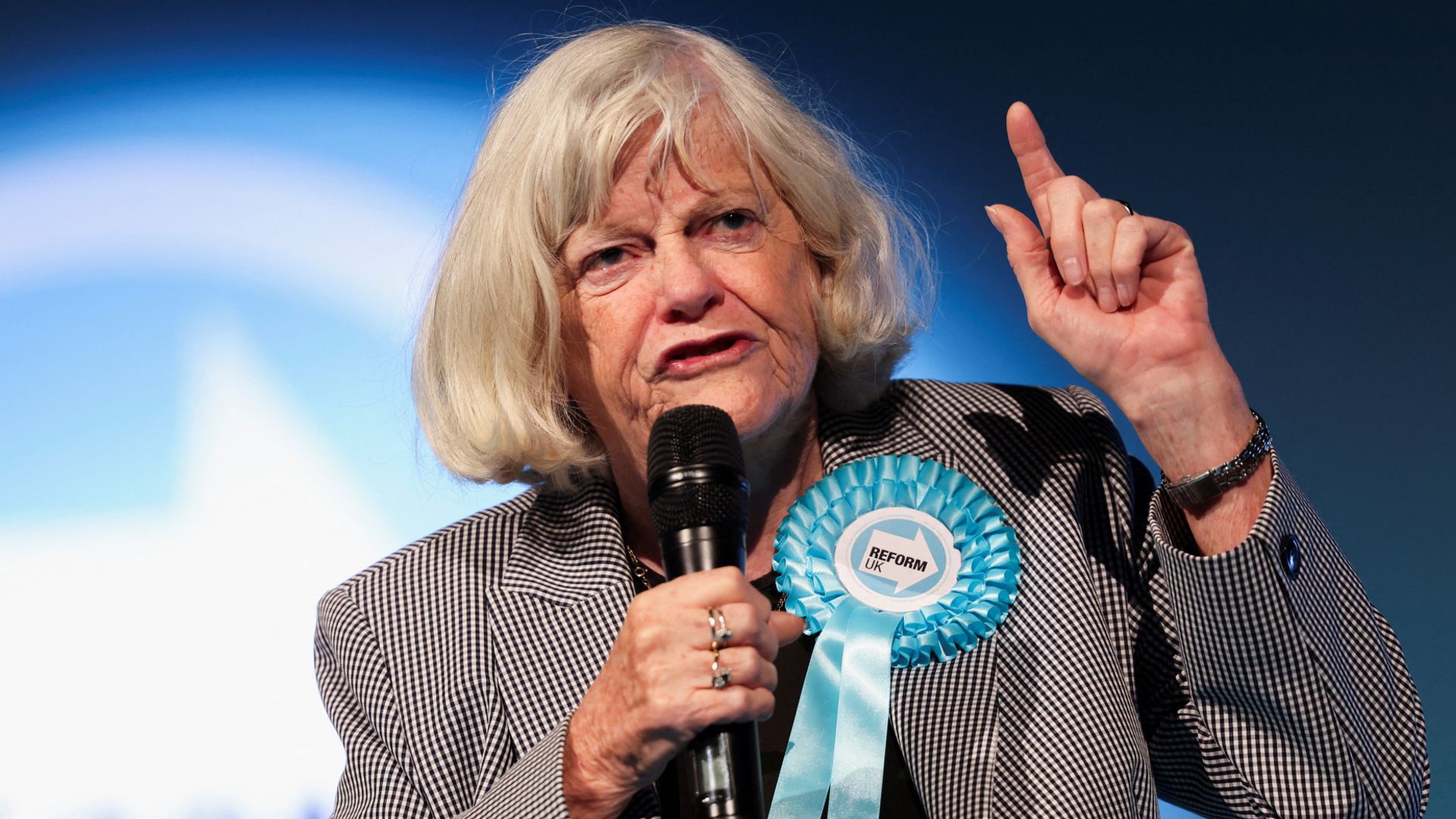
Ann Widdecombe, the former Conservative minister who transformed herself from a dogmatic Whitehall operator into a powerhouse of British right-wing populism, has died at the age of 78. Her management team confirmed her passing on July 9, 2026, triggering a wave of nostalgic tributes across the political spectrum. Yet, to treat her merely as a colorful Westminster relic or a prime-time television caricature misses the entire point of her career. Widdecombe was the bridge between old-school Tory authoritarianism and the modern insurgent right, weaponizing her refusal to compromise long before populism became the dominant political currency.
She did not follow the standard political playbook. Her career path defied the carefully managed public relations strategies that began to dominate British politics in the late 1990s. While her contemporaries hired spin doctors to soften their edges, Widdecombe sharpened hers, turning an uncompromising social conservatism into a highly marketable personal brand.
The Iron Minister and the Shadow of the Night
Widdecombe first entered Parliament in 1987, representing Maidstone. She quickly marked her territory on the hard right of the party, serving under John Major as an employment minister and later as a prisons minister. It was during her time at the Home Office that her fierce, unyielding worldview became obvious to the British public. She defended the practice of shackling pregnant prisoners during hospital visits, a policy that drew fierce condemnation from civil liberties groups but cemented her reputation among the Tory grassroots as a figure who favored punishment over platitudes.
Her political instincts were lethal. In 1997, following the catastrophic Tory electoral defeat to Tony Blair, she delivered a devastating blow to her former boss, Michael Howard, by declaring on the floor of the House of Commons that there was "something of the night about him."
The line became an instant classic of British political history. It single-handedly derailed Howard’s leadership ambitions at the time, demonstrating that Widdecombe was not just a loyal party soldier, but a dangerous independent actor who could break careers with a single phrase.
The Religious Rupture That Predicted the Brexit Fracture
Long before she walked away from the Conservative Party to join Nigel Farage, Widdecombe staged a highly public defection from another historic British institution. In 1993, she left the Church of England following its decision to ordain female priests. Her conversion to Roman Catholicism was not a private spiritual adjustment. It was a loud, defiant rejection of institutional compromise.
She argued that the Anglican Church preferred fashion over creed. In her eyes, absolute truth was not subject to democratic consensus or shifting societal norms. This exact philosophy would later dictate her approach to the European Union and national identity. Her religious certainty provided the foundation for her political certainty, making her completely immune to the standard pressures of political correctness.
Weaponizing the Screen
When she retired from the House of Commons in 2010, most commentators expected her to fade into a quiet retirement of writing detective novels. Instead, she entered the entertainment arena. Her appearance on the BBC’s Strictly Come Dancing in 2010 became a national phenomenon. She was dragged across the floor like a sack of coal, consistently receiving abysmal scores from the judges while winning the affection of millions of viewers who kept voting to save her.
It was a masterclass in anti-celebrity. By leaning into her lack of rhythm and treating the judges' critiques with visible amusement, she established a direct connection with the public that bypassed the traditional political press corps. Her later victory as runner-up on Celebrity Big Brother in 2018 followed the same pattern. She refused to budge on her traditionalist views regarding marriage, abortion, and gender, yet the audience respected her authenticity in an ecosystem built entirely on superficiality.
The Architect of the Insurgent Right
This immense public profile made her a devastating asset when she returned to active politics during the Brexit deadlock. When she joined Nigel Farage’s Brexit Party in 2019, it provided the movement with immediate institutional gravity. She was not an internet troll or a fringe activist. She was a former Privy Counsellor and shadow cabinet minister.
Her election to the European Parliament in 2019 was a direct challenge to the Westminster establishment. She used her maiden speech in Strasbourg to compare the UK’s departure from the EU to slaves turning on their masters, a characteristic piece of rhetorical escalation that outraged her opponents and thrilled her supporters. Her move to Reform UK in 2023 as an immigration and justice spokesperson ensured that the insurgent right maintained a direct line of credibility to older, traditionalist voters who felt abandoned by the modern, metropolitan Conservative Party.
She never sought to be liked by the media elite. She understood that in a polarized society, intense loyalty from your base is infinitely more valuable than mild approval from your critics. Her passing marks the end of a specific breed of British politician, one who viewed compromise not as a virtue, but as a form of moral rot. The political movement she helped build over her final decade will continue to shape the United Kingdom long after her final dance.