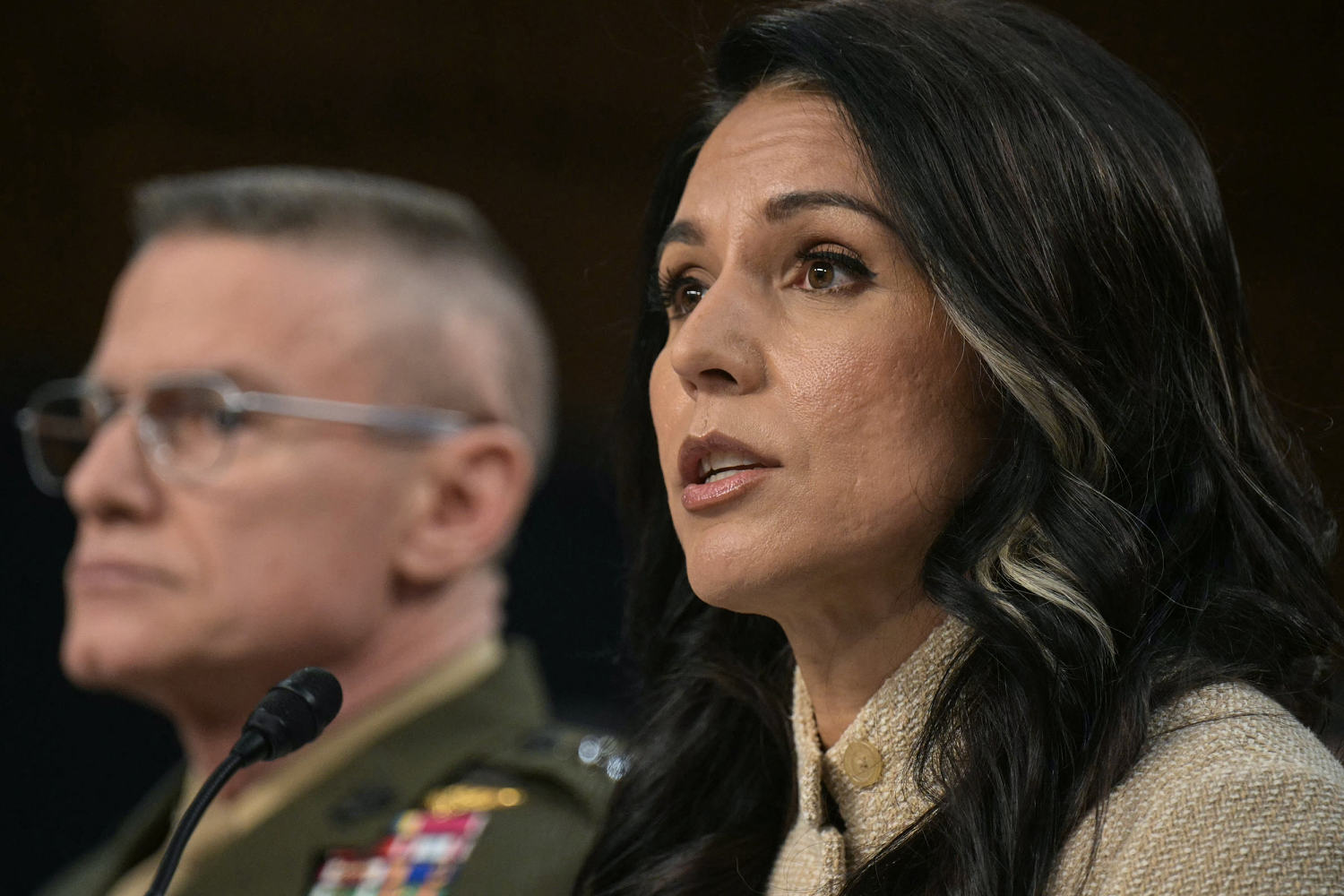
The tension between executive transparency and intelligence insulation creates a permanent friction point in American foreign policy. When a public figure, particularly one with a military or legislative background, declines to validate a specific intelligence characterization—such as the "imminent threat" designation regarding Iranian operations—they are not merely avoiding a question. They are navigating a trilemma of legal classification, political liability, and the structural limitations of the "imminence" doctrine under international law.
The debate surrounding Iranian kinetic capabilities and U.S. preemptive strikes centers on three distinct logical pillars: the evidentiary threshold for imminence, the political cost of intelligence validation, and the long-term utility of strategic non-commitment. For a deeper dive into similar topics, we suggest: this related article.
The Imminence Doctrine and the Threshold of Justification
In the context of the 2020 strike on Qasem Soleimani and subsequent Iranian escalations, the term "imminent threat" serves as a specific legal trigger rather than a casual description. Under the Caroline Test, a standard in international law, the necessity for self-defense must be "instant, overwhelming, leaving no choice of means, and no moment for deliberation."
When a political actor refuses to confirm imminence, they are often signaling a breakdown in the transition from raw signals intelligence (SIGINT) to actionable policy conclusions. This gap exists because "imminence" is a subjective temporal window. If the threat is "emerging" but not "instant," the legal justification for unilateral kinetic action shifts from Article 51 of the UN Charter to a more precarious interpretation of domestic executive power under Article II of the U.S. Constitution. For additional details on this issue, extensive coverage can be read on Reuters.
The refusal to use the word "imminent" functions as a hedge against future intelligence failures. If an actor validates the "imminence" of a threat that later proves to have been in a nascent planning stage, they become tethered to the subsequent policy failures. By maintaining a stance of skepticism, they decouple their political brand from the accuracy of the intelligence community’s top-line summaries.
The Political Cost Function of Intelligence Validation
Public figures operate under a cost-benefit framework when dealing with classified assessments. Validating an "imminent threat" claim carries a high reputational risk-adjusted cost.
- The Credibility Tax: If the threat does not materialize or is later debunked, the validator loses leverage in future security debates.
- The Procedural Constraint: Confirming imminence often implies support for the specific military response taken. For those advocating for non-interventionism or "Restraint" (a specific school of international relations theory), acknowledging imminence provides the opposition with the moral and legal high ground to justify expanded conflict.
- The Information Asymmetry Gap: Legislators often receive "Gang of Eight" briefings that contain more nuance than the public narrative. A refusal to simplify this nuance into a binary "yes/no" on imminence is an attempt to respect the complexity of the underlying data.
This skepticism often stems from a historical analysis of the intelligence-to-policy pipeline. In instances like the 2003 Iraq intervention, the "imminence" of weapons of mass destruction was a product of analytical layering where probabilities were presented as certainties. A sophisticated analyst recognizes that declining to confirm a threat is a mechanism to force the executive branch to provide a higher "burden of proof" for military escalation.
The Structural Mechanics of Iranian Kinetic Strategy
Iran’s regional strategy is built on asymmetric gray-zone operations. These are designed to remain just below the threshold of "imminent threat" to avoid a full-scale conventional response from the United States, while still exerting pressure through proxies.
- Pillar 1: Proxy Pluralism. By utilizing groups like Hezbollah or the Houthis, Iran creates "plausible deniability" which complicates the "imminence" calculation for U.S. planners.
- Pillar 2: Temporal Stretching. Iran often signals intent for months before acting, effectively "cooling" the imminence of the threat to make a U.S. preemptive strike appear like unprovoked aggression to the international community.
- Pillar 3: Geographic Dispersion. Threats are rarely localized to a single point of failure, forcing the U.S. to spread its SIGINT resources thin, which increases the margin of error in intelligence reporting.
When a commentator or politician declines to label these maneuvers as "imminent," they are highlighting the failure of the current U.S. strategic framework to categorize gray-zone threats. The binary choice between "imminent" and "non-existent" is a false dichotomy that ignores the reality of persistent, low-boil conflict.
The Bottleneck of Declassification
A significant reason for the friction between public statements and intelligence claims is the declassification bottleneck. The executive branch often holds "exigent evidence" that it cannot release without burning sources and methods (HUMINT). This creates a situation where the public is asked to trust an assessment without seeing the data.
For a figure like Tulsi Gabbard, who has consistently critiqued "regime change wars," the requirement for transparency is a foundational policy pillar. The refusal to validate the "imminent threat" narrative is a tactical move to demand the declassification of the logic behind the strike. It shifts the burden of proof back to the Pentagon.
This creates a stalemate. The intelligence community cannot show its hand, and the skeptic will not buy the bluff. The result is a fractured national narrative where "imminence" is a matter of political alignment rather than objective fact.
Strategic recommendation for interpreting security claims
Moving forward, analysts must move away from the "imminence" binary and adopt a probabilistic threat model. Instead of asking if a threat was "imminent," the inquiry should focus on the Capacity-Intent-Opportunity (CIO) Framework:
- Capacity: Does the adversary possess the physical hardware to execute the strike? (In the Iranian case: Yes, via ballistic missiles and UAVs).
- Intent: Have the communications (SIGINT) or movements (IMINT) indicated a directive to strike? (This is where the "imminent" debate usually collapses into ambiguity).
- Opportunity: Is there a window where U.S. defenses are vulnerable or the political climate favors an adversary strike?
Policy actors should be judged not by their willingness to parrot intelligence summaries, but by their ability to interrogate the CIO variables. The most rigorous path for any strategist is to maintain conditional skepticism: accepting the capacity of an adversary while demanding verifiable proof of intent before authorizing the transition from a defensive posture to a preemptive strike. This approach preserves the integrity of the "imminence" doctrine and prevents the "threat" label from being used as a tool of political convenience.
Would you like me to map the specific historical instances where the "imminence" designation was later retracted to provide a baseline for current skepticism?