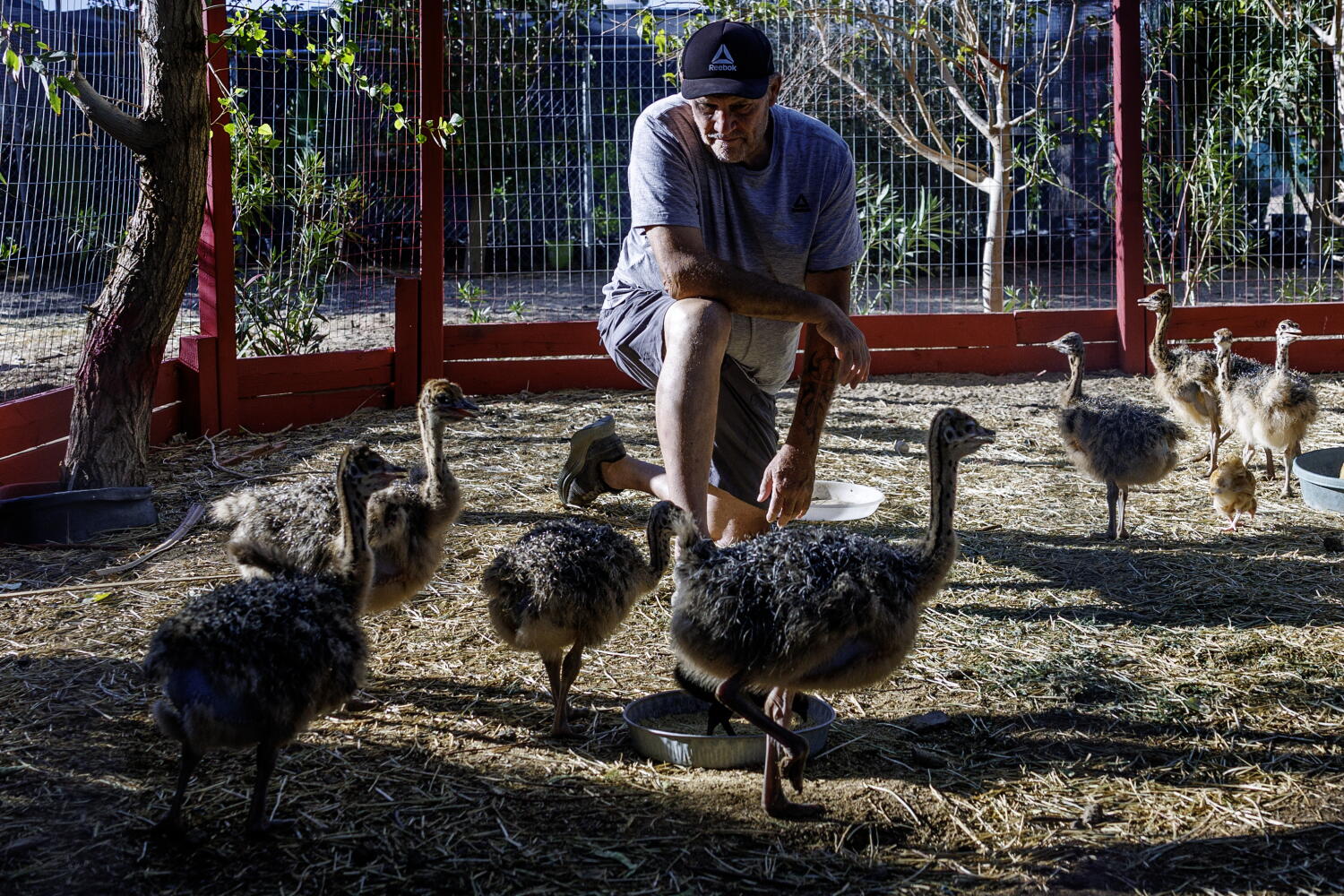
Protecting high-value exotic livestock in isolated geographic corridors requires structural asset hardening rather than reliance on localized law enforcement response times. Recent events in the Mojave Desert, highlighted by the targeted killings of multiple ostriches on a Newberry Springs ranch owned by local official Mike Matson, expose a severe vulnerability in rural property defense. When violent incursions target non-traditional livestock, the failure mode is rarely isolated to malicious intent alone; it is a systematic breakdown in perimeter deterrence, surveillance architecture, and risk mitigation economics.
Analyzing incidents of rural animal cruelty and poaching demands a shift away from emotional narrative framing toward an economic and operational security framework. Remote agricultural setups face distinct threat vectors that urban or suburban operations never encounter. Understanding why these high-value desert birds were targeted requires deconstructing the operational variables governing remote ranch security, the cost-benefit matrix of rural law enforcement, and the specific mechanics of perimeter failure.
The Triad of Rural Asset Vulnerability
Geographic isolation functions as a primary multiplier of risk for remote property owners. In expansive desert environments, response times from county sheriff departments routinely exceed thirty minutes, creating an operational window where malicious actors face zero immediate deterrence. This spatial isolation interacts with three specific vulnerability vectors that define the security posture of remote animal operations.
Perimeter Porosity
Traditional agricultural fencing is designed to keep large livestock contained, not to deter determined human intruders equipped with firearms or vehicles. Wire strands and basic post-and-rail configurations offer nominal physical resistance. Without integrated electronic tripwires, active optical sensors, or zoned physical barriers, the boundary between public access corridors and private animal enclosures remains porous. Attackers can scout, approach, and execute operations with total anonymity under the cover of vast open terrain.
High Visibility versus Low Surveillance
Exotic or large-scale alternative livestock, such as ostriches, possess high visual profiles against flat desert topography. Their size and distinct behavior patterns make them easily observable from distant roadways or public land boundaries. However, while the assets are hyper-visible to outsiders, the internal monitoring infrastructure of the ranch is frequently sparse. This asymmetry means an adversary can conduct continuous reconnaissance without detection while the property owner maintains a false sense of security derived simply from the expanse of the land.
The Enforcement Void
Rural law enforcement agencies operate under severe resource constraints, spreading sparse patrols across thousands of square miles of unincorporated territory. Criminal actors calculate this probability distribution accurately. The expected cost of apprehension for committing a crime on a remote desert ranch is exceptionally low. When deterrence is absent from the legal and physical environment, rural properties effectively transition into unguarded targets where opportunistic or targeted aggression can occur repeatedly without immediate interdiction.
The Economic Mechanics of Livestock Targeting
The deliberate killing of non-traditional livestock on private land points to underlying motivations that extend beyond simple vandalism. Vandalism is typically indiscriminate and low-effort, whereas executing large avian species requires intent, specific equipment, and calculated risk-taking. Assessing the profile of such attacks requires analyzing the economic and psychological drivers that transform a remote ranch into a focal point for hostility.
Targeting prominent figures or distinct assets introduces an element of retaliatory or symbolic targeting. When a property owner holds public office or a visible community role, the private ranch becomes an extension of their public persona. The livestock function as high-value proxy targets. Injuring or killing these animals inflicts quantifiable emotional distress and financial loss while maximizing public shock value.
Conversely, purely predatory or thrill-based motivations rely on the psychological thrill of dominance in unmonitored spaces. The remote desert acts as a behavioral vacuum where social norms erode, and the relative anonymity emboldens actors who would otherwise be constrained by civil society. The lack of acoustic monitoring—such as gunshot detection systems—ensures that lethal actions remain silent to authorities until discovery hours or days later.
Deconstructing the Failure of Traditional Deterrence
Relying on reactive security measures guarantees failure in high-risk rural environments. Traditional ranch management focuses on husbandry, feeding schedules, and basic enclosure maintenance, treating security as an afterthought rather than an operational discipline. This creates systemic vulnerabilities that can be categorized through three operational failures.
- Absence of Layered Defense: Security relies on a single perimeter. Once that outer boundary is breached, all internal assets are completely exposed. Modern asset protection requires concentric circles of defense, where breaching the outer ring triggers immediate automated responses long before physical contact with the livestock is possible.
- Static Monitoring: Fixed-position cameras, when present, suffer from predictable blind spots, limited power supplies, and vulnerability to physical sabotage or ballistic elimination. Without redundant, mobile, or AI-driven motion tracking, static setups fail to capture dynamic threats moving across rugged terrain.
- Unalerted Asset Bases: Animals housed in open-air desert pens lack automated alert mechanisms. Unlike indoor industrial livestock operations equipped with biometric or environmental sensors, outdoor desert birds register distress only through behavioral changes that human managers observe hours later during routine checks.
Transitioning to Hardened Rural Operations
Mitigating the threat of targeted violence against remote animal assets requires adopting industrial-grade security paradigms adapted for agricultural environments. Property owners must abandon the assumption that open land offers inherent safety through obscurity.
Deploying thermal imaging arrays combined with localized radar detection fundamentally alters the risk calculus for potential intruders. Unlike standard optical cameras, thermal systems operate effectively across complete darkness and variable weather conditions, stripping away the concealment advantages of the desert night. Integrating these sensors with automated acoustic gunshot locators drastically shortens the detection-to-response timeline, bridging the gap left by distant sheriff patrols.
Physical hardening must match technological upgrades. High-value animal enclosures require reinforced perimeter barriers augmented with multi-zone intrusion detection. Establishing secure, inner holding zones where vulnerable livestock can be moved during high-risk periods—such as overnight or during periods of public controversy involving the owner—limits exposure.
Operational security protocols must also be formalized. Varying daily routines, implementing strict visitor logging, and establishing rapid communication channels with neighboring remote landowners create a localized intelligence network. Adversaries rely on predictability; disrupting routine patrol patterns and surveillance routines shatters their planning assumptions.
Deploy armed private security patrols or establish a permanent deterrent presence during high-threat windows if local law enforcement response times remain prohibitive. Resource allocation must directly match the asset value being protected. Treating high-value exotic livestock with the same security rigor applied to commercial industrial sites eliminates the soft-target profile that invites malicious intervention.