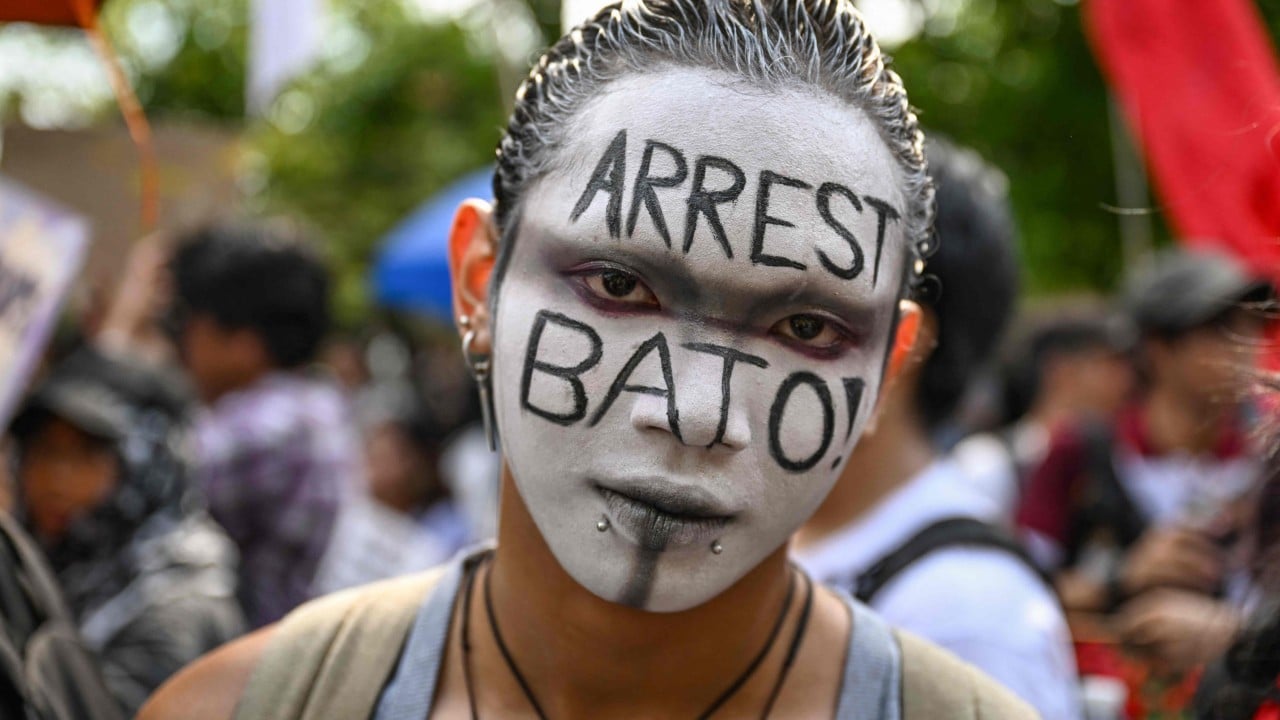
The interaction between sovereign legal systems and supranational courts is governed by structural friction, not consensus. The Supreme Court of the Philippines demonstrated this reality in its 9–5–1 en banc vote denying Senator Ronald "Bato" dela Rosa’s prayer for interim judicial relief. The petitioner sought a temporary restraining order (TRO) or a status quo ante order to insulate himself from an unsealed International Criminal Court (ICC) arrest warrant linked to the 2016–2018 anti-narcotics campaign.
By separating the immediate demand for an injunction from the broader constitutional questions, the high court exposed a critical systemic vulnerability: the intersection of local enforcement mechanics, international treaty obligations, and the domestic definition of a fugitive from justice.
The Three Pillars of the Sovereign-Supranational Conflict
The litigation brought by the former national police chief exposes three independent structural variables that dictate whether international criminal mandates can execute within a non-cooperating sovereign state.
       [Sovereign-Supranational Conflict]
                       │
     ┌─────────────────┼─────────────────┐
     ▼                 ▼                 ▼
[Temporal         [Enforcement      [Domestic Judicial
 Jurisdiction]    Mechanics]         Standing]
     │                 │                 │
(Rome Statute     (Interpol Red     (Fugitive Status
 Article 127)     Notices/DILG)      Waives Relief)
1. The Temporal Jurisdiction Continuum
The cornerstone of the petitioner’s strategy relies on the assertion that the Philippines’ formal withdrawal from the Rome Statute, effective March 17, 2019, nullifies the ICC's authority. This argument misinterprets the operational boundaries of Article 127 of the Rome Statute.
Under international law, withdrawal acts as a forward-looking termination of treaty duties; it does not retroactively erase obligations incurred while the state was a signatory. Because the ICC prosecutor initiated a formal preliminary examination in February 2018—prior to the expiration of the one-year notification period required for withdrawal—the court retains active temporal jurisdiction over acts committed during that active window.
2. Enforcement Mechanics and Institutional Bifurcation
A major operational bottleneck exists between international judicial intent and domestic police capability. The ICC lacks an independent enforcement arm, relying entirely on municipal authorities to execute its warrants. In the Philippine context, this creates a split in institutional behavior:
- The Executive Positioning: The Office of the Solicitor General (OSG) and the Department of Justice (DOJ) have moved toward explicit compliance, stating that the state is bound by international law obligations that survive treaty withdrawal.
- The Operational Layer: The Department of the Interior and Local Government (DILG) maintains that domestic police forces cannot directly execute a foreign warrant unless it undergoes a specific administrative transformation, typically through an Interpol Red Notice routed through the Philippine Center on Transnational Crime (PCTC).
3. The Judicial Doctrine of Standing and Flight
The third pillar involves the domestic legal consequences of evasion. The OSG argued that the petitioner’s physical absence from public view and subsequent departure from the Senate premises under irregular circumstances alters his legal status.
Under established Philippine jurisprudence, an individual who actively avoids the reach of law enforcement is categorized as a fugitive from justice. This status triggers an automatic waiver of the right to seek affirmative relief from domestic courts. The Supreme Court's refusal to issue a TRO validates this tactical framework, determining that an individual cannot simultaneously reject the authority of executive law enforcement while demanding protective intervention from the judiciary.
The Mechanics of Structural Degradation: From Protective Custody to Flight
The timeline between the unsealing of the confidential ICC warrant on May 11, 2026, and the Supreme Court’s ruling on May 20, 2026, highlights how institutional protections degrade under legal pressure.
[May 11: Warrant Unsealed] ──> [Senate Protective Custody] ──> [May 13: Staged Senate Disruption] ──> [May 14: Flight/Escape] ──> [May 20: SC TRO Denial]
The initial defensive strategy relied on the principle of parliamentary privilege and legislative immunity. When National Bureau of Investigation (NBI) agents attempted to intercept the petitioner at the Senate premises, the chamber invoked its internal autonomy to offer protective custody behind a perimeter of legislative security.
This protective barrier failed due to structural instabilities within the political coalition itself. The simultaneous legislative push for the second impeachment of Vice President Sara Duterte fractured the political shield that previously protected key actors of the prior administration.
The introduction of physical instability—specifically reports of gunfire within the Senate compound and the petitioner's subsequent departure in a colleague's vehicle—rendered the legislative immunity defense useless. By shifting from a position of institutional defiance to physical flight, the petitioner changed the legal calculation from a complex question of constitutional privilege to a straightforward matter of criminal evasion.
The Asymmetrical Impact on Institutional Credibility
The current legal stand-off reveals a stark asymmetry in how justice is distributed across different socio-economic strata. This gap damages the institutional credibility of domestic legal systems.
| Operational Variable | Extrajudicial Counter-Narcotics Enforcement (2016–2018) | High-Level Accountability Process (2025–2026) |
|---|---|---|
| Target Profile | Low-level street dealers and economically vulnerable populations. | Senior political actors and top-tier law enforcement commanders. |
| Procedural Velocity | Immediate execution via lethal force, often justified through unverified claims of armed resistance (nanlaban). | Multilateral legal actions, confidential warrants, and prolonged appeals over several years. |
| Institutional Shielding | Zero access to protective mechanisms or legal defense infrastructure. | Use of parliamentary privilege, specialized state security details, and direct access to Supreme Court en banc reviews. |
| Systemic Outcome | Broad, undocumented loss of life without formal trial or evidentiary discovery. | Complex debates over state sovereignty, international treaty interpretations, and jurisdictional boundary lines. |
This asymmetry shows that the technical tools of due process, constitutional exceptions, and jurisdictional challenges are effectively reserved for individuals who hold significant state power. For ordinary citizens during the anti-drug campaign, law enforcement functioned through direct, unmediated physical force. For the architects of that campaign, the law becomes a complex shield of procedural delays and jurisdictional exceptions.
Strategic Forecast and Enforcement Matrix
The Supreme Court’s denial of the TRO does not resolve the core challenge regarding the validity of the ICC warrant; it merely clears the legal path for executive enforcement actions. Moving forward, the confrontation will follow one of two structural tracks:
The Interpol Diffusion Pathway
If the executive branch chooses to minimize direct domestic political friction, it will defer execution until Interpol processes a formal Red Notice. This mechanism provides the DILG and the Philippine National Police (PNP) with a neutral administrative mandate, allowing the state to frame the arrest as a routine international law enforcement obligation rather than a politically motivated move against a sitting senator.
The Fugitive Forfeiture Doctrine
The DOJ will likely use the petitioner’s current lack of a verified physical location to file motions to dismiss the main petition still pending before the Supreme Court. By securing a formal ruling that classifies the petitioner as an active fugitive, the state can permanently strip him of his ability to challenge domestic enforcement mechanisms, forcing a choice between indefinite evasion or surrender to international custody in The Hague, where former President Rodrigo Duterte is already detained.