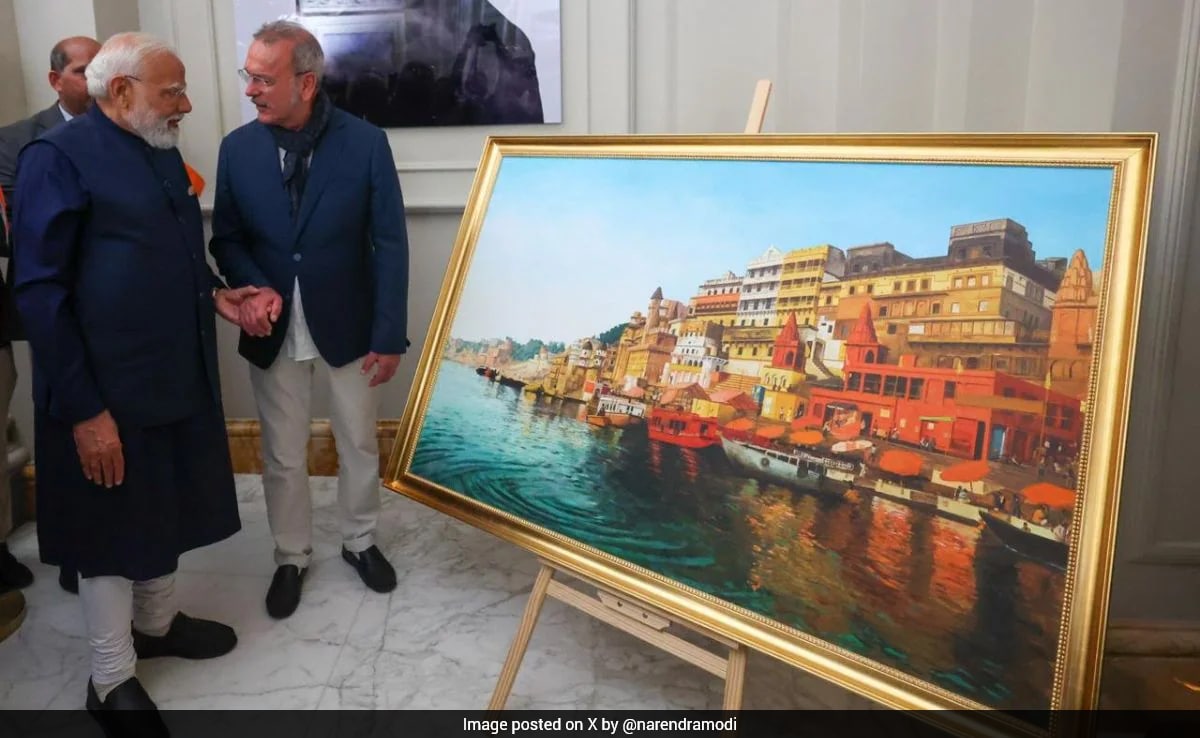
Geopolitical alignment is traditionally measured through hard assets: bilateral trade volumes, defense procurement contracts, and foreign direct investment (FDI) inflows. However, the structural optimization of a strategic partnership requires a parallel infrastructure of soft power to lower transactional friction between nations. When Indian Prime Minister Narendra Modi accepted a mixed-media painting titled "Holy Varanasi" from Italian artist Giampaolo Tomassetti during his official visit to Rome, the interaction was framed by mainstream media as a simple cultural exchange. A rigorous analysis reveals it as a deliberate application of asymmetrical soft power designed to reinforce the India-Italy Joint Strategic Action Plan (2025–2029).
By analyzing the mechanics of this interaction, we can map how localized cultural symbols are converted into diplomatic leverage, shifting state-level interactions from transactional deals to integrated strategic alliances.
The Strategic Framework of Cultural Asymmetry
Cultural diplomacy operates on a specific cost-benefit function. Unlike economic concessions, which carry a direct fiscal cost, soft power initiatives generate high symbolic returns with minimal budgetary layout. The presentation of the Varanasi painting highlights a three-part framework used by modern states to validate bilateral proximity.
1. The Verification of Long-Term Civilizational Interest
The interaction relies on the long-term credibility of the cultural actor. Tomassetti is not a temporary participant in cultural exchange; his engagement with Indian heritage spans more than 40 years.
- The 1980s Baseline: Began as an illustrator for foundational Vedic literature, establishing historical baseline credibility.
- The Monastic Phase: Spent nine years living as a monk under the name Jnananjana Dasa, working directly with the Bhaktivedanta Book Trust.
- The Masterpiece Timeline (2008–2013): Spent five years studying text and over a decade executing a series of 23 to 25 large-scale oil paintings depicting scenes from the Mahabharata, currently housed at the Museum of Sacred Art at Villa Vrindavana in Florence.
By highlighting this specific timeline, the diplomatic apparatus shifts the narrative from a superficial political photo-op to a long-standing, structural connection between European artistic tradition and Indian philosophy.
2. The Integration of High-Value Artistic Traditions
The artistic style of the painting serves as a visual representation of bilateral integration. Tomassetti's work uses classical European realism and Renaissance oil and acrylic techniques to depict Indian historic epics. This creates a distinct hybrid aesthetic:
[Classical European Realism / Renaissance Technique]
                       +
[Indian Spiritual Narratives & Vedic Iconography]
                       =
[High-Value Cross-Cultural Symbolic Capital]
This structural crossover combines the dramatic lighting, detailed anatomy, and emotional depth of Western classical art with the complex themes of the Bhagavad Gita and the Ramayana. The resulting artwork functions as an artifact that honors both the host nation's artistic history and the visiting nation's spiritual traditions.
3. Target Constituency Alignment
The specific focus of the artwork, Varanasi (Kashi), is highly strategic. Varanasi is not just an ancient city; it is the political constituency of the Prime Minister and a central symbol of India's cultural identity.
By centering the exchange on "Holy Varanasi," the host country's cultural ecosystem sends a direct signal of respect to the leadership of the visiting state. This transforms a standard diplomatic gift into a personalized acknowledgment of identity.
Economic and Security Implications of Soft Power Foundations
Cultural alignment is not an end in itself; it functions as a lubricant for complex economic and defense negotiations. The meeting between the two leaders in Rome occurred alongside major advancements under the Joint Strategic Action Plan 2025–2029.
The relationship between soft power validation and hard economic metrics can be mapped using a standard optimization model:
$$Bilateral\ Friction = \frac{Geopolitical\ Divergence}{Cultural\ Capital + Institutional\ Trust}$$
As cultural capital increases through successful high-profile engagements, the baseline friction for complex negotiations decreases. This dynamic directly impacts three key areas:
The Trade and Investment Corridor
Bilateral trade between India and Italy reached USD 16.77 billion in 2025, supported by a cumulative Foreign Direct Investment (FDI) inflow of USD 3.66 billion from April 2000 to September 2025.
The current diplomatic efforts focus on accelerating trade velocity, particularly following the progress on the India-European Union Free Trade Agreement (FTA). Cultural alignment helps build domestic public and political support in both nations for these deeper economic commitments.
Infrastructure and Transport Connectivity
A central component of the current talks is the operationalization of the India-Middle East-Europe Economic Corridor (IMEC). This multi-modal transit network requires long-term policy alignment across multiple jurisdictions.
Regular, positive public diplomacy helps sustain the political capital needed to maintain these long-term infrastructure commitments through changing domestic political cycles.
The Multilateral Policy Framework
The diplomatic agenda included a visit to the Food and Agriculture Organization (FAO) headquarters in Rome. By balancing defense and economic discussions with shared initiatives on global food security and cultural preservation, both nations present their bilateral alliance as a stabilizing partnership for international governance rather than a closed, exclusionary bloc.
Structural Limitations of Cultural Diplomatic Frameworks
While high-visibility soft power interactions are effective for public diplomacy, they face clear operational limits. Leaders and strategic planners must account for these constraints to avoid overestimating the impact of cultural capital:
- Asymmetric Public Perception: High-profile social media engagement can create an impression of deep alignment that may not match the actual speed of bureaucratic and regulatory changes.
- Vulnerability to Geopolitical Shocks: Cultural capital takes decades to build but can be quickly sidelined by sudden geopolitical shifts, protectionist trade policies, or differing positions on international conflicts.
- The Transactional Bottleneck: Soft power reduces friction but cannot replace core national interests. If tariff structures, technology transfers, or defense localization terms are unfavorable, cultural alignment alone will not secure a deal.
Strategic Playbook for Long-Term Alignment
To convert short-term diplomatic momentum into permanent strategic advantages, policy planners should move beyond occasional cultural exchanges toward structured institutional initiatives.
First, establish a dedicated India-Italy Cultural Technology Fund to finance collaborative digital preservation work. Using advanced European imaging technologies to archive ancient Indian texts creates a functional partnership that blends technical expertise with historical preservation.
Second, create a formalized academic exchange program focused on comparative philosophy and classical art restoration. Moving the study of these traditions from isolated artistic achievements into accredited university programs ensures a steady pipeline of cross-cultural expertise.
Finally, set up a joint industrial design lab that connects Italian industrial design expertise with Indian manufacturing scale. Applying high-end European design principles to Indian production lines scales the artistic fusion demonstrated by Tomassetti into a commercial framework, turning shared cultural appreciation into tangible economic output.