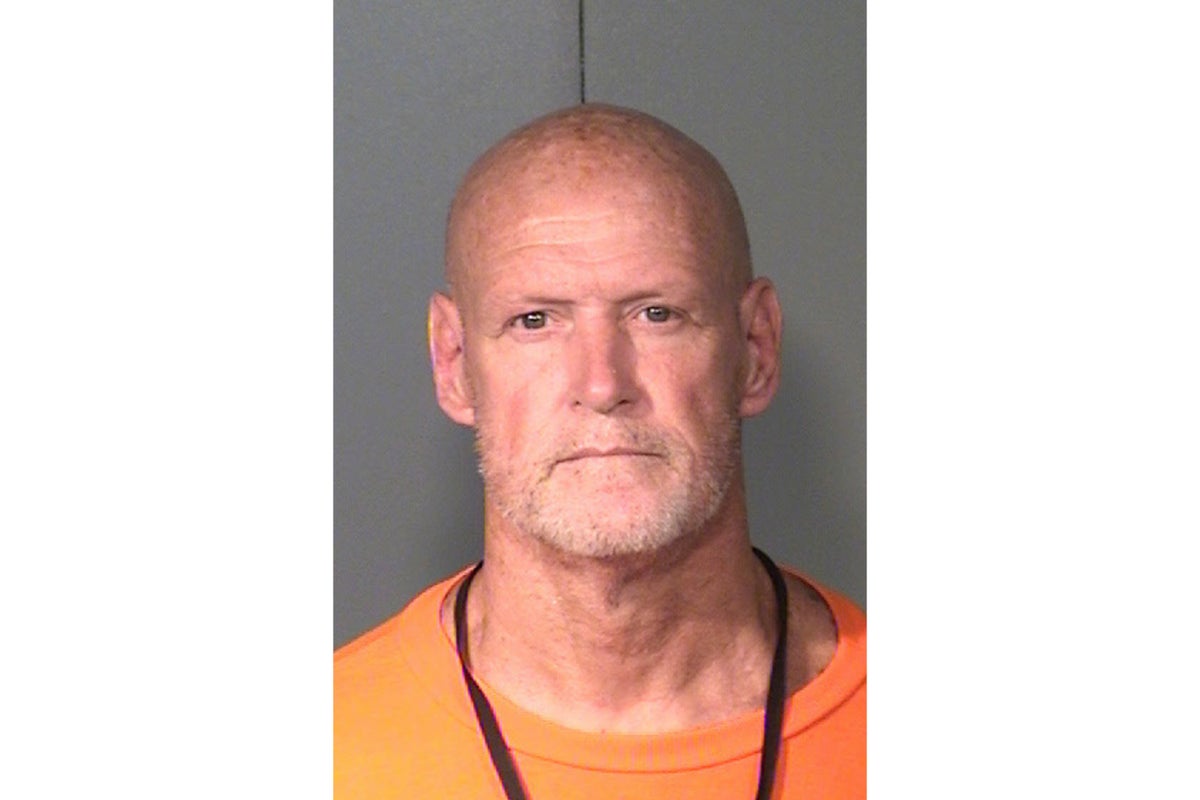
The execution of Leroy Dean McGill by lethal injection at the Arizona State Prison Complex in Florence terminates a twenty-four-year sequence of litigation rooted in a highly lethal mechanism of assault. Beyond the immediate criminal narrative, the case serves as a precise case study in the intersection of chemical weaponization, capital sentencing jurisprudence, and structural challenges within state execution protocols.
The legal and operational finality of this execution represents the resolution of specific statutory aggravators balanced against mitigation frameworks established under Arizona law.
The Chemistry of Aggravation: Weaponizing Viscosity
The capital sentence imposed on McGill in October 2004 relied heavily on the statutory aggravating factor of "especially cruel, heinous, or depraved" conduct under Arizona Revised Statutes § 13-751. The structural basis for this finding lies in the specific physical mechanics of the assault perpetrated on July 13, 2002, which resulted in the death of Charles Perez and severe injury to Nova Banta.
Standard hydrocarbon accelerants, such as commercial gasoline, exhibit low viscosity and high volatility. When ignited on a vertical surface or human tissue, unadulterated gasoline vaporizes rapidly and flows away from the ignition site, which limits the localized thermal transfer duration. To bypass this physical limitation and maximize thermal delivery, McGill synthesized a rudimentary incendiary gel by dissolving expanded polystyrene (Styrofoam) into gasoline.
This chemical combination alters the physical properties of the fuel through specific mechanisms:
- Viscosity Amplification: The dissolved polystyrene polymers transform the liquid hydrocarbon into a high-viscosity, adhesive gel. Upon contact with skin, the substance adheres to the epidermis, preventing victims or rescuers from wiping or shaking the fuel away.
- Thermal Retention: The gel state restricts fluid runoff, concentrating the thermal energy of combustion directly onto the underlying tissue. This maintains localized temperatures exceeding 800°C directly against the body.
- Suppression of Oxygen Deprivation Tactics: Traditional extinguishing methods, such as smothering with blankets, are rendered less effective because the adhesive gel contains volatile hydrocarbons trapped within a polymer matrix, maintaining combustion even under partial suppression.
The medical consequence for Perez was full-thickness (third-degree) burns covering approximately 80 percent of his body, leading to systemic shock and subsequent mortality. Banta sustained third-degree burns across 75 percent of her anatomy, requiring a prolonged medically induced coma and permanent structural scarring. The deliberate modification of the accelerant established the prerequisite legal threshold for exceptional cruelty, demonstrating an intentional engineering of prolonged physical agony.
The Constitutional Loophole: The Juror Discretion Bottleneck
The longevity of the post-conviction appeals in State v. McGill stems from a unique constitutional timing conflict that occurred during the summer of 2002. The assault took place on July 13, 2002. This date fell precisely within an administrative window created by the United States Supreme Court decision in Ring v. Arizona on June 24, 2002, and the subsequent corrective legislation passed by the Arizona Legislature on August 1, 2002.
Timeline of the 2002 Constitutional Conflict:
[June 24: Ring v. Arizona] ---> [July 13: McGill Offense] ---> [August 1: Legislative Fix]
Before Ring, Arizona law permitted a trial judge, acting independently, to determine the existence of aggravating factors and impose a death sentence. The Supreme Court ruled this mechanism unconstitutional under the Sixth Amendment, holding that any fact increasing a maximum penalty to death must be found by a jury.
The defense argued that because McGill committed the offense while the state's capital sentencing framework was structurally unconstitutional, applying the subsequent statutory fix violated the Ex Post Facto Clause. The Ninth U.S. Circuit Court of Appeals rejected this argument in a 2-1 decision, determining that the underlying liability for first-degree murder remained unchanged; the legislative update altered only the procedural mechanism (the decision-maker) rather than the substantive definition of the crime or its maximum penalty.
A secondary structural challenge involved juror instructions regarding sentencing alternatives. During the penalty phase, federal public defenders argued that jurors were misled concerning the availability of parole. At the time of the 2004 trial, Arizona had abolished parole for offenses committed after January 1, 1994, replacing it with a choice between death and natural life without the possibility of release.
The defense asserted that ambiguous instruction phrasing created a cognitive bottleneck where jurors feared that failing to vote for execution might eventually allow the defendant back into society via administrative parole. This issue was systematically litigated and denied based on the trial record, which demonstrated that the jury was explicitly presented with "life without parole" as the specific statutory baseline.
Mitigation Asymmetry and the Impact of Substance Abuse
The sentencing phase of capital cases functions as a binary evaluation where proven aggravating factors are weighed against mitigating evidence. The defense presented a tri-part mitigation framework:
- Developmental Trauma: Documented severe physical and sexual abuse within the foster care system.
- Neurological Deficits: Evidence of organic brain impairment and psychological immaturity.
- Chemical Dependency: Chronic, long-term substance abuse, culminating in daily methamphetamine consumption.
The operational reality of capital litigation reveals a sharp asymmetry in how juries evaluate these factors. While developmental trauma and neurological deficits are legally cognizable mitigation points, their real-world efficacy is frequently neutralized by the specific details of the crime.
In McGill’s case, the state counteracted the mitigation baseline by emphasizing conscious executive function. The preparation of the polystyrene-gasoline mixture requires deliberation, material sourcing, and processing time. This structural sequence directly undermined the defense claim that the defendant was acting in an uncontrollable, meth-induced state of psychosis at the moment of the offense.
The jury required less than sixty minutes of deliberation to reject the mitigating evidence as insufficient to warrant leniency, demonstrating that evidence of premeditated chemical modification carries significantly more weight than historical psychological vulnerability.
Chemical Execution Dynamics: The Pentobarbital Protocol
Arizona’s execution protocol has undergone significant technical modifications following the execution of Joseph Wood in 2014, which required fifteen doses of a two-drug combination (midazolam and hydromorphone) over a two-hour period. To address this operational vulnerability, the Arizona Department of Corrections, Rehabilitation and Reentry (ADCRR) transitioned to a single-drug protocol utilizing compounded pentobarbital.
Lethal Injection Chemical Progression:
[Pentobarbital Injection] -> [CNS Depression] -> [Respiratory Arrest] -> [Cardiac Standstill]
The execution protocol relies on a deliberate overdose mechanism designed to halt metabolic function systematically:
- Central Nervous System Suppression: Pentobarbital acts as a potent short-acting barbiturate. It binds to $GABA_A$ receptors in the central nervous system, increasing chloride ion influx and hyperpolarizing neurons. This induces immediate sedation, followed rapidly by deep surgical anesthesia and unconsciousness.
- Respiratory Arrest: As the plasma concentration of the drug rises, it suppresses the respiratory drive centers within the medulla oblongata, halting diaphragm movement and stopping gas exchange.
- Cardiac Standstill: Severe systemic hypoxia, combined with the direct myocardial depressant effects of high-dose barbiturates, stops cellular ATP production, leading directly to cardiac arrest.
The operational bottleneck in this protocol shifts from the drug's chemical efficacy to the logistics of supply chain procurement and vascular access. Because major pharmaceutical manufacturers restrict the use of their products in capital punishment, the state relies on compounding pharmacies to prepare custom batches of pentobarbital.
These compounded solutions carry strict expiration dates due to chemical degradation risks, requiring precise timing between procurement, laboratory potency verification, and execution scheduling.
Strategic Execution Forecast
The denial of McGill’s final emergency stays by the Arizona Supreme Court establishes a clear operational precedent for the state's handling of remaining death row cases. Following a lengthy hiatus between 2014 and 2022, the state has stabilized its single-drug pentobarbital protocol, successfully executing prisoners in 2022 and 2025 without the procedural disruptions that characterized earlier multi-drug attempts.
The legal strategy deployed by the state confirms that challenges based on constitutional timing gaps or historical juror instruction ambiguities have exhausted their systemic utility. Future capital litigation in Arizona will focus almost exclusively on the chemical integrity of the compounding process and the specific medical profiles of aging inmates regarding IV line placement.
Barring a comprehensive policy shift by the executive branch, Arizona's current legal framework is optimized to maintain a consistent execution schedule for inmates who have exhausted their standard tier of federal habeas corpus appeals.
The analysis of lethal injection protocols and capital litigation procedures highlights the operational complexities detailed in Arizona Capital Punishment History and Protocol Operations, which examines the administrative frameworks governing these state procedures.