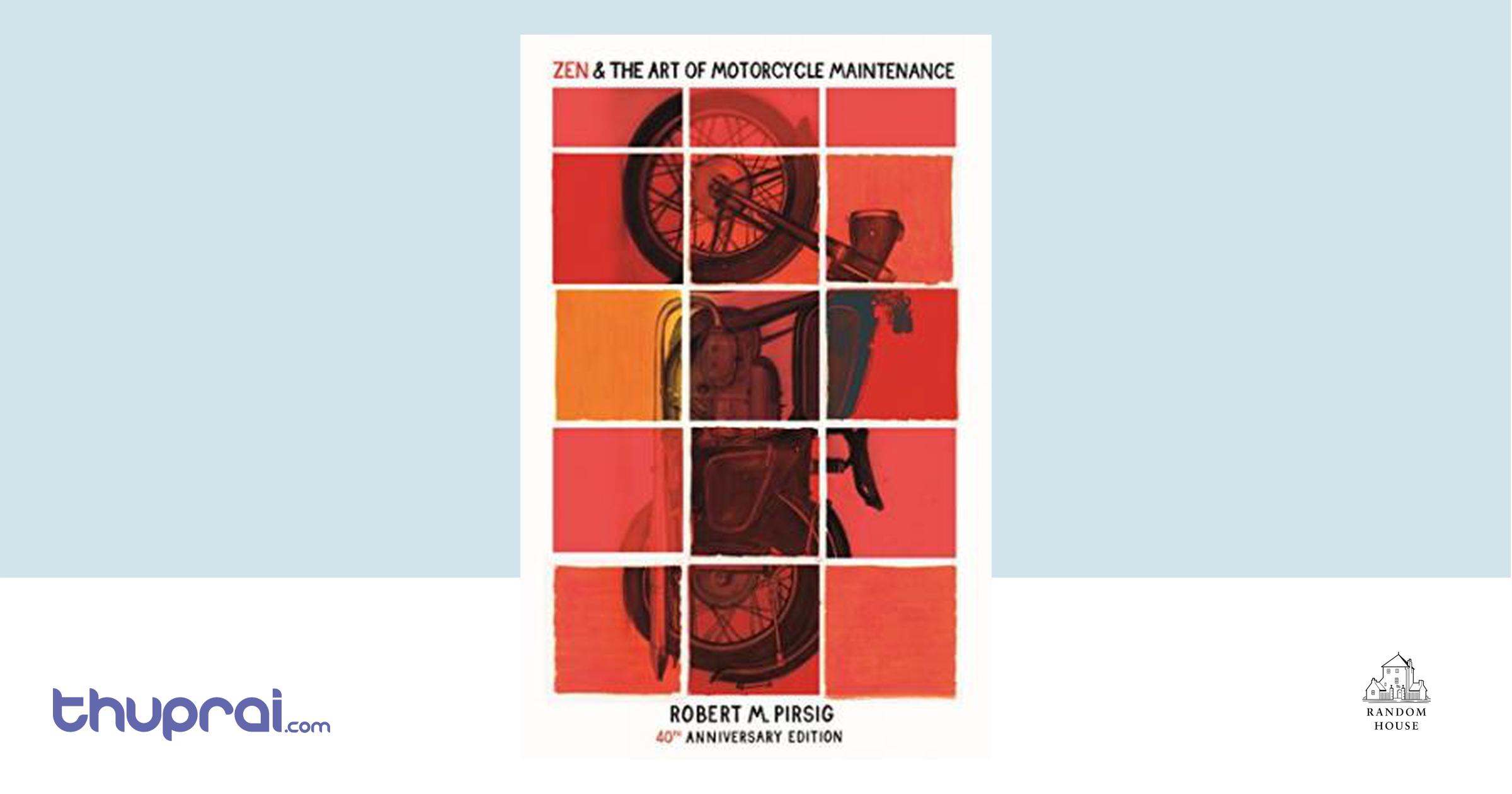
Robert Pirsig’s Zen and the Art of Motorcycle Maintenance is probably the most widely misunderstood book in the history of American literature. People pick it up expecting a repair manual or a breezy travelogue about the open road. Instead, they get a 400-page philosophical sledgehammer that dives into the nature of reality and the psychological collapse of a man named Phaedrus. It's weird. It’s dense. Honestly, it’s a bit of a miracle that it ever became a bestseller after being rejected by 121 publishers.
But here we are. Decades later, the book remains a cultural touchstone. Why? Because Pirsig wasn't really writing about carburetors. He was writing about how we live our lives and the crushing divide between people who care about how things work and people who just want to use them.
The Ghost of Phaedrus and the Road Trip
The plot is simple on the surface. A father and his son, Chris, are riding a motorcycle from Minnesota to California. They’re joined by their friends, the Sybarites, who represent the "romantic" view of life. These friends love the feeling of riding but hate the mechanical reality of the machine. When the bike breaks, they get frustrated. They see the machine as an alien, hostile entity.
Pirsig uses this to introduce his central concept: Quality.
He spends a massive chunk of the book exploring what "Quality" actually means. It’s not just "goodness" in a vague sense. For Pirsig, Quality is the event where the subject and the object meet. When you’re "in the zone" fixing a bike or writing a line of code, you aren't separate from the task. You are the task. That’s the Zen part. It’s about the lack of duality.
Why the "Stuckness" Matters
One of the most relatable parts of Zen and the Art of Motorcycle Maintenance is the discussion of "gumption traps." We’ve all been there. You’re working on a project—maybe it’s a home repair, a DIY desk, or a software bug—and you hit a wall. A screw strips. A piece of wood splits. You lose your "gumption."
Pirsig argues that this "stuckness" is actually the most important moment of the process.
Most people walk away. They get angry. They blame the tool. But Pirsig suggests that being stuck is the only time you’re truly learning. It forces you to look at the object with fresh eyes. You have to stop being a consumer and start being a participant. He calls this "Quality" awareness. If you can stay quiet and look at that stripped screw long enough, the solution will present itself because you've finally stopped fighting reality and started observing it.
The Romantic vs. The Classic
The book splits the world into two types of people.
- The Romantics: These folks see the world for its beauty and surface appearance. They love the roar of the engine but couldn't tell you how a spark plug works. To them, technology is a cold, ugly "system" that threatens their humanity.
- The Classics: These are the "how it works" people. They see the blueprints, the logic, and the underlying form. They find beauty in the efficiency of a piston moving in a cylinder.
Pirsig’s point? Neither side is complete.
Living purely as a Romantic makes you a victim of the world around you because you don’t understand how it functions. Living purely as a Classic makes you a robot. The goal of Zen and the Art of Motorcycle Maintenance is to bridge that gap. He wants us to find the art in the engine and the logic in the sunset.
The Tragic Reality Behind the Book
It’s impossible to talk about this book without mentioning the real-life tragedy that followed it. The "Chris" in the book was a real boy. He struggled with the same mental health issues his father did. In 1979, just five years after the book became a sensation, Chris Pirsig was murdered in a mugging outside the San Francisco Zen Center.
This adds a haunting layer to the narrative. When you read the "Afterword" in later editions, Pirsig’s grief is palpable. It changes the book from a philosophical exercise into a heartbreaking meditation on fatherhood and the fragility of the human mind. The "Phaedrus" personality Pirsig describes wasn't just a literary device; it was a representation of his own struggle with schizophrenia and the electroconvulsive therapy that "killed" his former self.
Actionable Insights for the Modern Reader
You don't need a vintage Honda CB77 to apply these ideas. The book is really a guide for the digital age, even though it was written before the internet existed.
- Stop Blaming the Tools. When your computer lags or your car won't start, notice your internal reaction. That anger is a "gumption trap." Instead of fighting the machine, try to understand the logic of why it’s failing.
- Cultivate "Care." Pirsig’s ultimate definition of Quality is simply "caring." If you care about what you’re doing, you’ll do it well. If you don't, no amount of skill will save the final product.
- Engage with the "Ugly" Stuff. Don’t just be a consumer of technology. Learn how one thing in your life actually works. Take apart a toaster. Change your own oil. Read a manual. Breaking the barrier between you and the "system" reduces anxiety.
- Embrace the Stuckness. The next time you hit a dead end in a project, don't walk away immediately. Sit with the problem. Recognize that the "stuckness" is the precursor to a breakthrough.
Zen and the Art of Motorcycle Maintenance teaches us that the way we treat a machine is a direct reflection of how we treat ourselves. If we’re sloppy with the bolt, we’re being sloppy with our own minds. The motorcycle is just a mirror.
To truly master the art of living, you have to be willing to get grease under your fingernails. You have to be willing to look at the world as it actually is, not just how you want it to feel. Quality isn't something you buy; it's something you practice through attention, patience, and a weirdly deep respect for the humble 10mm wrench.