You’ve probably seen the cover. It’s usually a minimalist white or beige paperback with a simple bow or a circle on the front. Eugen Herrigel’s Zen and the Art of Archery is one of those books that everyone owns but almost nobody actually understands. Honestly, most people treat it like a coffee table ornament. They think it’s a manual on how to hit a bullseye while meditating. It’s not. It’s a weird, frustrating, and deeply influential memoir about a German philosophy professor trying to survive the rigid discipline of 1920s Japan.
It’s messy.
Herrigel went to Japan to teach at Tohoku Imperial University, but what he really wanted was to understand mysticism. He figured the best way into the Japanese "soul" was through Kyudo—the traditional way of the bow. He spent years failing. He couldn't draw the bow right. He couldn't breathe right. He certainly couldn't hit the target. The book is basically a long-form complaint that turns into a spiritual breakthrough. But here’s the kicker: recent scholarship suggests Herrigel might have misunderstood his own teacher. That’s the real story.
The Myth of the "Spiritual" Shot
If you pick up a bow today, your instructor will talk about anchor points, draw weight, and sight pictures. In Zen and the Art of Archery, Herrigel’s teacher, Awa Kenzô, didn't care about any of that. Awa was a bit of a maverick in the Kyudo world. He had developed his own idiosyncratic style called Daishado-kyo, which was more of a "Great Way of Shooting" religion than a sport.
Awa told Herrigel that the "Great Doctrine" of archery wasn't about hitting the target. It was about "it" shooting.
"It" shoots.
Think about how bizarre that sounds to a Western academic in 1924. Herrigel spent months just learning how to breathe into his belly. He was told to relax his grip on the string until the shot "fell" away, like a fruit falling from a tree when it's ripe. He tried to cheat. He really did. He started using his thumb to trigger the release manually. When Awa found out, he almost kicked Herrigel out of the dojo. It was a scandal.
The breakthrough moment—the one everyone quotes—happened in total darkness. Awa shot two arrows at a target he couldn't see. The first hit the center. The second split the first one down the middle. To Awa, this wasn't luck. It was proof that the archer and the target were no longer two separate things.
Why the Translation Matters
Here is where it gets complicated.
Herrigel didn't speak Japanese fluently. Awa didn't speak German. They communicated through a translator who wasn't exactly an expert in Zen philosophy. Later scholars, like Yamada Shoji, have pointed out that Awa Kenzô wasn't even technically a Zen master. He was a Kyudo master with a very personal, almost mystical approach to the art.
The "Zen" in the title? That was mostly Herrigel's interpretation. He was trying to fit his experiences into the framework of Zen Buddhism because that was the buzzword in Western intellectual circles at the time. He wanted to explain the "irrational" to a rational audience. Because of this, the book actually helped create the very Western idea of Zen we have today—this idea that Zen is about "flow state" or "being in the zone."
It’s a bit of a feedback loop. We read Herrigel to understand Zen, but Herrigel used his (sometimes flawed) understanding of Zen to write the book.
Kyudo vs. Modern Archery
If you go to a local range in 2026, you're going to see compound bows with fiber-optic sights and carbon fiber arrows. It’s all physics. It’s all about repeatability. Zen and the Art of Archery argues for the exact opposite.
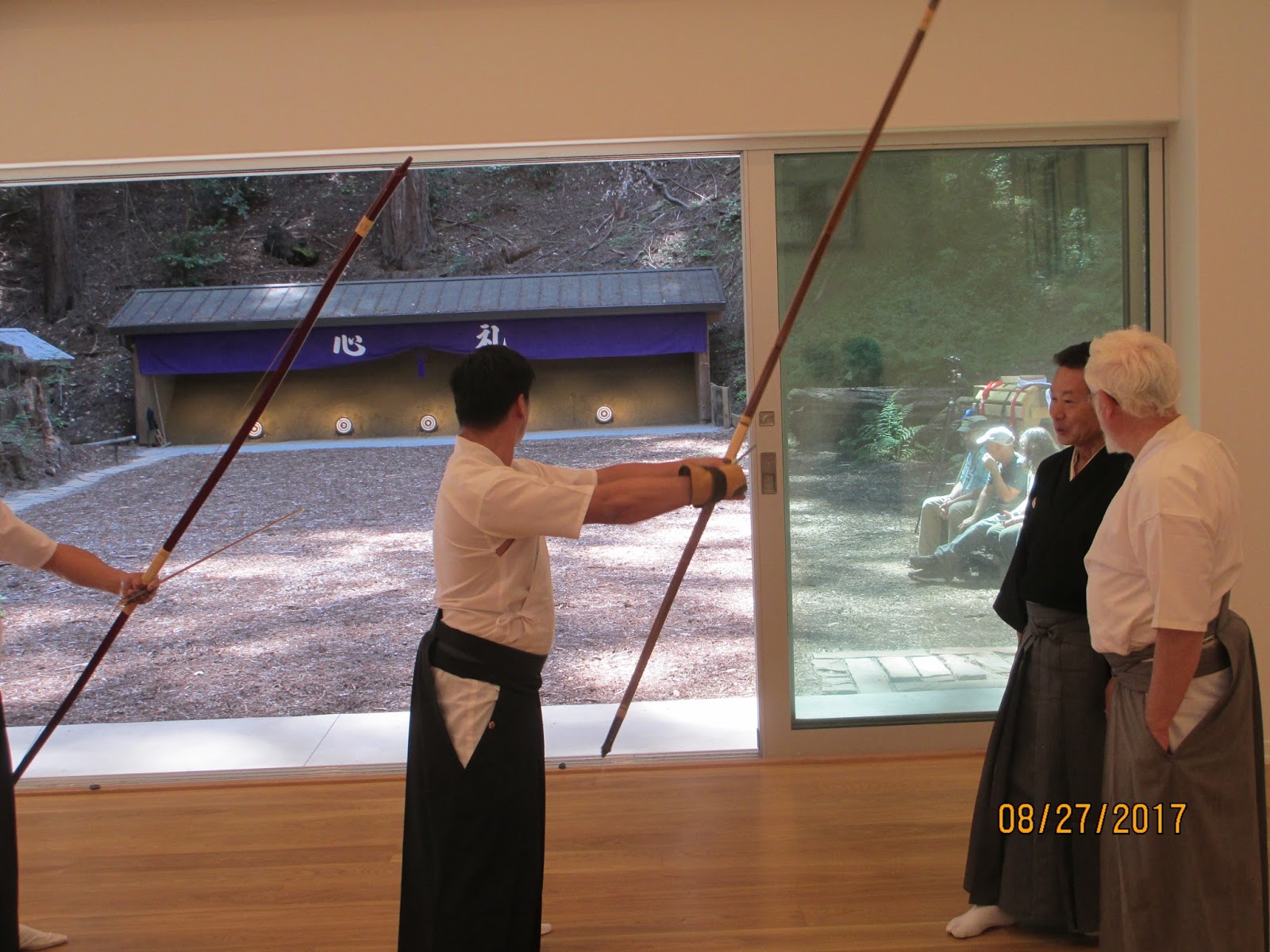
In Kyudo, the equipment is intentionally difficult. The Yumi (the Japanese bow) is asymmetrical. The grip is about a third of the way up from the bottom. It’s massive—over seven feet tall. It doesn't have a shelf for the arrow to sit on. If you don't twist the bow correctly upon release (a move called yugaeri), the string will smack you in the face or the arm. Hard.
It’s a ritual.
- The approach to the shooting line.
- The specific way you breathe as you raise the bow.
- The "expansion" phase where you're not just pulling, but growing into the shot.
- The release, which should be a surprise even to the archer.
- The Zanshin—the remaining spirit or "follow-through" where you stay in the moment after the arrow is gone.
Most people focus on the release. They want the "it shoots" moment. But the Zanshin is actually the most important part for your daily life. It’s about not immediately rushing to the next thing the second you finish a task. It’s sitting with the result, whether you hit the mark or missed by a mile.
The Problem With "Letting Go"
We love the idea of "letting go." It sounds easy. It sounds like a vacation. But in the context of Herrigel's training, letting go was agonizing. It took him five years to get it.
The Western mind hates the idea of purposelessness. We want to achieve. We want the promotion, the weight loss, the gold medal. Awa Kenzô basically told Herrigel that the more he wanted to hit the target, the less likely he was to actually do it. The "desire" was the interference.
This isn't just mystical mumbo-jumbo. Modern sports psychology calls this "ironic process theory." It’s the phenomenon where the more you try to suppress a thought or a mistake (like "don't flinch"), the more likely your brain is to trigger that exact behavior. By focusing on the process instead of the result, you bypass the anxiety that causes the flinch.
Real World Application: The "Non-Aiming" Strategy
Is this practical? Sorta.
Think about writing. If you sit down and say, "I am going to write a masterpiece today," you'll probably stare at a blank screen for three hours. You're aiming too hard. But if you just focus on the rhythm of the typing—the "breathing" of the work—the words eventually start to "fall" like Herrigel's ripe fruit.
It’s the same in business negotiations. If you’re desperate for the deal, the other person smells it. You’re tense. You miss the subtle cues. When you stop "aiming" at the closing of the deal and start focusing on the actual conversation happening in the room, the "it" (the deal) often happens on its own.
What Herrigel Actually Left Us
Despite the translation errors and the potential misunderstandings of Japanese culture, Zen and the Art of Archery remains a powerhouse. Why? Because it’s one of the few books that accurately describes the "dark night of the soul" that comes with mastering any craft.
It’s the frustration. The plateau. The feeling that you’re getting worse instead of better.
Herrigel’s journey is a reminder that mastery isn't a linear path. It’s a series of circles. You keep coming back to the same basics—the breath, the stance, the grip—but each time you return, you're a slightly different person.
Actionable Steps: How to Practice "Zen" Archery (Without a Bow)
You don't need a $1,000 Japanese bow to apply these principles. The core of the "Art of Archery" is about the relationship between your intention and your action.
- Audit Your "Aiming": Identify one area of your life where you are trying too hard. Are you micromanaging a project? Are you forcing a relationship? For one week, try to focus entirely on the "form" (the daily actions) and forbid yourself from checking the "target" (the end result).
- Practice the "Surprise" Release: Whatever you’re working on, try to find the point of peak tension and then simply stop resisting. In a conversation, this might mean stopping your internal script and just seeing what the other person says next.
- The Three-Breath Rule: Before you start any high-stakes task—an email, a phone call, a workout—do exactly what Herrigel did. Breathe into your lower abdomen three times. Don't think about the task. Just feel the air. This anchors the "archer" before the "shot."
- Master the Zanshin: When you finish a task, don't immediately pick up your phone or open a new tab. Sit for thirty seconds. Observe the "vibration" of what you just did. This builds the mental muscle of completion.
Ultimately, Herrigel’s little book isn't a guide to Japan or a guide to Buddhism. It's a mirror. It shows you your own impatience, your own ego, and your own desire for shortcuts. If you read it and feel annoyed by how long it takes him to learn anything, congratulations—you’ve just identified your own "target" that’s getting in the way.
The bow is just a stick and a string. The target is just paper. The real archery is happening inside your own head, every time you try to do something that matters.