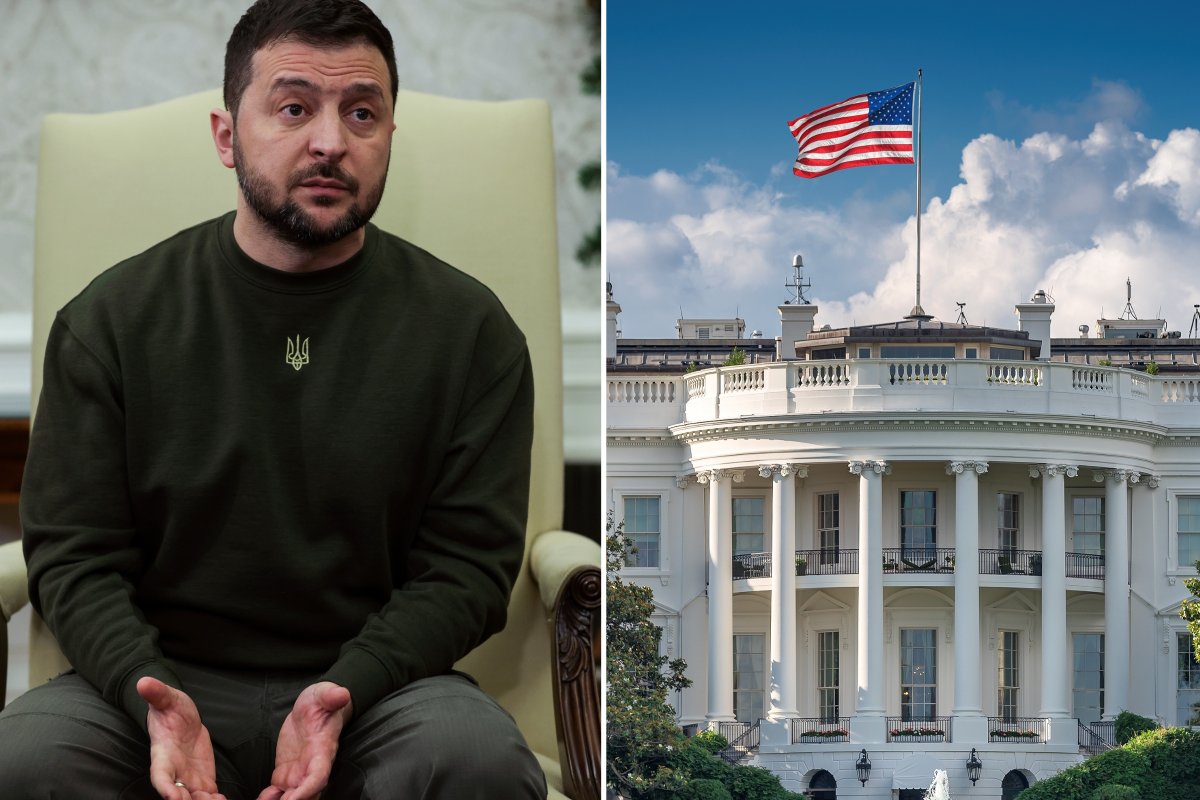
It happened again. You’ve seen the photos. While every other world leader stands stiffly in a $3,000 navy blue wool suit, there’s Volodymyr Zelensky. He’s usually in a tactical fleece, a simple olive-drab T-shirt, or maybe a dark henley with a small Ukrainian trident embroidered on the chest.
It looks out of place. It’s meant to.
Some people find it disrespectful. Others see it as the most effective branding exercise of the 21st century. But honestly, after years of this, the question "why is Zelensky not wearing a suit?" isn't just about fashion anymore. It’s about the psychology of a country that refuses to go back to "business as usual."
The Day the Ties Disappeared
Before February 24, 2022, Zelensky was a suit guy. He was a former entertainer, sure, but as President, he played the part. He wore the starched collars. He did the silk ties. He looked like any other European bureaucrat.
Then the missiles started falling.
The shift wasn't gradual. It was overnight. When he posted that famous "We are here" video from the streets of Kyiv, he was in olive green. He hasn't looked back. By ditching the suit, he effectively told the world that the "civilian" version of the Ukrainian government had ceased to exist.
He basically turned his entire physical presence into a 24/7 news ticker that reads: WE ARE AT WAR. ## Why a Suit is a "Costume" to Him Now
In early 2025, during a particularly heated exchange at the White House, a reporter flat-out asked him why he wouldn't just put on a suit for the sake of decorum. Zelensky’s response was blunt. He called the suit a "costume."
He told the room he’d wear a "costume" again once the war was over.
Think about that for a second. To him, the olive green isn't the outfit—it’s the reality. The suit is the performance. By refusing to wear it, he’s saying that pretending everything is normal for the sake of a photo op is a lie he’s not willing to tell. It’s a move that echoes Winston Churchill’s "siren suit"—that one-piece coverall Churchill wore during the Blitz so he could be ready for a bunker at a moment's notice.
The Contrast with the "Mannequin" in Moscow
Fashion experts like G. Bruce Boyer have pointed out that Zelensky’s wardrobe is a direct middle finger to Vladimir Putin’s aesthetic. Putin is all about the "strongman" luxury: Cartier sunglasses, Patek Philippe watches, and custom-tailored suits that look like they belong in a museum.
Zelensky? He looks like the guy who just finished filling sandbags.
It’s the "David vs. Goliath" narrative woven into 100% cotton. When he stands next to a leader in a tuxedo, the contrast makes the other person look like they belong to a world of luxury and debating, while Zelensky belongs to a world of survival.
The 2025 Shift: The "Suit-Style" Compromise
Lately, things have changed slightly. As the war dragged into 2025 and 2026, the diplomacy got... complicated. Especially during meetings with Donald Trump and other leaders who put a high premium on traditional "respect."
We started seeing the "suit-style" look.
Ukrainian designer Viktor Anisimov was actually commissioned to create a specific wardrobe for these high-stakes meetings. It’s fascinating stuff. It’s not a suit. It’s a French-style army jacket made of military canvas. It has four patch pockets—very utilitarian—but it’s black. It has a back vent like a blazer, which Anisimov calls a "lucky charm" for peace.
It’s a bridge. He’s meeting the West halfway without giving up his identity as a wartime leader.
- February 2025: Zelensky wears a black henley to the Oval Office. Tensions are high. Trump reportedly quips, "You're all dressed up today."
- August 2025: Zelensky returns in the Anisimov jacket. The mood is different. It’s more formal, but the combat boots stay on.
- Independence Day 2025: He ditches the "diplomatic" look for a black vyshyvanka (traditional embroidered shirt), signaling that his ultimate loyalty isn't to DC or Brussels, but to Ukrainian heritage.
Is it Disrespectful to Congress?
This is where the internet usually explodes. When Zelensky addressed the US Congress, critics like Peter Schiff famously Tweeted about him not owning a suit. The argument is that the office of the Presidency or the floor of the Senate deserves a certain level of formal "reverence."
But here’s what the critics miss: Zelensky isn't dressing for the people in the room.
He’s dressing for:
- The soldiers in the trenches who need to know their boss isn't sipping champagne in a tux while they’re freezing.
- The Ukrainian civilians who are living in basements.
- The average person scrolling through Instagram in Ohio or London.
A suit is a barrier. It says "I am an elite." A T-shirt says "I am one of you." By wearing the "uniform" of his people, he’s making it impossible for world leaders to treat him like a peer. He wants them to treat him like a crisis.
The Logistics of a Wartime Wardrobe
Believe it or not, there’s a practical side to this that people rarely talk about. When you’re moving between bunkers, train cars, and active zones, a three-piece suit is a nightmare.
Suits need pressing. They need dry cleaning. They need to be handled with care.
Tactical gear is designed to be lived in. It’s sweat-wicking. It has pockets for encrypted phones. It can be washed in a sink and hung to dry. There’s an inherent honesty in the utility of his clothes. He doesn't have time for a tailor, and he wants you to know he doesn't have time for a tailor.
What Most People Get Wrong
People think this is a PR stunt. "Oh, he’s an actor, he knows how to play a part."
Sure, he’s aware of the camera. But you can't fake this for four years straight. If it were just a stunt, he would have slipped back into a suit for a funeral or a high-level wedding by now. He hasn't. Even at the funeral of Pope Francis in 2025, he stayed in his modified military attire.
It’s not a costume. It’s a vow.
He’s essentially in a state of mourning and mobilization. To put on a suit would be to signal that the emergency is over. And for Ukraine, the emergency is very much still happening.
How to Understand the Symbols
If you want to "read" Zelensky’s outfits like a pro, look for these three things:
- The Color: Olive green means "active defense." Black (which he’s used more in 2025-2026) usually signals a more somber, diplomatic, or mourning-focused tone.
- The Crest: He almost always has the Ukrainian trident (Tryzub) somewhere. It’s a reminder of sovereignty.
- The Fabric: If it’s canvas or heavy cotton, he’s in "leader" mode. If it’s a simple jersey T-shirt, he’s in "soldier" mode.
What Happens When the War Ends?
Everyone asks this. Will he go back to Brioni suits and silk ties?
Honestly, I doubt it. He’s changed. The country has changed. When the war eventually reaches a resolution, there will likely be a new "Ukrainian Style"—something that combines that rugged, tactical resilience with civilian life.
The "Zelensky look" has already influenced fashion globally. You see "tech-wear" and military-inspired civilian clothes everywhere now. He’s accidentally become a style icon for a generation that values "authenticity" over "authority."
Actionable Takeaways for Following the Story
If you’re following the geopolitical shifts of 2026, keep an eye on these subtle wardrobe cues:
- Watch the Footwear: If Zelensky swaps his rugged boots for dress shoes, it’s a massive signal that a formal peace treaty is likely imminent.
- The "Suit-Style" Jacket: This is his "negotiation" uniform. When you see him in the Anisimov jacket, it means he’s in "deal-making" mode with the West.
- The Return of the Tie: This will be the ultimate signal of the war's end. It will be the "mission accomplished" moment, physically manifested.
For now, that green T-shirt is the most powerful piece of clothing on the planet. It’s a reminder that sometimes, the most respectful thing you can wear is the truth of your situation.