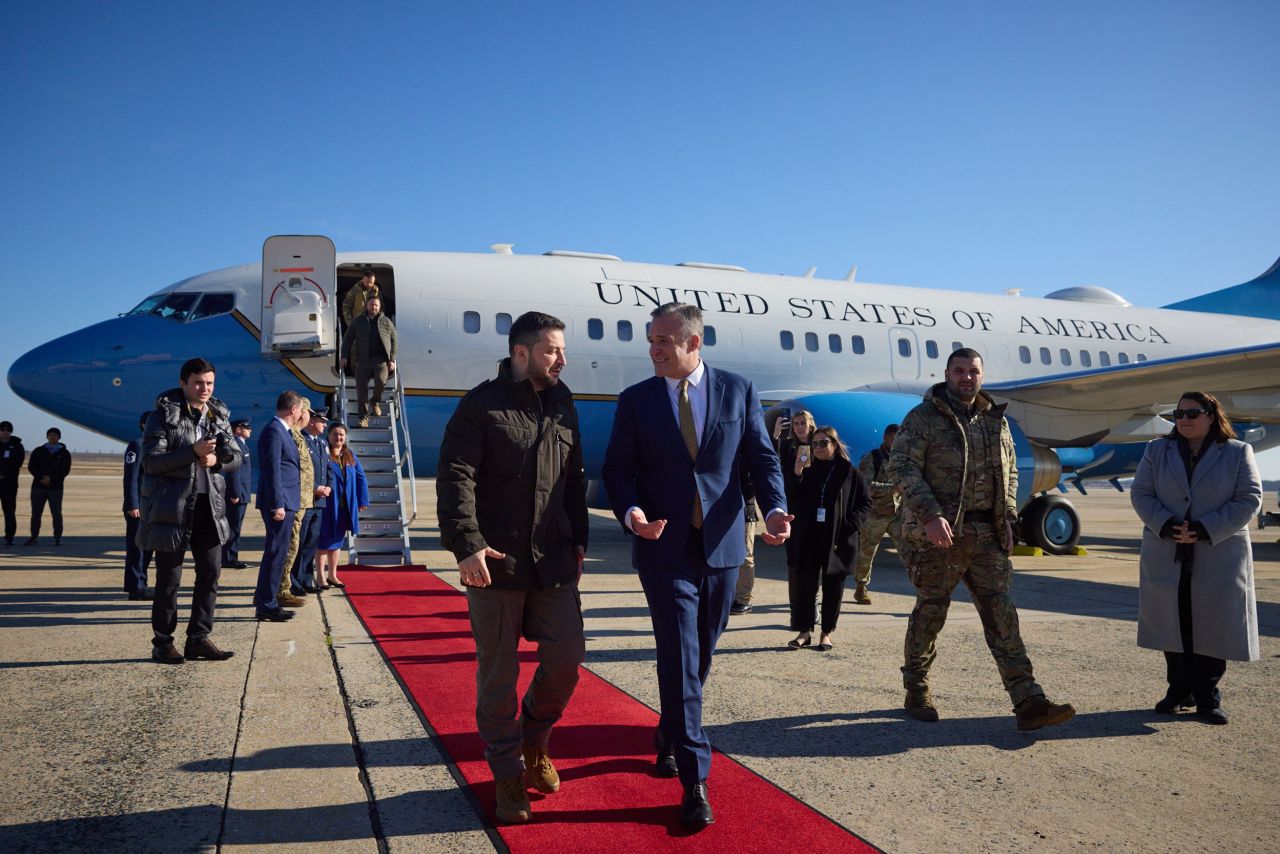
Honestly, if you were to walk through the quiet streets of Scranton, Pennsylvania, on a typical Sunday, you’d probably find people grabbing coffee or heading to church. But one Sunday in September 2024, the vibe was totally different. Black motorcades. Heavy security.
Then, there he was: Volodymyr Zelensky.
The Ukrainian president didn't just show up for a quick photo op. He went straight to the Scranton Army Ammunition Plant. He was there to say thanks. Specifically, to thank the 400 workers who spend their days churning out 155mm artillery shells. These aren't just pieces of metal; they are the literal backbone of Ukraine's defense against Russia.
But here’s where things got messy.
The visit quickly spiraled into one of the most heated political debates of the 2024 election cycle. What was meant to be a diplomatic "thank you" tour became the center of a "Zelensky campaigns in Pennsylvania" narrative that had Republicans fuming and Democrats playing defense.
The Shells of Scranton: More Than Just Ammo
To understand why this trip was such a lightning rod, you have to look at what's actually happening inside that factory. The Scranton Army Ammunition Plant is a government-owned, contractor-operated facility. It's one of the few places in America that makes the specific artillery shells Ukraine uses at an eye-popping rate—sometimes 6,000 to 8,000 rounds per day.
When Zelensky stood there with Governor Josh Shapiro, he wasn't just talking to politicians. He was talking to the guys in work shirts who have helped produce over 3 million shells for his country. "I wanted very much to come here and to thank you," Zelensky told the workers. "Four hundred people have saved millions of Ukrainians."
It sounds noble, right? But the timing was... well, it was something.
We were weeks away from a presidential election. Pennsylvania is the ultimate "must-win" state. And Scranton? That’s Joe Biden’s hometown.
Why Republicans Called Foul
It didn't take long for the GOP to start throwing flags.
House Speaker Mike Johnson didn't hold back. He called the tour a "partisan campaign event" designed to help Democrats. The logic was simple: Zelensky flew in on a U.S. C-17 military aircraft. He was surrounded by high-profile Democrats like Shapiro, Senator Bob Casey, and Representative Matt Cartwright.
No Republicans were invited.
Representative James Comer, the Chair of the House Oversight Committee, actually launched an investigation into the trip. He wanted to know if taxpayer funds were being used to basically "campaign" for the Biden-Harris ticket. For many on the right, seeing a foreign leader in a battleground state alongside top Democrats felt like a thumb on the scale.
- The Aircraft: Critics pointed out that using a military plane for a trip with political optics was a bad look.
- The Location: Why Scranton? Why now?
- The Rhetoric: Zelensky had recently made comments in an interview with The New Yorker that were critical of JD Vance, calling him "too radical."
It felt like a coordinated effort. Or at least, that's how it looked from the outside.
The Democratic Pushback: "It’s About Jobs, Not Politics"
If you ask Governor Josh Shapiro, he’ll tell you the whole controversy is a "political stunt."
Shapiro and other local leaders argued that Scranton was the only logical place for Zelensky to visit. If you want to thank the people making your ammo, you go to where the ammo is made. Simple as that.
They also leaned heavily into the economic angle. See, a lot of the money being sent "to Ukraine" is actually staying in places like Pennsylvania. The Scranton plant received roughly $440 million for modernization. That means jobs. It means new equipment. It means the local economy gets a shot in the arm.
The Sister State Deal
During the visit, Shapiro even signed a "Sister State" agreement between Pennsylvania and Zaporizhzhia, a region in southeast Ukraine. The goal? To help Pennsylvania businesses get a piece of the pie when it comes time to rebuild Ukraine after the war.
It was a savvy move. It framed the relationship as a business partnership rather than just a one-way street of aid.
The Impact on the 750,000 Polish-Americans
There’s another layer here that most people miss. Pennsylvania has a massive Polish-American population—about 750,000 people. Many of them have deep family ties to Eastern Europe and are terrified of Russian expansion.
By bringing Zelensky to Pennsylvania, the Democrats were subtly sending a message to these voters: We are the ones standing up to Putin. Whether or not it was a "campaign" event, it definitely had campaign consequences. In a state where elections are decided by a few thousand votes, the optics of Zelensky in Scranton were powerful.
The 2025 Aftermath: A Lasting Grudge?
The fallout didn't end in 2024. Even as recently as early 2025, the tension was still palpable. Following a meeting between President Trump and Zelensky in February 2025, Governor Shapiro issued a scathing statement. He claimed he watched in "shock" as the new administration allegedly berated Zelensky.
It’s clear the "Zelensky campaigns in Pennsylvania" drama created a rift that hasn't fully healed. It changed the way foreign leaders interact with swing states. It made every handshake and every factory tour a potential headline for "election interference."
What We Learned from the Scranton Trip
So, what’s the takeaway here?
First, the line between diplomacy and domestic politics has basically disappeared. When a world leader steps onto U.S. soil, every move is scrutinized through a partisan lens.
Second, Pennsylvania’s role in global security is bigger than most people realize. The "Arsenal of Democracy" isn't just a history book term; it’s a living, breathing part of the Keystone State’s economy.
Next Steps for You:
- Check the local impact: If you live in Pennsylvania, look up how much "Ukraine aid" money has actually been invested in your local manufacturing sector. You might be surprised.
- Watch the investigations: Keep an eye on the House Oversight Committee’s findings regarding the use of military transport for the trip.
- Context matters: Next time you see a foreign leader visiting a swing state, look at the calendar. If it’s within 60 days of an election, expect fireworks.
The Scranton visit wasn't just about shells. It was about how a war thousands of miles away can become the biggest talking point in a Pennsylvania diner.