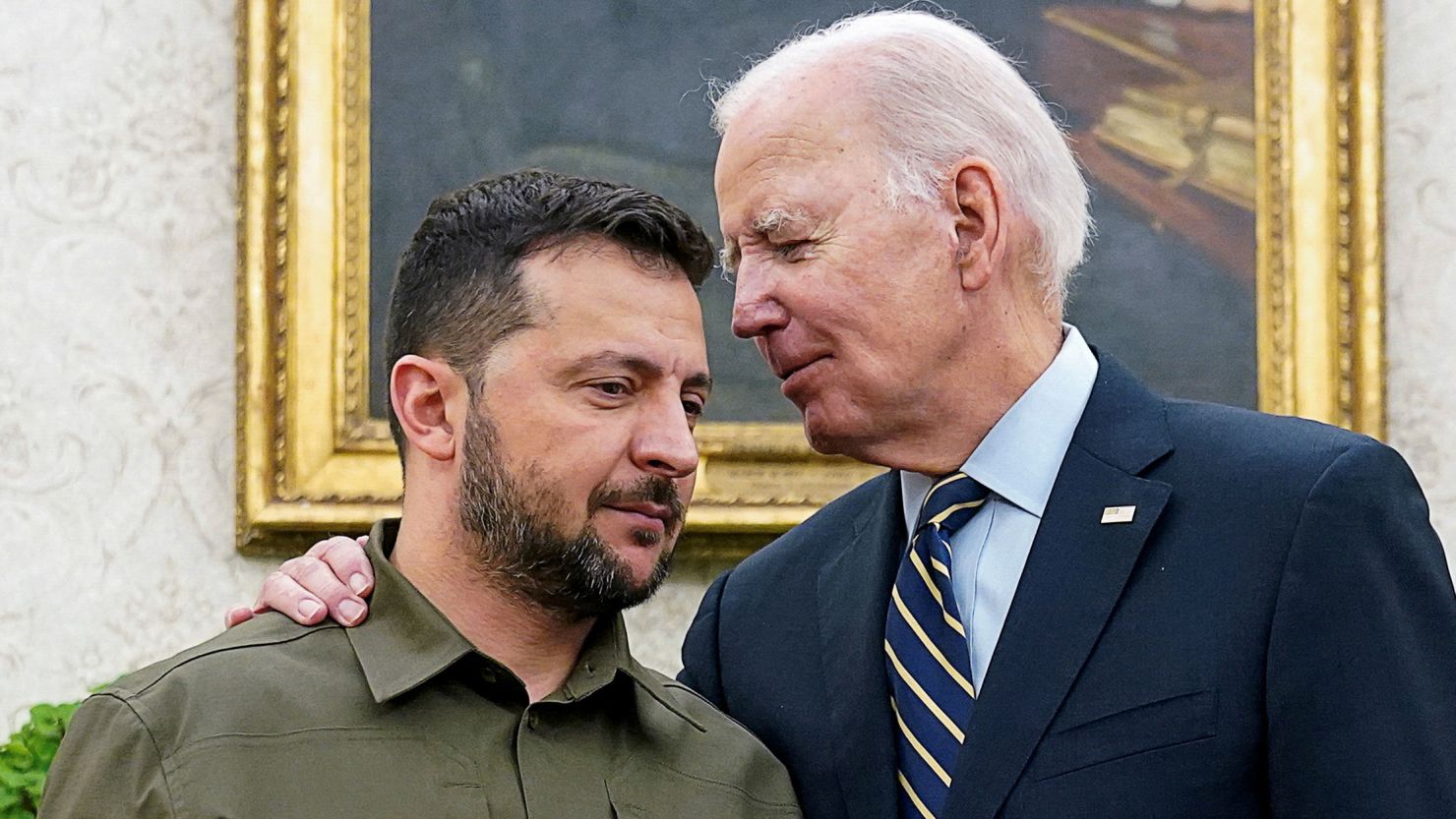
If you’re looking for the usual pomp and circumstance of a state visit, you won't find it. Honestly, the vibe in Washington today feels a bit more like a high-stakes corporate restructuring than a diplomatic summit. Ukrainian President Volodymyr Zelensky is back at the White House, and while the cameras are clicking, the air in the West Wing is thick with the kind of tension you only get when two leaders are trying to force a "win" that neither can quite define yet.
Basically, we’re at a breaking point.
The big talk of the day is the "90% ready" peace plan. Zelensky himself mentioned the figure just a few days ago, but as any seasoned diplomat—or anyone who has ever tried to close a real estate deal—will tell you, that last 10% is where the bodies are buried. It's the 10% that covers the Donbas, Crimea, and whether Ukraine gets a seat at the NATO table or just a very expensive "participation trophy" in the form of vague security assurances.
What’s Actually Happening Behind Closed Doors Today?
Zelensky isn't just here to ask for more Patriot missiles. He’s here because the clock is ticking on the Trump administration's promise to end the war "in 24 hours." We are now a year into that presidency, and while the fighting hasn't stopped, the diplomatic pressure has reached a fever pitch.
Today’s meeting is centered on three very specific, very thorny issues:
- The "Rare Earths" Bargain: There’s a document floating around involving Ukraine’s massive mineral wealth. The idea is simple: U.S. investment and access to lithium and titanium in exchange for continued (and increased) military backing.
- The European "Shield": For the first time, we're seeing a unified push from leaders like France’s Macron and the UK’s Keir Starmer. They are trying to convince the White House that any peace deal without a "hard" security guarantee from the U.S. is just a delayed surrender.
- The Territorial Freeze: This is the elephant in the room. The U.S. side is pushing for a freeze along current front lines. Zelensky is looking at a map where Russia holds 20% of his country and wondering how he sells that to a public that has spent four years bleeding for every inch of soil.
It’s messy.
You’ve got Vice President JD Vance in the mix, who has been historically blunt about his skepticism toward continued aid. Remember that "disrespectful" comment from the Oval Office last year? That shadow still hangs over the room. Zelensky has to navigate a White House that is openly frustrated with the "forever war" narrative while trying to ensure his country doesn't become a vassal state.
The 10% Problem: Why Peace is Still a Long Shot
Everyone wants to know when the shooting stops. The reality is that while the U.S. and Ukraine are "90% ready" on a framework, the "root causes" Russia keeps whining about aren't addressed in that draft. Putin wants a neutral Ukraine. Zelensky wants a protected Ukraine. You can't really split the difference on sovereignty.
Recent strikes in Kyiv and Lviv using nuclear-capable missiles have only raised the stakes. Zelensky is using these attacks as leverage today, basically saying, "See? This is what happens when you talk peace while they launch ballistic missiles."
The European Perspective
The Europeans are terrified. If Trump pulls the plug or forces a bad deal, the "Security Guarantees" fall onto the shoulders of a depleted European military industrial complex. Macron and Starmer have been working overtime to create a "Coalition of the Willing" that can step in if the U.S. decides to pivot toward Greenland or its domestic "DOGE" budget cuts.
The Minerals Factor: Business as Diplomacy
One of the most fascinating—and kinda cynical—aspects of Zelensky at White House today is the shift toward an economic quid pro quo. We aren't just talking about "defending democracy" anymore. We're talking about supply chains.
Ukraine sits on roughly $10-12 trillion worth of critical minerals. For a White House focused on "America First" and decoupling from China, those resources are a massive carrot. If Zelensky can guarantee American firms first dibs on the reconstruction and the mines, he might just buy the security guarantees he needs. It's a "minerals-for-missiles" trade that would have been unthinkable two years ago, but in 2026, it’s the primary language of the Oval Office.
What Does This Mean for the Average Person?
If you’re watching this from home, it’s easy to get lost in the jargon. But here’s the bottom line: Today’s meeting determines if the global economy stays in this weird "war-inflation" limbo or if we finally see a path toward stabilization.
If a deal is struck, expect:
- A massive surge in reconstruction contracts (the "Gold Rush" of the 2020s).
- A potential cooling of energy prices in Europe.
- A very angry, very vocal segment of the Ukrainian population that feels betrayed.
If the meeting ends in another "fundamental disagreement," as we saw with the Greenland talks earlier today, then the war likely grinds on through the rest of 2026.
Honestly, the stakes couldn't be higher. Zelensky is fighting for his country's life, and the White House is fighting for a "historic" foreign policy win. Sometimes those two goals align; sometimes they crash into each other.
Actionable Insights: What to Watch Next
Instead of just checking the headlines, keep an eye on these specific triggers over the next 48 hours to see if today was actually a success:
- The "Joint Statement" Wording: Look for the phrase "Security Assurances" vs. "Security Guarantees." Guarantees usually imply military intervention; assurances are just a fancy way of saying "we'll talk about it."
- Congressional Backing: Watch if Senator Lindsey Graham or Roger Wicker release statements following the meeting. If they start talking about "ratifying" a deal, we're looking at something much more serious than a handshake.
- The Mineral Deal Announcement: If a formal agreement on "Strategic Resource Cooperation" is signed, it means Zelensky has successfully tied Ukraine’s survival to U.S. economic interests. That is his strongest insurance policy.
- Front-line Activity: Often, when peace talks are happening in D.C., Russia ramps up attacks to gain last-minute leverage. Watch the Pokrovsk sector specifically; if it falls, Zelensky's bargaining power drops significantly.
The era of "blank checks" is over. What we are seeing today is the birth of a new, much more transactional era of international relations. Whether it brings peace or just a temporary pause is anyone's guess.