Honestly, if you grew up in the late '90s, your image of Zelda Spellman is probably Beth Broderick in a lab coat, holding a beaker and looking mildly disappointed at a talking cat. She was the "responsible" one. The scientist. The one who actually remembered to pay the utility bills while Hilda was busy buying a clock shop on a whim. But if you've only seen the sitcom, or if you only know the darker, cigarette-smoking version from the Netflix era, you're missing about 600 years of context.
Zelda isn't just a sidekick or a killjoy. She's the anchor of the Spellman family. Without her, Sabrina would have probably turned herself into a grapefruit by episode three.
The Zelda Spellman Evolution: From Green Hair to Lab Coats
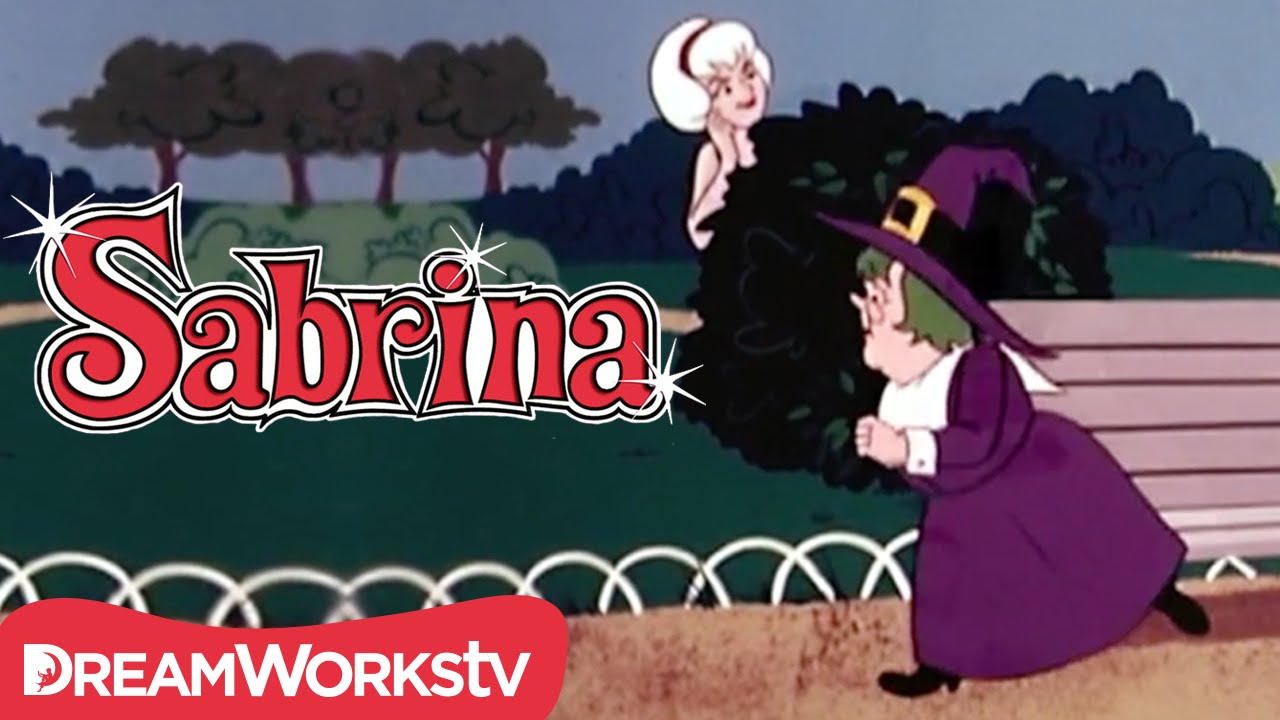
Most fans don't realize that Zelda didn't start out as a blonde scientist in Massachusetts. In her first appearance in Archie’s Mad House #65 back in 1968, she was... well, she was a bit of a stereotype. We're talking green hair, tall hats, and a much more "wicked" vibe. The early comics didn't really care about her being a "role model." She and Hilda were basically there to poke fun at the old-school witch aesthetic while trying to get Sabrina to be a little less "nice."
It wasn't until the 1996 live-action series that we got the Zelda most of us recognize. The writers made a genius move: they turned her into a woman of science.
Think about how wild that is for a second. She's a literal witch who can bend reality with a finger-snap, yet she spent centuries getting degrees. She’s got a PhD from Harvard (graduated in 1873, no big deal) and another from Adams College. She represents this weird, beautiful tension between the mystical and the rational. She’s the person who uses a literal chemistry set to brew potions because she likes the precision of it.
Why Beth Broderick and Miranda Otto Are Practically Different People
Comparing the two most famous versions of Zelda is like comparing a warm cup of tea to a chilled glass of absinthe.
In the 1996 sitcom, Beth Broderick played Zelda as the ultimate straight man. She was the "voice of reason." While Caroline Rhea’s Hilda was all impulse and high-pitched jokes, Zelda was the one reminding everyone that magic has consequences. She was strict, sure, but it came from a place of "I’ve lived through the Black Plague and three days of marriage to a guy named Benvolio, so please just do your homework."
Then 2018 happened.
Netflix’s Chilling Adventures of Sabrina gave us Miranda Otto’s Zelda. And man, she was intense. This Zelda wasn't just a worried aunt; she was a High Priestess of the Church of Night. She didn't just worry about Sabrina’s grades; she worried about Sabrina’s soul and the family’s standing with the Dark Lord. This version of Zelda was cold, devout, and frankly, a bit terrifying. She’d kill you for the family, but she might also kill you for the family’s reputation.
The fascinating thing? Both versions are "correct" according to different eras of the lore. They both share that core Zelda trait: a desperate, often suffocating need to protect the Spellman name.
The Secret History (That 1346 Birthdate)
If you really want to understand why Zelda is the way she is, you have to look at her "childhood." According to the show's lore, Zelda P. Spellman was born in 1346. She’s over 650 years old.
She grew up in 14th-century Europe. That’s not exactly a time known for being "chill" toward witches. She has a sister named Vesta who was so jealous of her and Hilda that she turned their parents into pigs. For real. Zelda and Hilda were actually raised by foster parents for a while because their real parents were literally in a barn.
When you spend six centuries watching empires fall and having your family members turned into farm animals, you develop some trust issues. You become a perfectionist. You become Zelda.
Quick Facts Most Fans Forget:
- The Violet Glow: In the sitcom, Zelda’s magic always manifested as violet or purple particles, distinguishing her from Sabrina’s gold/red sparkles.
- The Age Gap: Despite looking like peers, Zelda is the older sister. In season 6 of the sitcom, it’s mentioned she’s 658, while Hilda is a "youthful" 620-ish.
- The Career Path: Zelda wasn't just a professor. Over the years, she’s been a coal miner in Wales and a saloon girl in the 19th century. She basically did the "finding yourself" thing for 500 years before settling on physics.
Is Zelda Actually More Powerful Than Hilda?
This is a huge debate in the fandom. On the surface, Zelda seems like the powerhouse because she’s so disciplined. She knows the theory. She’s read every book in the Other Realm.
But a lot of fans argue that Hilda is actually the more "natural" witch. In the Netflix series, there’s a recurring theme that Hilda’s potions and "homely" magic are actually more resilient, whereas Zelda’s power is tied to her status and her rigid adherence to rules.
In the sitcom, Zelda’s magic is surgical. She’s the one you want if you need to turn a vacuum cleaner into a sports car without it exploding. But if things get weird and emotional? Zelda usually panics or tries to apply logic to a situation that is fundamentally illogical. That’s her tragic flaw. She tries to treat the Other Realm like a math equation.
The "Candle" Incident and the Sitcom Ending
We need to talk about the end of the 90s show, because it was weird. Toward the end, the writers kinda did Zelda dirty.
In the final season, Beth Broderick actually left the show. To explain her absence, the writers had Zelda "give up her maturity" to bring Sabrina back to life after she turned into stone. This turned Zelda into a literal child. Later, in the series finale, Zelda is seen only as a candle.
Yep. A candle.
She sacrificed her physical form so that Sabrina’s mother (who was cursed to turn into a ball of wax if she ever saw her daughter) could attend Sabrina’s wedding. It was a beautiful gesture of love, but honestly? It felt like a bizarre way to send off such a strong character. It highlighted the one thing that never changed across any version of the character: Zelda will always set herself on fire to keep her family warm.
How to Channel Your Inner Zelda
If you’re looking to bring a bit of that Spellman energy into your own life—without the whole "serving the Dark Lord" or "turning into a candle" part—there are a few takeaways.
- Value the "Borning" Stuff: Zelda succeeded because she did the work. She studied. She got the degrees. In a world of "quick fixes" and "magic shortcuts," there’s something powerful about being the person who actually knows how the machine works.
- Protective Boundaries: Zelda’s "strictness" was just a boundary. She knew the world (and the Other Realm) was dangerous. Setting rules for yourself and the people you love isn't "mean"—it's necessary for survival.
- Adaptability: Whether it’s 1346 or 2026, Zelda survived. She moved from Europe to Westbridge to Greendale. She switched from coal mining to chemistry. Stay curious and keep learning new skills, even if you're 600 years old.
The next time you’re rewatching the show, look past the witty one-liners from the cat. Look at Zelda. She’s the one keeping the roof over their heads, the secrets in the closet, and the magic from tearing the house apart. She’s the unsung hero of the Spellman household.
To dive deeper into the lore, you might want to track down the Chilling Adventures of Sabrina comic run by Roberto Aguirre-Sacasa—it’s where the "modern" Zelda really found her teeth. Or, if you prefer the nostalgia, go back to season 2 of the sitcom; it’s widely considered the peak of the Zelda/Hilda/Sabrina dynamic before the college years made things complicated.



