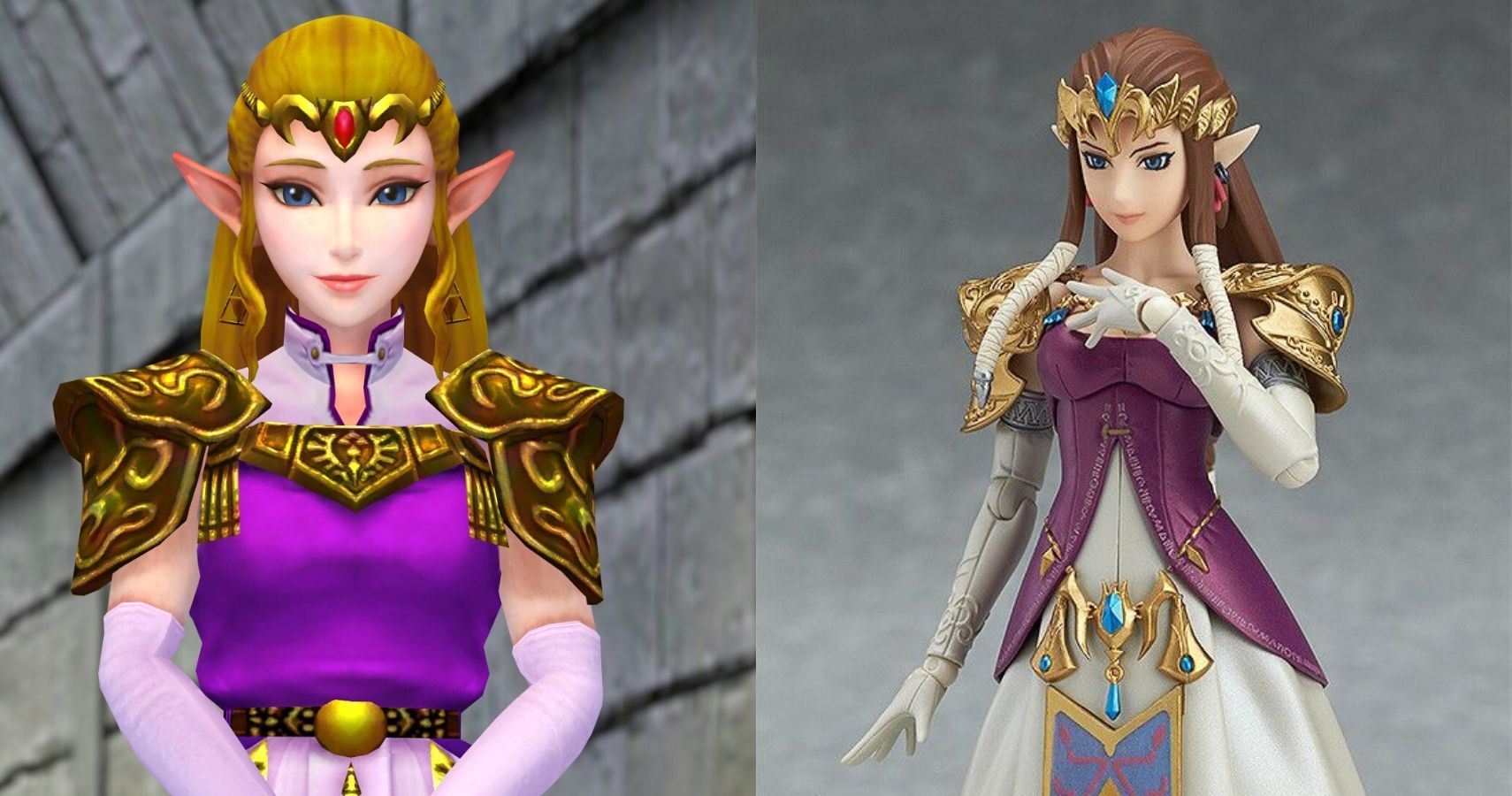
It’s been decades. Yet, somehow, we’re still talking about her. When you think of the Zelda Ocarina of Time Princess Zelda, your mind probably goes to that stained-glass aesthetic of the N64 era or maybe the haunting melody of her Lullaby. Most people remember her as the girl in the white and pink dress waiting in the castle garden. But honestly? She’s a lot more complicated than that.
She isn't just a damsel. She’s kind of a disaster. In the best way possible for a narrative, I mean.
Link is the hero, sure. But Zelda is the one who actually sets the entire tragedy of Hyrule into motion. If she hadn't been a paranoid ten-year-old with prophetic dreams, maybe Ganondorf never gets the keys to the kingdom. It’s a heavy burden for a character who, for a long time, was dismissed as a secondary player in her own namesake franchise.
The Girl Behind the Garden Hedge
When you first meet the Zelda Ocarina of Time Princess Zelda, she’s just a kid. She’s spying through a window. Think about that for a second. The heir to the throne of Hyrule is literally crouching in the dirt because the adults in her life—specifically her father, the King—won't listen to her. This is where the game establishes her core trait: wisdom that outstrips her agency.
She sees the "man from the desert" and knows he's bad news. She sees the dark clouds. She feels the shift in the Triforce. But because she's a child, she has to rely on another child.
Enter Link.
This partnership is built on a massive mistake. By sending Link to collect the Spiritual Stones, Zelda inadvertently opens the Door of Time for Ganondorf. She literally hands him the map to the Triforce. It’s a gut-punch of a plot twist that most of us didn't fully grasp back in 1998. We were too busy being amazed by the 3D grass. Looking back, Zelda’s arc is one of immense guilt. She spends seven years in hiding, watching her world burn, specifically because her "plan" backfired.
Sheik and the Subversion of the Princess Trope
You can't talk about Zelda Ocarina of Time Princess Zelda without talking about Sheik. For years, this was the biggest spoiler in gaming. Now, it’s common knowledge, but it doesn't make the transformation any less cool.
Sheik is Zelda’s survival mechanism.
While Link was taking a seven-year nap in the Chamber of Sages, Zelda was busy. She didn't just sit in a tower. She trained with Impa, the last of the Sheikah. She learned how to vanish in a cloud of nuts and silk. She learned how to play the harp. Most importantly, she learned how to stay one step ahead of a literal god-king who was hunting her down.
The "Sheik" persona isn't just a costume. It’s a radical departure from how princesses were portrayed in the 90s. Sheik is stoic, poetic, and arguably more capable than Link for half the game. Sheik guides you. Sheik teaches you the warp songs. Sheik is the one who explains the lore of the temples.
- The Minuet of Forest
- The Bolero of Fire
- The Serenade of Water
- The Nocturne of Shadow
- The Prelude of Light
Every time Sheik appears, the music shifts. The vibe gets serious. It’s a masterclass in character design that doesn't need a single line of spoken dialogue to work.
The Wisdom of a Fugitive
There is a specific kind of melancholy in Zelda’s dialogue as Sheik. She talks about the flow of time like it’s a river. She talks about how people’s memories fade. It’s deep stuff for an E-rated game.
"The flow of time is always cruel... its speed seems different for each person, but no one can change it."
She’s not just being edgy. She’s talking about her lost childhood. She’s talking about the seven years she spent living as a ghost while Ganondorf sat on her father’s throne. When she finally reveals herself back in the Temple of Time, it’s not a moment of triumph. It’s a moment of vulnerability. And, predictably, it’s the moment she gets caught.
People give Zelda a hard time for getting kidnapped immediately after revealing herself. Honestly, though, Ganondorf is a literal sorcerer with the Triforce of Power. What was she supposed to do? She stayed hidden for seven years. The second she tried to step back into the light to help Link, the trap snapped shut. That’s tragedy, not weakness.
Breaking Down the Mechanics of the Ocarina of Time Ending
The finale of Ocarina of Time puts Zelda in a very specific role. She’s not fighting with a sword, but she’s the one holding the barrier open. She’s the one who eventually uses her power to pin Ganondorf down so Link can deliver the final blow.
But then comes the part that still sparks debates in forums today: the ending.
Zelda uses the Ocarina to send Link back to his childhood. On the surface, it’s a gift. She wants him to have the life he lost. But in doing so, she creates a massive temporal rift. This is the origin of the "Split Timeline" theory that Nintendo eventually made official in the Hyrule Historia.
- The Child Timeline: Link goes back, warns Zelda, they stop Ganondorf before he ever starts.
- The Adult Timeline: Hyrule is saved, but Link is gone. Zelda is left to rebuild a broken world without its hero.
- The Fallen Hero Timeline: Link loses the final battle (the "Game Over" scenario).
The Zelda Ocarina of Time Princess Zelda basically breaks the universe because she feels bad for her friend. It’s a deeply human choice. It’s also a catastrophic one. Without Link in the Adult Timeline, there’s no hero to stop Ganondorf when he eventually returns, leading to the Great Flood and the events of The Wind Waker.
Why Her Design Still Works
If you look at the concept art by Yusuke Nakano, there’s a specific elegance to this version of Zelda. She wears the royal crest of the Royal Family of Hyrule on her tabard. Her hair is wrapped in those iconic Sheikah-style ribbons. Even the "child" version of her has a regal, if slightly nervous, posture.
Technically, the N64 hardware couldn't do much. Her face was basically a flat texture. But the way she moves—the way she reaches out to Link—carries a lot of weight.
Later versions of Zelda, like the one in Twilight Princess or Breath of the Wild, are great. They have more voice acting and better graphics. But they all owe a debt to the Ocarina of Time version. She was the first one to be more than a goalpost at the end of a level. She was a co-conspirator.
Common Misconceptions About Zelda’s Role
A lot of casual fans think Zelda just waited around for seven years. That’s just wrong. If you look at the state of the world when Link wakes up, it’s clear Sheik has been active. She’s been checking in on the various races of Hyrule. She’s been monitoring the temples.
Another weird myth is that Zelda didn't know Link was the "Hero of Time" until the end. She knew the whole time. That’s why she was waiting for him at every temple. She was testing him, guiding him, and making sure he was ready for the final confrontation.
She also wasn't "damseling" herself at the end. She was the bait. By revealing herself, she forced Ganondorf to show his hand. It was a calculated risk that, while it led to her capture, ultimately led to Ganondorf’s sealing.
Practical Takeaways for Fans and Lore Hunters
If you're revisiting the game—whether it's the original N64 version, the 3DS remake, or the Nintendo Switch Online port—pay attention to the Sheikah stones and the gossip stones. They drop hints about Zelda’s training under Impa that many players miss.
- Look for the subtext: Zelda’s dialogue as Sheik is full of references to her own identity.
- Notice the music: Zelda’s Lullaby and Sheik’s Theme share similar melancholic undertones.
- Check the timeline: Understand that this Zelda is the literal "Prime" version that dictates the rest of the series' history.
The legacy of the Zelda Ocarina of Time Princess Zelda is one of sacrifice and accidental consequence. She tried to save the world and ended up shattering time itself. She hid her identity to survive and became a legend in the process.
To really appreciate her character, you have to look at the game as a tragedy. It's a story about two kids who tried to do the right thing and realized, too late, that the world is a lot darker than their dreams. Zelda isn't just a princess; she's the architect of Hyrule's most complicated era.
Next Steps for Deepening Your Knowledge
- Study the Hyrule Historia: This is the definitive source for the timeline split caused by Zelda’s actions at the end of the game.
- Compare the 3DS Remake: The 3D version updates Zelda’s character model significantly, making her expressions much clearer during the pivotal "Garden" and "Temple of Time" scenes.
- Analyze Sheik’s Poems: Read the lyrics/text for each warp song; they provide the best insight into Zelda’s mental state during the seven-year gap.