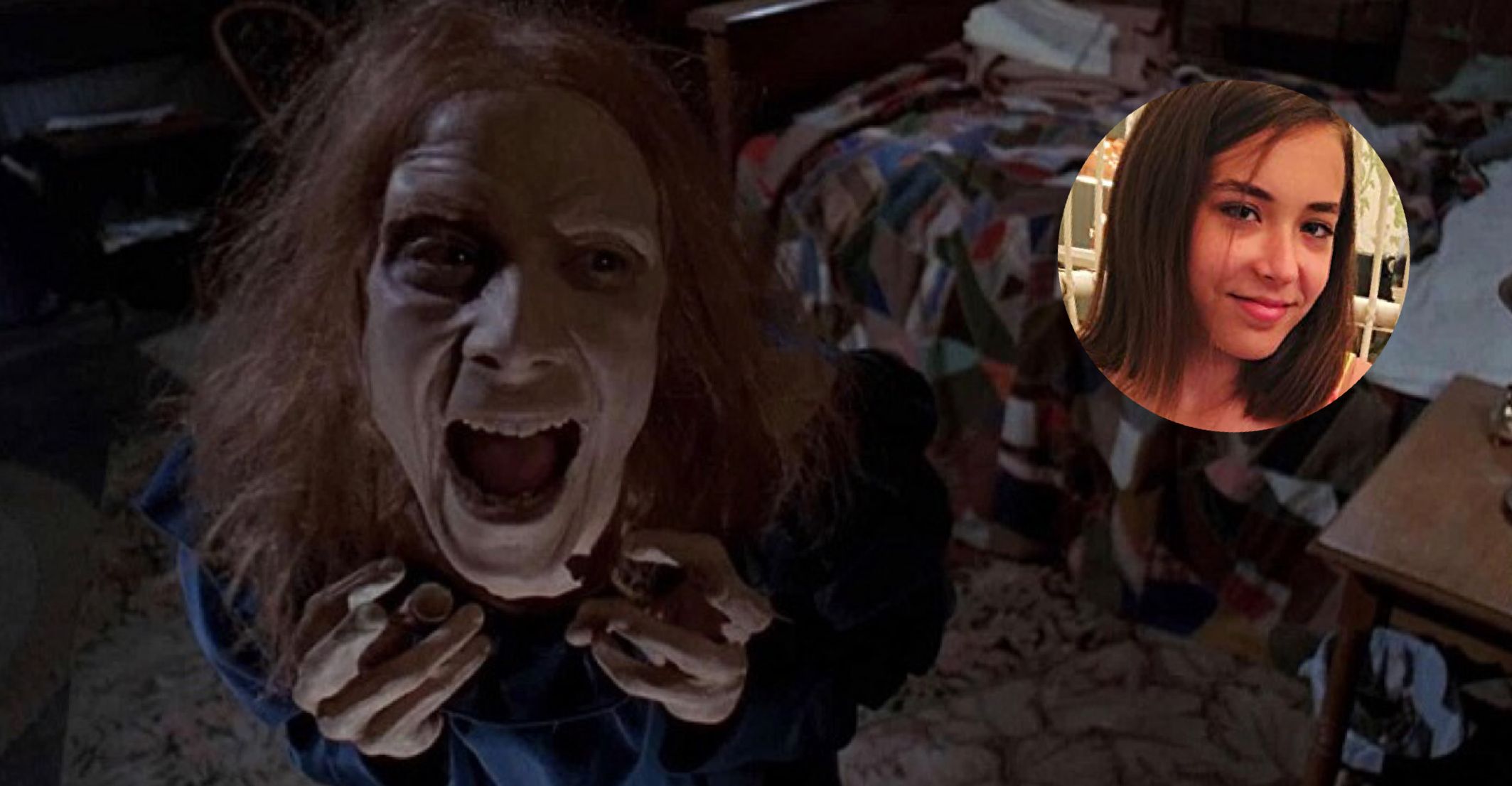
She’s the reason you didn't sleep in 1989. Honestly, if you grew up watching Stephen King movies, the name Zelda probably triggers a very specific, visceral physiological response. Your spine stiffens. You remember that attic. You remember the sound of a rattling breath. Zelda Goldman, the sister from Pet Sematary, isn't even the main villain of the story, yet she’s the one who stayed with us. Why? Because she represents a brand of horror that feels way too real: the terror of the sickroom.
Stephen King has a gift for taking universal fears and twisting them into something supernatural, but with Zelda, he didn’t have to do much twisting. In the original 1983 novel and Mary Lambert’s 1989 film adaptation, Zelda is the physical manifestation of trauma. She is Rachel Creed’s childhood secret, a rotting memory that refuses to stay buried. When we talk about the sister from Pet Sematary, we aren't just talking about a ghost or a zombie. We are talking about the agonizing intersection of grief, guilt, and the grotesque reality of spinal meningitis.
The Reality Behind the Nightmare
Zelda wasn't some invented monster from the "macroverse" like Pennywise. She was a girl dying of spinal meningitis. In the context of the story, her body was wasting away, her spine twisting into a "question mark," as Rachel describes it. This is where King gets mean. He doesn’t give us a sanitized version of illness. He gives us the version that scares children—the version where your own sister becomes a stranger who hates you because you can still breathe while she can't.
Andrew Hubatsek played Zelda in the 1989 film. It was a deliberate choice by director Mary Lambert. She wanted someone who could convey a skeletal, jarringly "off" presence that a young girl simply couldn't achieve. Hubatsek’s performance is legendary among horror fans because it’s so frantic. The way he moves, the way those prosthetic ribs heave—it’s pure nightmare fuel. This choice leaned into the "uncanny valley" effect. You knew something was wrong with the image on the screen, even if you couldn't quite put your finger on it.
Why Zelda Still Scares Us More Than Church or Gage
Think about the structure of Pet Sematary. We have a resurrected cat. We have a toddler with a scalpel. Those are scary, sure. But they are "movie" scary. Zelda Goldman is different. She represents the domestic horror of the long-term illness. Every family has a "Zelda"—not necessarily a dying sibling in an attic, but a secret that everyone is afraid to talk about.
In the book, the trauma is even deeper. Rachel's parents basically left an eight-year-old child alone to watch her sister die. That’s the real horror. It’s not just the "choking" sounds or the back spasms. It’s the isolation. When Zelda finally dies, Rachel feels a wave of relief. She's happy. And that happiness becomes a lifelong curse of guilt. That’s why the sister from Pet Sematary is so effective; she’s a ghost fueled by the survivor's shame.
The 2019 Reboot vs. The Original
People have a lot of feelings about the 2019 remake. Some liked the change to Ellie being the one who dies, but the handling of Zelda was polarizing. In the remake, they used more CGI and focused on a "dumbwaiter" set piece. It was jump-scary. It was loud. But did it capture that same soul-crushing dread? Probably not.
The original 1989 Zelda felt like she was actually in the room with you. The lighting was harsh. The makeup was practical. There’s a specific shot where she looks directly into the camera and screams "Rachel!" that has likely fueled more therapy sessions than any other five-second clip in cinema history. The 2019 version tried to make it more of a "haunting," whereas the original treated it like a memory that was physically attacking the present.
The Science of the "Question Mark" Spine
King mentions spinal meningitis frequently. For those lucky enough to not know, it’s an inflammation of the fluid and membranes surrounding your brain and spinal cord. In the late 19th and early 20th centuries (the era when Zelda's parents would have been younger), it was often a death sentence or led to severe physical deformation.
- Opisthotonus: This is the medical term for the severe arching of the back seen in Zelda.
- The Attic Isolation: It was common practice to hide the "infirm" away from polite society, adding to the psychological rot of the family.
- The Sound: The "thick" breathing described by Rachel is a result of the body’s systems failing.
King used these clinical realities to ground the supernatural elements of the Micmac burial ground. If the "Wendigo" is the external force of evil, Zelda is the internal one. She is the rot that was already inside the Goldman family before Louis Creed ever moved to Maine.
Why We Can't Look Away
Horror works best when it exploits things we aren't supposed to find scary. We are supposed to love our siblings. We are supposed to care for the sick. By making Zelda a source of terror, King forces us to confront our own selfishness. We identify with Rachel. We know that if we were eight years old and trapped in a house with a dying, screaming person, we’d be terrified too.
The sister from Pet Sematary isn't a villain in the traditional sense. Zelda didn't ask to get sick. She didn't ask to be deformed. She’s a victim. But in the eyes of a child, she's a monster. That duality is what makes her the most complex character in the franchise. She is both a tragic figure and a demon.
How to Process the Trauma of the Sister from Pet Sematary
If you're revisiting the franchise or introducing it to someone new, it helps to understand the context. This isn't just about jump scares. To get the most out of the experience, look at Zelda through these lenses:
- Watch the 1989 film for the performance. Pay attention to Andrew Hubatsek’s movements. Notice how he never blinks when he’s in frame as Zelda. It’s unnerving because it’s physically impossible for a healthy person.
- Read the book for the internal monologue. Stephen King spends pages describing the smell of the room and the exact shade of Zelda’s skin. It’s much more clinical and, frankly, much more disturbing than the movie.
- Analyze the guilt. Rachel’s entire character arc is defined by her inability to face death. Zelda is the wall she can't climb over. Without Zelda, Louis probably never buries Gage in the woods. He would have had a partner who could help him grieve rationally. Instead, he had a wife who was paralyzed by the mere mention of a cemetery.
Zelda Goldman remains the gold standard for "the scary lady in the back room." She taught a generation that sometimes, the things that go bump in the night aren't monsters from another dimension—they're just the people we loved, changed by things we can't control.
Actionable Insights for Horror Fans:
If you want to dive deeper into the lore of the sister from Pet Sematary, start by comparing the "Zelda" chapters in the novel to the 1989 screenplay by King himself. You’ll notice he intentionally stripped away the supernatural elements for her scenes, focusing instead on the "ordinariness" of her suffering to make it more impactful. Secondly, look into the production history of the 1989 film; Mary Lambert’s insistence on casting a man for the role is a masterclass in using gender-non-conforming traits to create a sense of the "uncanny" in horror. Finally, recognize that Zelda’s role is a cautionary tale about the dangers of suppressed trauma—Rachel’s refusal to speak about her sister is exactly what allowed the Wendigo to use that image against her later in life.



