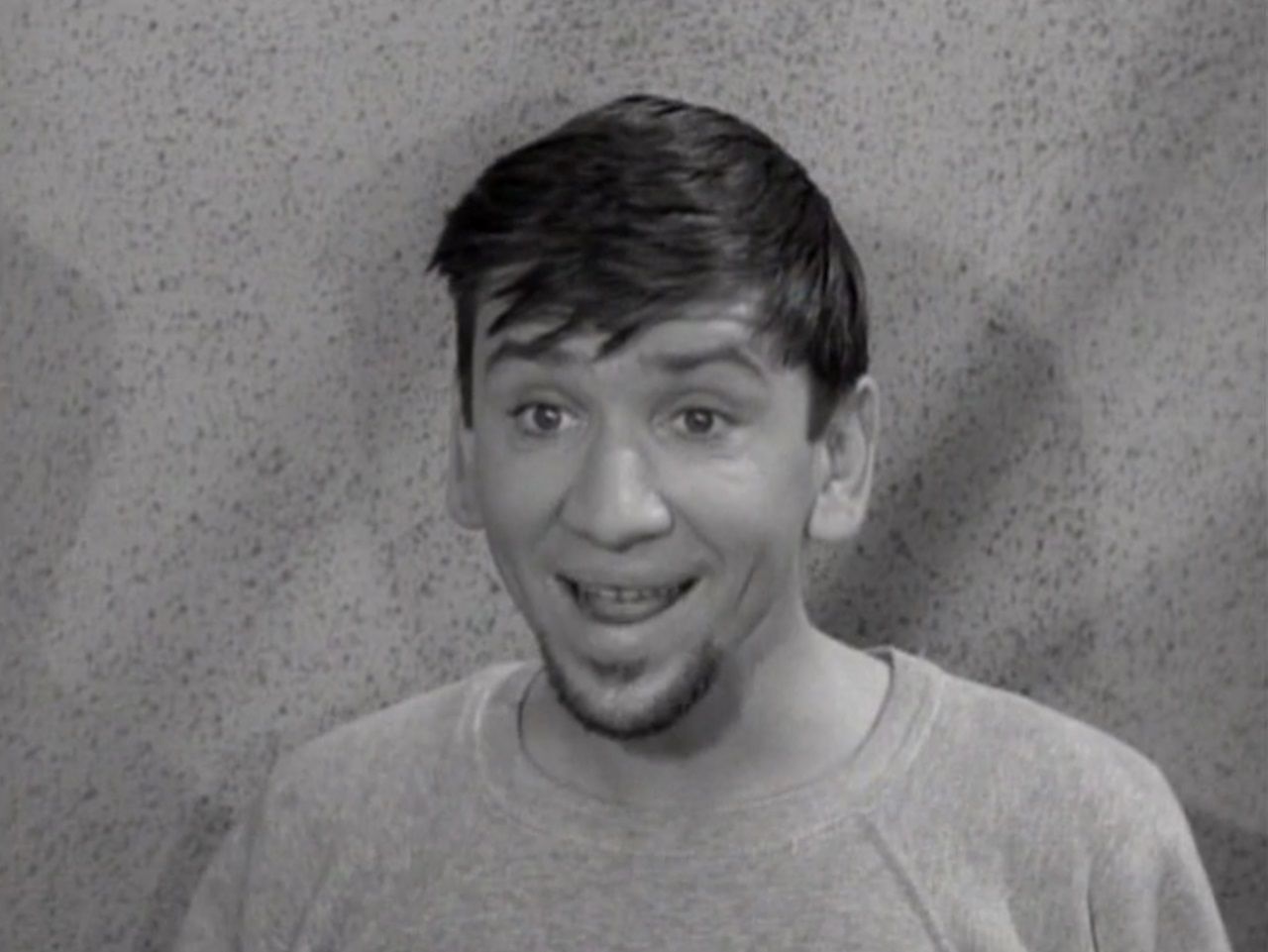
Honestly, if you look back at the landscape of 1950s and 60s television, most female characters were stuck in a very specific, very boring box. They were either the "perfect" housewife or the "unattainable" dream girl. Then there was Zelda Gilroy.
When The Many Loves of Dobie Gillis first hit CBS in 1959, the audience probably expected another cookie-cutter sitcom. What they got instead was a weird, wonderful, beatnik-adjacent show with a girl who didn't care about being "sweet." Zelda, played by the incredibly talented Sheila James Kuehl, basically rewrote the rules for what a teenage girl could be on screen. She was smart. She was aggressive. And she was absolutely convinced that science and "propinquity" would eventually force Dobie to love her.
Why Zelda on Dobie Gillis Broke Every Rule
Zelda wasn't just another one of Dobie’s "loves." In fact, for most of the series, she was the one doing the loving—or rather, the hunting. While Dobie was busy chasing girls like the money-hungry Thalia Menninger (played by Tuesday Weld), Zelda was right there, wrinkling her nose and telling him it was only a matter of time before they got married.
She used logic. She used math. She used the fact that their last names, Gillis and Gilroy, meant they’d always be seated together in class. That’s the "propinquity" she kept talking about. It wasn't some romantic fairy tale; it was a statistical certainty.
The Famous Nose Wrinkle
You probably remember the "nose wrinkle" bit. Zelda would scrunch her nose at Dobie, and he’d reflexively do it back. He’d shout, "Now cut that out!" but Zelda knew. She saw that reflex as proof of their biological compatibility. It’s funny, but it’s also kind of revolutionary for 1960. She wasn't waiting for a knight; she was the scientist conducting an experiment on her own life.
The Spin-off That Almost Was (And Why It Failed)
Most fans don't realize how close we came to a Zelda solo show. Around 1961, the character was so popular that a pilot was actually filmed. It was titled, simply, Zelda. CBS was initially excited, but the network president at the time, James T. Aubrey, famously killed it.
The reason? He reportedly said she was "too butch."
That’s a heavy word, especially considering Sheila Kuehl was a closeted lesbian at the time. She later spoke about how devastating that feedback was. In an interview with the Television Academy, she recalled how that specific rejection felt like a personal attack on her identity, even though she wasn't "out" yet. It basically ended her leading-lady prospects in Hollywood.
Sheila Kuehl’s Incredible Real-Life Pivot
If the story ended with a cancelled pilot, it would be a tragedy. But Sheila Kuehl is a powerhouse. After Dobie Gillis wrapped in 1963, she eventually left acting behind. She didn't just fade away, though.
- She went to Harvard Law School.
- She became the first woman to win "Best Oralist" in the Ames Moot Court Competition.
- She entered politics and became the first openly gay person elected to the California State Legislature.
It's sort of poetic. Zelda Gilroy was the smartest person in the room on TV, and Sheila Kuehl became the smartest person in the room in the California State Senate. She even served on the Los Angeles County Board of Supervisors until 2022. When she ran for office, she actually found that being "Zelda" helped her. People felt like they already knew her and trusted her because of that brainy girl on their TV screens decades earlier.
The Marriage We Finally Got
The original series ended without Dobie and Zelda officially tying the knot. But the "prophecy" of propinquity eventually came true in the reunion specials. In the 1977 pilot Whatever Happened to Dobie Gillis? and the 1988 movie Bring Me the Head of Dobie Gillis, Dobie and Zelda are finally married.
They’re running the family grocery store. They have a son. It’s exactly what Zelda predicted in 1959.
How to Revisit Zelda Today
If you want to catch the "propinquity" in action, you can still find The Many Loves of Dobie Gillis on various classic TV streaming services or DVD sets. Look for the episode "Love is a Science"—it's the one where Zelda first explains her grand plan. It’s arguably one of the best-written episodes of early 60s television.
Actionable Next Steps: If you're interested in the intersection of TV history and civil rights, look up Sheila Kuehl’s oral history interview with the Archive of American Television. It’s a fascinating look at how a "sitcom character" helped pave the way for a major political career. Also, pay attention to the "smart girl" trope in modern shows like The Big Bang Theory or Parks and Recreation; you’ll see Zelda Gilroy’s DNA in characters like Amy Farrah Fowler or Leslie Knope. They owe her a lot.



