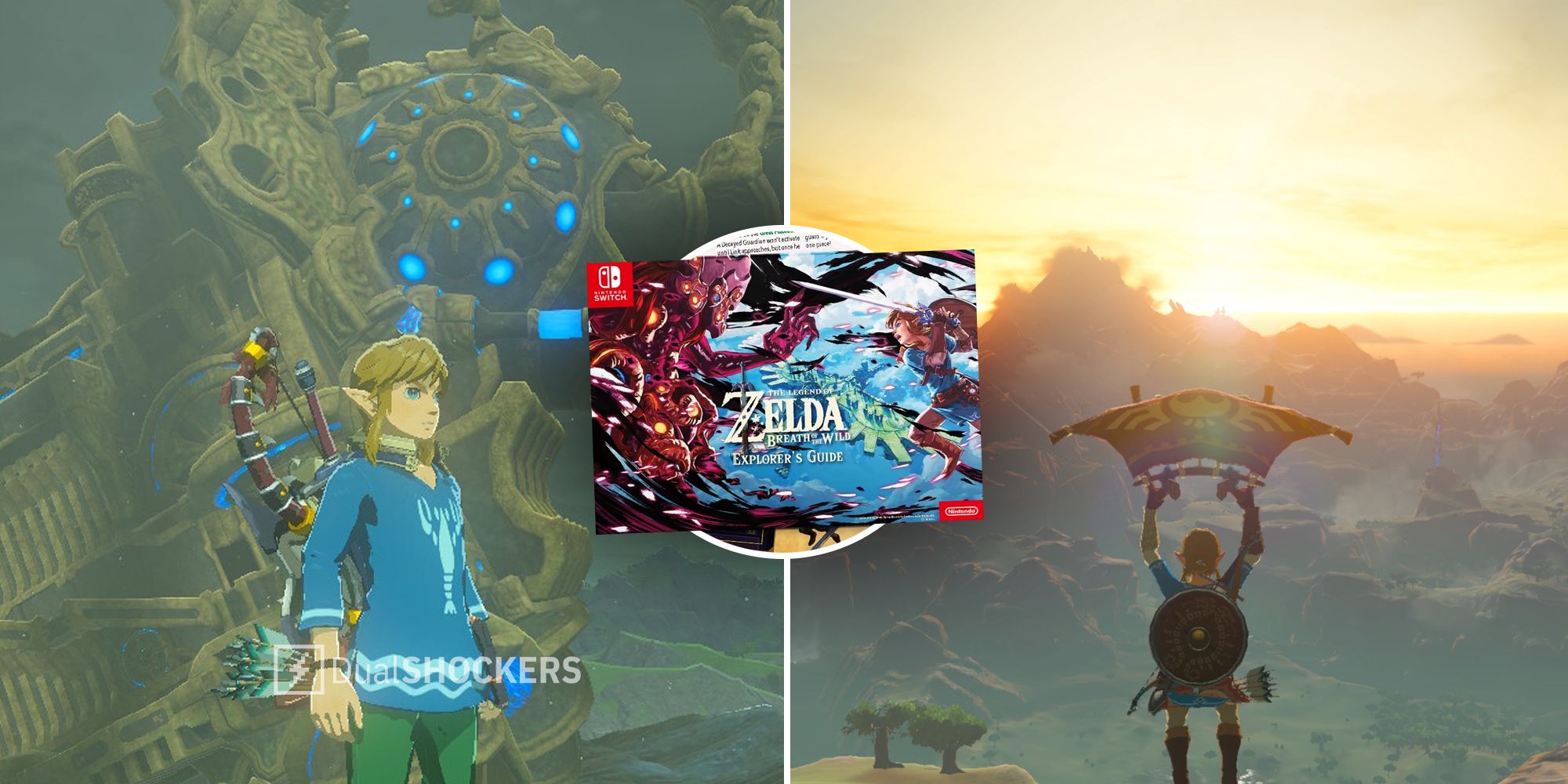
You’re standing on a cliff. The wind is howling. You have a stick, some old rags for clothes, and a weird glowing tablet. Most people start this game and immediately try to run toward the biggest landmark they see. Bad idea. You’ll die. Probably to a blue Bokoblin that hits like a freight train.
The Zelda Breath Wild guide most people need isn't just a map of shrines; it’s a reality check on how the game actually functions under the hood. It’s not a linear adventure. It’s a chemistry set. If you don't understand how the systems interact—fire, wind, electricity, and gravity—you’re going to spend forty hours breaking weapons and getting frustrated.
Honestly, the "freedom" of the game is its biggest trap. You can go anywhere, but should you? Probably not until you’ve sorted out your stamina.
The Great Plateau is a Lie
Everyone thinks the Great Plateau is just a tutorial. It’s actually a microcosm of every mistake you’re about to make. You see that old man? He’s basically the only thing keeping you from jumping off a ledge to see if there’s fall damage. There is. Lots of it.
Most players rush through the four shrines to get the Paraglider. That’s fine. But if you leave the Plateau without learning how to cook, you’re making the rest of Hyrule twice as hard. Cooking isn't a "side hobby" here. It is your primary defense mechanism. One "Hearty" ingredient—like a Hearty Truffle or a Hearty Radish—thrown into a pot alone will fully heal you and give you extra hearts. Stop eating raw apples. It’s a waste of time.
Why Your Weapons Keep Breaking (and Why It’s Okay)
The durability system is the most hated part of the game for a reason. It feels bad. You find a cool Flameblade, use it five times, and shatter.
Here is the thing: the game wants you to be a scavenger. If you cling to your "best" weapon, you’ll never use it, and it’ll just take up a slot. Use the good stuff. Always. There is always more loot. The real trick to this Zelda Breath Wild guide tip is understanding that the environment is your best weapon. Why waste a 20-damage sword on a group of enemies standing near a red barrel? Shoot the barrel. Or use Magnesis to drop a metal crate on their heads.
Lightning is also a weapon. If it’s raining and sparks are flying off your shield, don't just unequip it. Throw it at an enemy. Let the sky do the work for you. It’s hilarious and effective.
Stamina Over Hearts: The Counter-Intuitive Truth
When you finish shrines, you get Spirit Orbs. You trade four of them for a Heart Container or a Stamina Vessel. Natural instinct says "I need more health so I don't die."
Wrong.
You need stamina. More stamina means you can climb higher mountains, swim across wider rivers, and—most importantly—sprint away from Guardians when they target you with that terrifying red laser. You can always cook "Hearty" food to give yourself temporary yellow hearts, effectively bypassing the need for permanent ones early on. But "Enduring" food for stamina is slightly harder to come by in bulk. Get at least two full wheels of stamina before you even think about stacking hearts.
The only exception? You need 13 permanent hearts to pull the Master Sword. But you can respec your stats at the cursed statue in Hateno Village later anyway. So, go for the lungs first, the heart later.
The Combat Mechanics Nobody Practices
Perfect Guards and Flurry Rushes. If you don't learn these, the Lynels will turn you into paste. A Lynel is a centaur-like creature that is harder than the final boss. No joke.
To Flurry Rush, you have to jump at the exact moment an attack is about to hit. Time slows down. You mash the Y button. Link goes into a frenzy. It’s the only way to deal massive damage without getting your shield shattered.
Exploring the Map Without Getting Overwhelmed
Hyrule is massive. Like, "I’ve been playing for 80 hours and just found a new village" massive.
Don't try to clear every region one by one. It’ll lead to burnout. Instead, follow the towers. Activating a Sheikah Tower fills in the map for that region. From the top of the tower, look for glowing orange shrines. Mark them with your scope.
Shrines are your fast-travel points. Even if you don't feel like completing a shrine right now, just walk up to it and activate the pedestal. Now you can warp back there later. This saves you literal hours of backtracking.
The Dragon Farosh and the Farming Myth
You might see a giant green dragon flying around Lake Hylia. Most people freak out and hide. Don't hide. Shoot it with an arrow. It’ll drop a scale, a claw, or a horn shard. These items are the most valuable things in the game. A Dragon Horn shard, when cooked into a meal, makes the buff last for 30 minutes.
Imagine having a "Triple Attack Up" buff that lasts for half an hour. You become a god.
Weather is Your Greatest Enemy
Rain is the true final boss of Breath of the Wild. You can’t climb in the rain. You just slip. It’s maddening.
There are two ways to deal with this:
- Find a dry spot, make a fire (use flint and a wood bundle), and "Sit" until the morning.
- Get the Climbing Gear set found in various shrines (specifically the Muwo Jeem Shrine on Cape Cales).
But honestly? Sometimes you just have to wait. Or find a path that involves less verticality. The game is trying to tell you to slow down. Listen to it.
The Truth About the Divine Beasts
You’ll be told to go tackle the four Divine Beasts. These are the "dungeons" of the game. Vah Medoh (the bird) is generally considered the easiest and gives you Revali’s Gale—an upward gust of wind that makes exploration trivial. Do that one first.
Vah Naboris (the camel) is in the desert. It is significantly harder. The boss there, Thunderblight Ganon, is the only boss in the game that requires actual fast-twitch reflexes. If you aren't prepared with non-metal equipment and shock-resistant food, you’re going to have a bad time.
Hidden Mechanics: The Blood Moon
Every so often, the sky turns red. The music gets creepy. Monsters you’ve killed come back to life.
This isn't just a way to reset the world. It’s a resource reset. All the powerful weapons sitting in enemy camps are back. All the "Endura Carrots" behind the Great Fairy Fountains are back. Also, if you cook while the Blood Moon is rising (between 11:30 PM and midnight), you get a "critical cook." Every dish will have significantly better stats or extra hearts.
Actionable Next Steps for New Players
If you’ve just started or are feeling stuck, do these three things immediately:
- Head to Kakariko Village: Talk to Impa. This triggers the main questline and gives you the context you need to understand the world. It also leads you toward the Hateno Tech Lab where you can upgrade your runes.
- Find the Hestu: He’s a giant broccoli-looking dude on the road to Kakariko. He needs Korok Seeds. Find them under rocks, in trees, or by solving little puzzles. Give them to him to expand your weapon inventory. Inventory space is more valuable than almost any armor set.
- Capture a Horse: Look for a spotted one first; they have gentler temperaments. Register it at a stable. It makes crossing the vast plains of Central Hyrule much less of a chore.
The world of Hyrule doesn't care if you succeed. It’s an indifferent wilderness. But once you stop fighting the mechanics and start using them—freezing enemies with Stasis+, burning grass to create updrafts, and hoarding "Hearty" radishes—the game transforms from a survival struggle into a playground. Forget the "correct" way to play. If it works, it’s the right way.