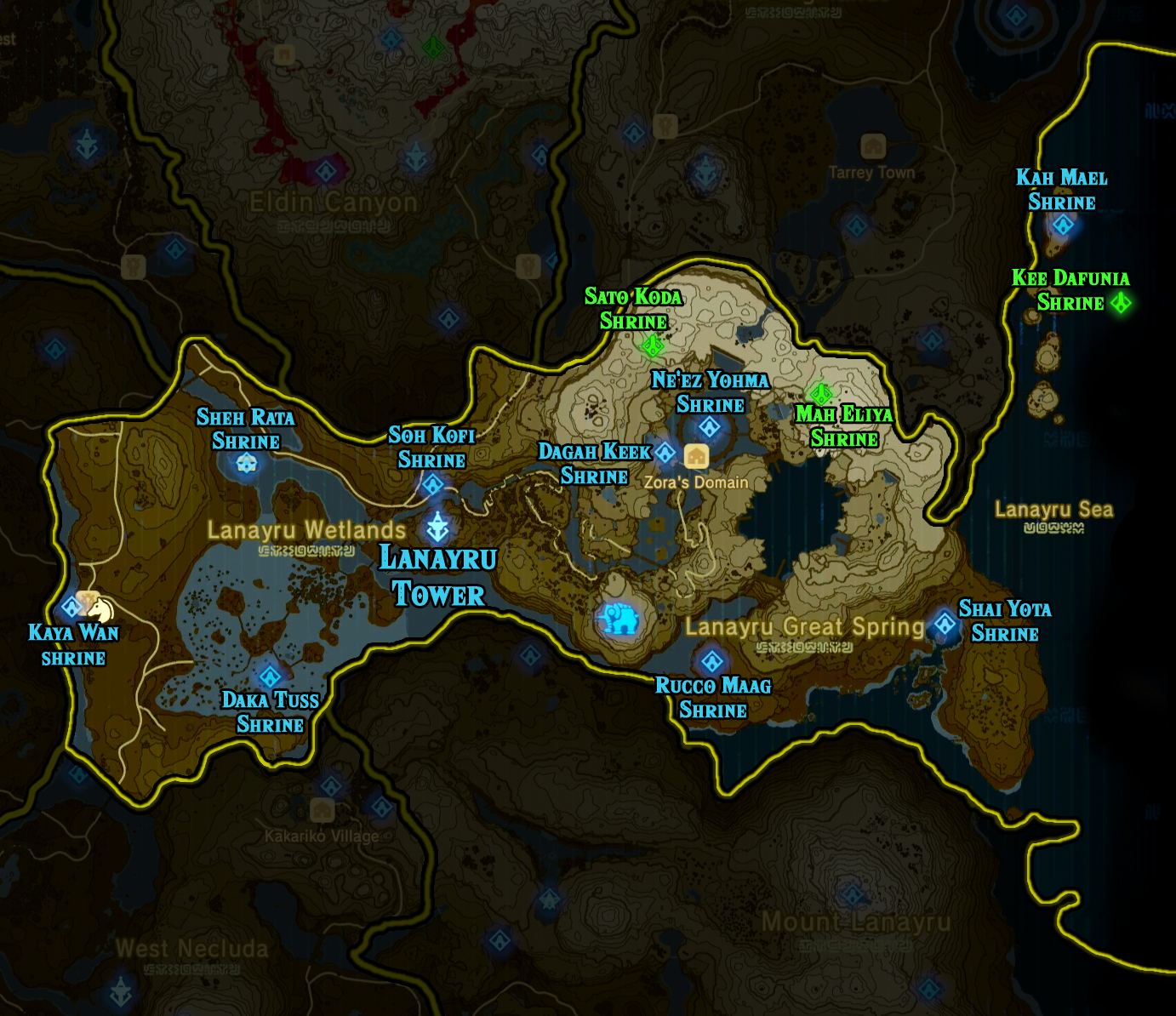
They’re everywhere. You’re paragliding off a cliff in Akkala, the wind is howling, and suddenly that rhythmic ping-ping-ping starts. It’s the Sheikah Sensor. It’s annoying, yet you can’t stop. You look down and see that familiar orange glow peeking out from behind a cracked rock face or tucked under a snowy ledge in the Hebra Mountains. Zelda Breath of the Wild shrines aren't just mini-dungeons; they are the literal heartbeat of Hyrule's design philosophy.
Most open-world games feel like chores. Go here, kill ten wolves, come back. But Nintendo did something weird with Breath of the Wild. They took the classic, sprawling Zelda dungeon and chopped it into 120 bite-sized pieces. Some take two minutes. Some take an hour if you’re stubborn like me and refuse to look up a guide. Honestly, the genius isn’t in the puzzles themselves, but in how they force you to actually look at the world instead of just staring at a mini-map.
The sheer variety is staggering. You’ve got the "Trial of Power" combat shrines that test your parrying skills against Scouts, and then you’ve got the physics-based nightmares where you’re trying to tilt your Nintendo Switch like a steering wheel to get a giant marble through a maze. It’s frustrating. It’s brilliant. It’s Zelda.
Finding Every Last Zelda Breath of the Wild Shrine Without Losing Your Mind
If you’re trying to hit that 120 mark, you’ve probably realized that the Sheikah Sensor has its limits. It tells you a shrine is nearby, but it doesn't tell you that the shrine is buried under three tons of hay or hidden behind a destructible wall at the bottom of a canyon.
Geography is your best friend here. Nintendo’s level designers—led by Hidemaro Fujibayashi—used a concept called "The Triangle Rule." Basically, they hide things behind large landmasses so you have to constantly change your perspective to see what’s on the other side. If you see a weirdly shaped mountain, climb it. If you see a suspicious circle of rocks in the water, jump in.
A lot of people get stuck around the 115 mark. Usually, the ones you’re missing are the Shrine Quests. These don’t trigger the sensor because the shrine hasn't actually emerged from the ground yet. You have to talk to specific NPCs—like the accordion-playing Rito, Kass—to trigger a riddle. For example, the "Under a Red Moon" quest requires you to stand on a pedestal during a Blood Moon without any clothes on. It sounds fake. It sounds like one of those old schoolyard rumors from the 90s. But in Breath of the Wild, that’s a real mechanic.
The Problem With Combat Shrines
Let’s be real: the "A Major Test of Strength" shrines are a bit of a repetitive slog after the fourth one. You walk in, the gates close, and a Guardian Scout IV pulls out a glowing blue battle axe.
If you’re low on gear, these are terrifying. But once you realize you can just use an ice arrow to freeze them, then a heavy weapon to shatter that ice for triple damage, the "challenge" kinda evaporates. It’s one of the few areas where the game’s systemic freedom actually makes the content feel a little thin. Still, the rewards—those high-level Ancient Battle Axes—are worth the three minutes of circular strafing.
The Physics Engine is the Real Protagonist
What makes Zelda Breath of the Wild shrines so fundamentally different from anything in Twilight Princess or Skyward Sword is the chemistry engine. In older games, a puzzle had one solution. You used the hookshot on the target. Period.
In Breath of the Wild, the developers basically said, "Here are the rules of gravity, electricity, and fire. Figure it out."
I remember one shrine—the Myahm Agana Shrine in Hateno Village. It’s the one with the motion-control tilt maze. It’s notoriously finicky. Most people spend ten minutes trying to roll the ball through the paths. I got frustrated, flipped my Pro Controller upside down, and realized the bottom of the maze was a flat, smooth surface. I just flicked the ball into the goal like a pancake.
The game didn't punish me for "cheating." It rewarded me for being clever. That’s the "Aha!" moment that keeps people coming back even years after the game launched.
Hidden Gems and Total Nightmares
Not all shrines are created equal. Some are basically just a reward for getting there. These "Rauru’s Blessing" shrines usually follow a grueling trek through a thunderstorm or a desert wasteland.
Then there’s the Eventide Island challenge (Korgu Chideh Shrine). Technically a shrine quest, but it’s the peak of the game's design. You arrive on an island, and the game strips you of every single item, weapon, and piece of armor you’ve spent 40 hours collecting. You’re back to being a naked guy with a tree branch fighting Hinoxes. It’s a masterpiece of "emergent gameplay." You have to use the environment—boulders, lightning, chuchu jelly—to survive. It turns the entire island into a macro-shrine.
On the flip side, we have the "Twin Memories" shrines (Shee Vaneer and Shee Venath) on the Dueling Peaks. You have to look at the pattern of orbs in one shrine, memorize it, and go to the other mountain peak to replicate it in the twin shrine. If you didn't think to take a screenshot with your Sheikah Slate, you’re in for a lot of climbing.
Why 120 is the Magic Number (And What You Get)
Completing all 120 shrines isn't just for bragging rights. It’s the only way to get the "Of the Wild" armor set. This is the classic green tunic that Link usually starts with in other games. In Breath of the Wild, it’s your ultimate trophy.
But there’s a deeper mechanical reason to hunt them down. Each shrine gives you a Spirit Orb. Four orbs equals a Heart Container or a Stamina Vessel. By the time you hit 120, you’re basically a god. You can sprint up the side of Hyrule Castle without stopping to breathe. You can take a direct hit from a Lynel and walk it off.
Does the game get too easy at that point? Maybe. But the journey to get there is where the magic lives. You aren't just checking boxes; you're uncovering the history of a civilization that died 10,000 years ago. Every Monk at the end of a shrine—the desiccated figures who give you the orbs—has a slightly different hand pose. Some fans have spent hours analyzing these poses to see if they correlate to the type of puzzle or the Monk's role in the lore. It’s that level of detail that keeps the community alive.
Survival Tips for Your Shrine Hunt
If you’re just starting your 100% completion run, keep these things in mind:
- Stock up on Octo Balloons. You can use them to lift heavy slabs covering shrine entrances. It’s way easier than trying to use Stasis and hitting them twenty times.
- The "Cryonis Trick." Many shrines involve water puzzles. You can use Cryonis to lift gates or create platforms, but you can also use it horizontally in some cases to jam machinery.
- Don't ignore the birds. If you see a bunch of birds circling a specific spot in the distance, there’s almost always a shrine or a secret below them.
- Fire is a multi-tool. If a shrine is covered in thorns or ice, don't waste your arrows. Just drop a bunch of wood, light it with a flint, and let the physics engine do the work.
The beauty of the Zelda Breath of the Wild shrines is that they respect your intelligence. They don't give you a tutorial every time you walk into a new room. They just present a problem and let you fail until you find a solution that feels like yours.
Actionable Steps for Completionists
To efficiently clear the remaining shrines on your map, follow this specific order of operations:
- Prioritize the Towers: You can't see the terrain clearly without them. Map out the regions first to identify "suspicious" empty spaces on the map where a shrine should be.
- Find the Stables: Almost every stable has an NPC with a hint about a nearby shrine or a "Shrine Quest" that won't show up on your sensor.
- The Master Sword Check: You need 13 hearts to pull the sword. That means you need at least 40 shrines worth of Spirit Orbs (minus the hearts you get from Divine Beasts). Make this your first major milestone.
- Use the DLC: If you have the Breath of the Wild DLC, use the "Hero's Path" mode. Look at your map for areas where you haven't walked yet. If there’s a giant green blank spot, there is almost certainly a shrine hiding there.
- Save the Hebra Region for Last: It’s the most difficult to navigate due to the verticality and the "snow blindness" effect. You'll want high-level cold resistance food and the Snowquill armor set before you even attempt it.
Once you hit that 120th shrine, head to the Forgotten Temple in the Tanagar Canyon. Your reward will be waiting there at the feet of the massive Goddess Statue. It’s a long walk, but after 120 puzzles, what’s one more hike across Hyrule?