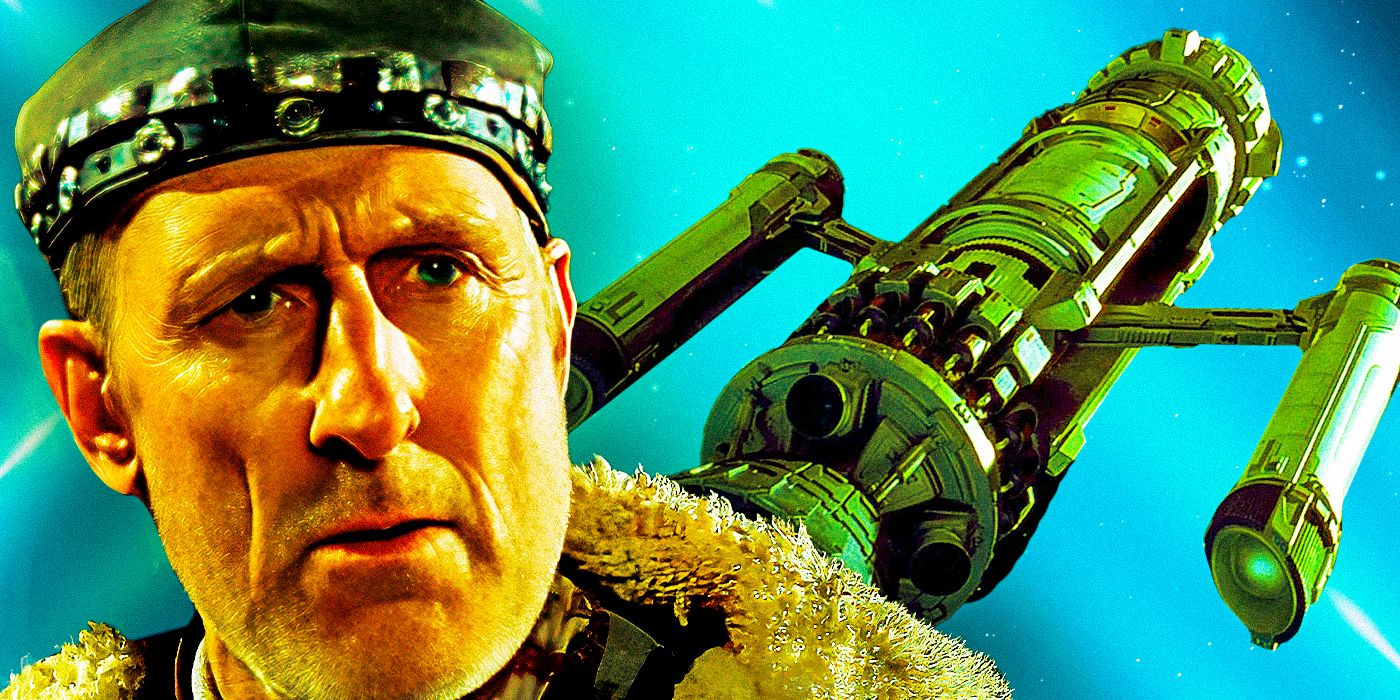
History is a funny thing. We tend to turn our pioneers into marble statues—unflinching, noble, and perfect. But if you actually met the man who broke the light-speed barrier, you’d probably find him passed out in a Montana bar with a half-empty bottle of tequila and Roy Orbison blasting on the jukebox.
Zefram Cochrane is the most important human in the history of Star Trek. Period. Without him, there’s no Federation, no Starfleet, and definitely no "boldly going" anywhere. But the gap between the legend and the man is wider than the Neutral Zone.
Honestly, the real Zefram Cochrane wasn’t trying to save the world. He just wanted to retire to a tropical island with a suitcase full of cash.
The Bozeman Incident: Success by Accident
It’s April 5, 2063. Earth is a mess. We’re talking post-World War III "horror show" levels of chaos. Most of the planet's governments have collapsed, and millions are dead from nuclear fallout. In the middle of this nightmare, in a repurposed Titan V missile silo in Bozeman, Montana, Cochrane is tinkering with a rocket called the Phoenix.
Now, if you ask a schoolkid in the 24th century, they’ll tell you Cochrane was a visionary. They’ve seen the 20-meter tall marble statue of him. They think he flew that ship to usher in a new era of peace.
He didn't. He did it for the money. He literally told Geordi La Forge that his motivation was "dollars" and "naked women." It’s kinda hilarious when you think about it—the foundation of a utopian future was built on a foundation of pure, unadulterated greed.
The flight itself was a miracle of "making do." Using a nuclear missile as the hull for a warp ship is peak human engineering. The Phoenix hit Warp 1, the Vulcans saw the signature from their survey ship (the T'Plana-Hath), and the rest is history. But remember: Cochrane had to be literally dragged to the cockpit. He tried to run away. He was terrified of his own success.
Why the Two Cochranes Don't Match
If you’re a long-time fan, you’ve probably noticed something weird. The Zefram Cochrane we see in The Original Series (TOS) episode "Metamorphosis" doesn't look or act like the one in the movie Star Trek: First Contact.
In the 1960s, actor Glenn Corbett played Cochrane as a chivalrous, handsome, and fairly "standard" hero. Fast forward to 1996, and James Cromwell gives us a lanky, cynical, alcoholic mess.
So, what gives?
- The Age Gap: In First Contact, Cochrane looks like he's in his 60s. But the math says he was born around 2030, making him only 33 during the flight in 2063.
- The Personality Shift: People argue that the "history books" version is what Kirk expected to find, while the "real" man was the one Picard met.
- The Radiation Factor: Some fans (and a few non-canon novels) suggest Cochrane suffered from radiation poisoning from the war, which aged him prematurely and fueled his drinking.
By the time Kirk finds him on that asteroid with "The Companion," Cochrane has been rejuvenated. He’s found a strange kind of peace. It’s a tragic arc, really. The man who gave humanity the stars ended up marooned on a rock, hiding from the very civilization he created.
The Tech: How Warp Actually Works
We use the term "Cochranes" to measure subspace distortion for a reason. Before him, space was too big. After him, it was a neighborhood.
Basically, Cochrane’s big breakthrough wasn't just "going fast." It was the Warp Field.
- The Matter-Antimatter Reaction: You need a lot of juice to bend space. Cochrane used a crude matter-antimatter reactor.
- Dilithium Crystals: These are the only things that can regulate that reaction without the whole ship turning into a second sun.
- Warp Coils: These generate the "bubble." The ship doesn't move through space; it moves space around the ship.
It’s worth noting that Cochrane’s design was "better" than other species' versions because it was adaptable. While Vulcans were using ring-ships, Cochrane’s nacelle design allowed for much higher speeds later on. He wasn't just the first; he was arguably the best engineer the species ever produced.
Life After the Flight
Most people think Cochrane just disappeared after the Vulcans landed. Not true. He stuck around for quite a while.
He worked with Henry Archer (Captain Jonathan Archer’s dad) on the Warp Five engine. He even gave the dedication speech at the Warp Five Complex in 2119. If you listen closely to that speech, you’ll hear him drop the line "to boldly go where no man has gone before."
Shortly after that, he hopped in a ship and vanished. He was 89 years old. Most people assumed he died in space, seeking one last adventure. In reality, he ended up in the Gamma Canaris region, where a cloud-like entity kept him alive for over a century.
The Mirror Universe Twist
If you want to see how important Cochrane’s personality was, look at the Mirror Universe. In the Enterprise episode "In a Mirror, Darkly," Cochrane doesn't shake the Vulcan’s hand.
He shoots him. Then he and his buddies raid the Vulcan ship. That one act of violence turns the "Federation" into the "Terran Empire." It shows that the future didn't just depend on Cochrane's engine; it depended on his choice to be just a little bit better than his worst instincts.
Facts to Keep Your Timeline Straight
- Birthplace: St. Paul, Minnesota (according to some sources) or simply "Earth."
- First Flight Date: April 5, 2063, at roughly 11:00 AM.
- Ship Name: The Phoenix.
- The Music: He prefers 20th-century rock and roll, specifically "Magic Carpet Ride" by Steppenwolf.
- The Legacy: The "Cochrane" is the standard unit of measurement for subspace field stress.
What This Means for You
You don't have to be a perfect person to do something great. That’s the real takeaway from Zefram Cochrane's life. He was a flawed, grumpy, reluctant hero who just happened to change the galaxy because he wanted a better life for himself.
If you're looking to dive deeper into the lore, start by re-watching Star Trek: First Contact. Pay attention to the scenes where he realizes what people think of him. It’s a masterclass in the "burden of greatness."
Next time you see a statue of a famous person, just remember—they might have preferred a drink and some loud music over a pedestal.
To truly understand the legacy, your next step is to watch the Star Trek: Enterprise pilot, "Broken Bow," to see his final recorded message to humanity.



