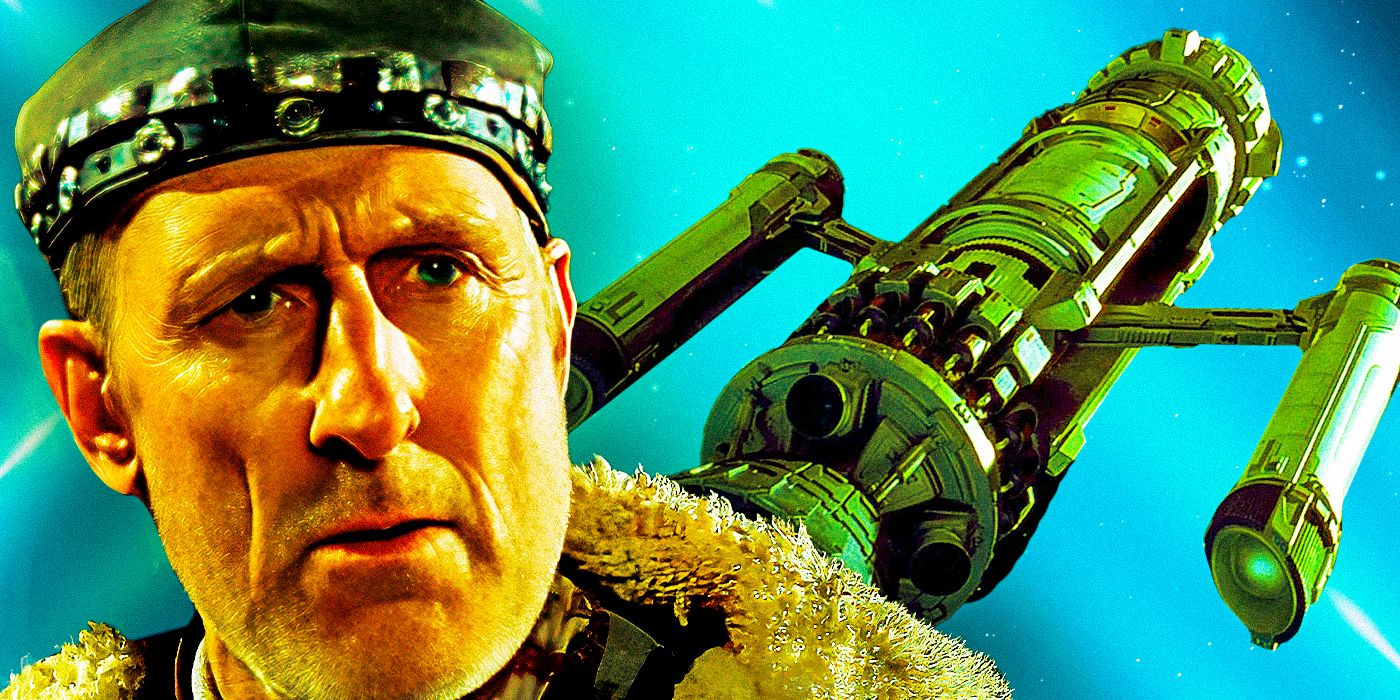
You probably picture him as a saint. A towering, marble figure with a hand outstretched toward the stars, leading a unified humanity into a golden age of exploration. That’s the version the 24th-century history books sell. It's the version the Federation wants you to believe. But honestly? If you actually met Zefram Cochrane in 2063, you’d probably just find a grumpy, middle-aged guy with a massive hangover and a serious case of impostor syndrome.
He wasn't some visionary trying to save the world. Not at first.
Basically, the guy just wanted to get rich. He wanted to retire to a tropical island filled with beautiful women and enough booze to forget that World War III just nuked half the planet. Instead, he ended up becoming the most important human in history. It’s a weird, messy story that involves nuclear missiles, 50s rock and roll, and a giant energy cloud that eventually turned him into a literal immortal.
The Montana Silo and the Ship Made of Junk
To understand Zefram Cochrane, you have to look at where he was on April 5, 2063. He wasn’t in a high-tech lab. He was in Bozeman, Montana.
The world was a wreck. We’re talking post-atomic horror territory here. Governments had collapsed, and millions were dead. In the middle of this chaos, Cochrane and his partner, Lily Sloane, were scavenging parts to build the Phoenix.
Now, the Phoenix is iconic, but let’s be real—it was a repurposed Titan II nuclear missile. He literally took a weapon of mass destruction and stuffed a warp core into it. People sometimes ask how one guy built a faster-than-light engine in a shed. The truth is, he didn’t do it alone, and he didn't do it from scratch. He was a brilliant physicist—some accounts say he studied at MIT or Caltech—and he’d been obsessed with matter-antimatter reactions for years.
He didn't "discover" warp drive like a lucky accident. He engineered it through sheer, stubborn brilliance under the worst possible conditions.
Then the Borg showed up. Or rather, they would have shown up if the crew of the Enterprise-E hadn't followed them back through time. This is where the lore gets trippy. In the "official" timeline, the crew from the future actually helped him finish the ship. Geordi La Forge and Reginald Barclay were basically fanboying over him while they turned wrenches on his engine. Cochrane hated it.
Imagine trying to build a car in your garage and some guy from the year 2373 shows up to tell you that you're going to have a 20-meter statue and a planet named after you. It freaked him out. He tried to run away. He literally had to be shot with a stunner just to get him into the cockpit of his own invention.
Why April 5, 2063, Changed Everything
The launch itself was kind of a disaster waiting to happen.
Cochrane, Riker, and Geordi blasted off to the tune of "Ooby Dooby" by Roy Orbison. Not exactly the "Space: The Final Frontier" vibe you’d expect. But when he hit the throttle and the Phoenix broke the warp barrier, everything changed.
That tiny warp signature caught the attention of a Vulcan survey ship, the T'Plana-Hath, which just happened to be passing through the solar system. The Vulcans didn't give a damn about Earth until that moment. Their rule was simple: if a species hasn't figured out warp travel, leave them alone.
When that Vulcan ship landed in Bozeman and that robed alien did the split-fingered salute, the "old" world died. Poverty, war, and disease didn't vanish overnight, but for the first time, humanity realized they weren't the only ones at the party. Cochrane gave us the keys to the galaxy, even if he was mostly just trying to find a way off the planet.
The Alpha Centauri Mystery and the "Second" Cochrane
Here is where the history gets really confusing for casual fans.
If you watch The Original Series, you meet a very different Zefram Cochrane. This version (played by Glenn Corbett) was found by Captain Kirk on a tiny asteroid in the Gamma Canaris system. Wait—how? Wasn’t he in Montana?
Well, after the first contact, Cochrane lived a long, famous life. He helped design the Warp 5 engine (the one Jonathan Archer’s dad worked on). He became a living legend. But by the time he was 87, he was tired. He was dying. He didn't want a state funeral. So, he did what any eccentric genius would do: he took a shuttle and flew into deep space to die alone.
Except he didn't die.
An energy being called "The Companion" found him. It rejuvenated him, stopped his aging, and kept him as a sort of "pet" on an asteroid for 150 years. When Kirk and Spock found him in 2267, he looked like he was in his 30s.
This creates a weird continuity headache. James Cromwell’s Cochrane in the movies looks way older in 2063 than Glenn Corbett’s Cochrane does in 2267. Hardcore fans usually explain this away by saying Cochrane had radiation poisoning in 2063 that made him look aged, and the Companion "fixed" him back to his prime.
Whatever the case, the man who started the Federation ended up living out his days in total obscurity on a rock with a cloud and a woman named Nancy Hedford. Honestly? That probably suited him way better than being a statue in Montana.
The Mirror Universe: The Dark Version
We can't talk about Zefram Cochrane without mentioning the "Mirror Universe" version.
In the Star Trek: Enterprise episode "In a Mirror, Darkly," we see what happens if Cochrane wasn't just a grumpy drunk, but a straight-up murderer. When the Vulcans land in Bozeman, Mirror-Cochrane doesn't shake hands. He pulls out a shotgun, kills the Vulcan captain, and leads a mob to strip the Vulcan ship for tech.
That single act of violence created the Terran Empire—a fascist, galactic nightmare. It’s a wild reminder that the "Trek" future we love was a coin toss. It depended entirely on whether one flawed man decided to be a pioneer or a predator.
What You Should Take Away From Cochrane's Legacy
- He was human first. Don't buy into the "great man" myth. He was a guy with flaws who did something great anyway. That's the whole point of his character arc.
- The technology was scavenged. Warp drive wasn't born in a sterile lab; it was born in a missile silo with scraps. It's a testament to human ingenuity when everything else falls apart.
- The Vulcans were watching. They didn't come to save us; they came because we proved we were worth talking to. Cochrane's flight was the "Hello" that the universe finally answered.
If you're looking to dive deeper into the lore, your best bet is to re-watch the movie Star Trek: First Contact. It's widely considered one of the best in the franchise for a reason. Pay attention to the scenes between Cochrane and Lily—she’s arguably the real hero who keeps him grounded while the world is literally ending around them.
After that, check out the Enterprise pilot "Broken Bow" to see his final recorded speech before he disappeared. It’s the closest we get to seeing the "legendary" version of the man before he went off the grid for good.



