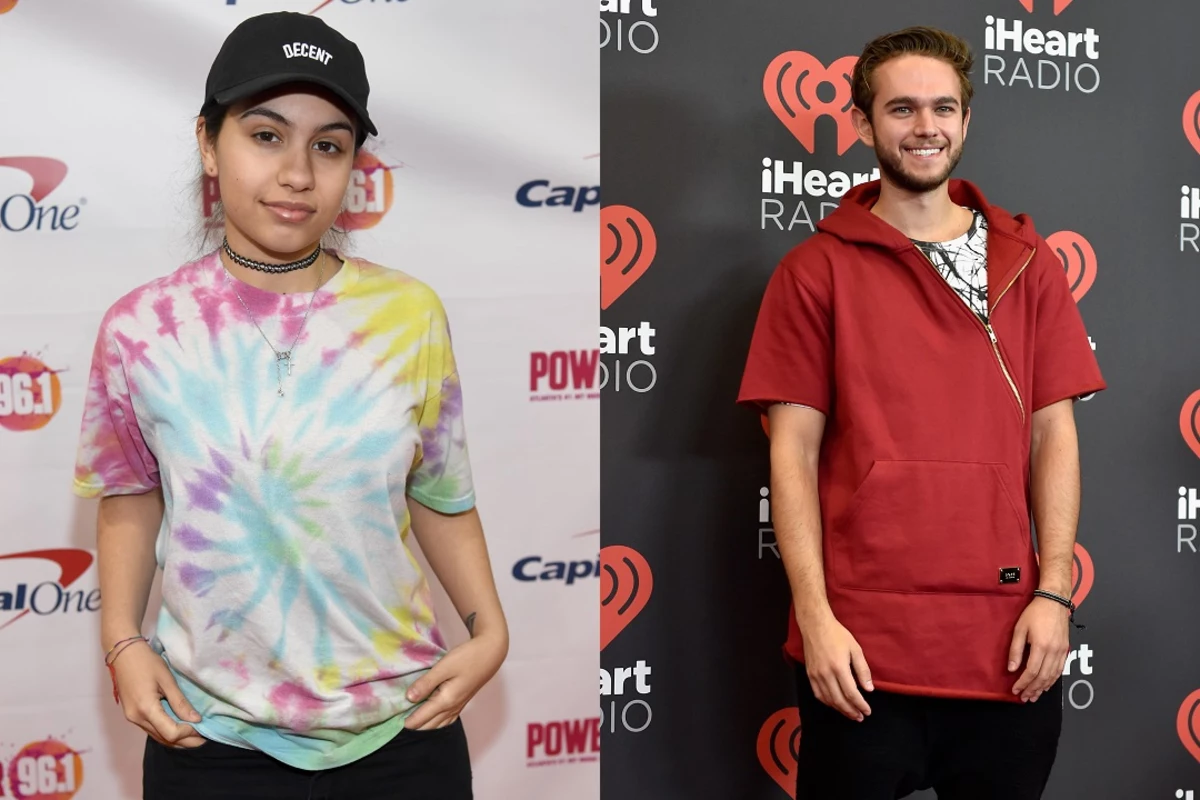
You remember the ticking clock, right? That sharp, rhythmic metronome that felt like it was counting down the seconds until a breakup actually happened. It’s been almost a decade since Zedd & Alessia Cara Stay first hit the airwaves, yet if you turn on a Top 40 station or scroll through a nostalgic "Summer 2017" playlist today in 2026, the track doesn't sound aged. Not even a little.
Honestly, the mid-2010s were a weird time for EDM. Everything was trying to be "Clarity" or some massive, stadium-shaking anthem. Then Zedd decided to dial it back, grab a vocoder, and team up with a girl from Brampton who was known for an anti-party anthem. It shouldn't have worked. It should have been another generic radio filler. Instead, we got a masterclass in pop precision.
The "Stay" Formula: A Ticking Clock and a Risky Sample
Most people think "Stay" is just a catchy synth-pop tune. But if you look under the hood, Zedd was doing some pretty experimental stuff for a mainstream DJ. He literally used the sound of a ticking clock as a percussion element. It’s subtle, but it drives the anxiety of the lyrics.
Then there’s the elephant in the room: the "Poltergeist" sample.
Shortly after the song dropped in February 2017, fans of the alternative artist BANKS noticed something. The hummed vocal melody in the intro and throughout the track sounded eerily similar to her 2016 song "Poltergeist." BANKS herself even acknowledged it on social media at the time, basically saying "my fans know." It didn't turn into a massive legal battle, but it added a layer of "if you know, you know" grit to a song that was otherwise destined for the Disney Channel.
Why Alessia Cara Was the Secret Weapon
Let's be real: Zedd is a genius producer, but he needs a specific kind of voice to ground his digital worlds. He’d worked with Ariana Grande and Hayley Williams, both of whom have massive, operatic ranges. Alessia Cara was different. She had this "cool girl next door" vibe—raspy, grounded, and a little bit tired of everyone’s nonsense.
- The Meeting: They first crossed paths at the HALO Awards rehearsals. Zedd heard her sing and immediately realized she wasn't just a studio creation.
- The Vocal Take: Alessia has mentioned in interviews that working with Zedd was "scary" at first because it was her first real foray into electronic music.
- The Result: Her performance on "Stay" isn't just singing; it’s pleading. When she hits those notes in the pre-chorus, you actually believe she’s trying to stop someone from walking out the door.
Breaking Down the Charts (And Why They Mattered)
In 2017, "Stay" was everywhere. It peaked at Number 7 on the Billboard Hot 100 and stayed in the Top 10 for what felt like an eternity. It also snagged the Number 1 spot on the Mainstream Top 40.
But the real proof of its staying power—no pun intended—is the certifications. We’re talking 7x Platinum in Australia, 8x Platinum in Canada, and over a billion streams on Spotify long before that was a common milestone. It won a Best Dance Video award at the 2017 MTV VMAs and even grabbed a Grammy nomination for Best Pop Duo/Group Performance.
The Music Video's "Sliding Doors" Reality
If you haven't watched the music video directed by Tim Mattia recently, it’s worth a re-watch. It uses a non-linear "what if" narrative.
In one timeline, Zedd and Alessia meet in a hotel elevator. They spend a sun-drenched day driving a convertible through the Los Angeles coast, looking like the definition of "forever young." In the other timeline, Zedd misses the elevator by a split second. They never meet. Their lives continue in parallel, lonely and unremarkable. It perfectly mirrors the song's central thesis: everything can change in a minute. Or a second.
What Most People Get Wrong About the "Zedd Sound"
After "Stay," Zedd released "The Middle" with Maren Morris. Because they sounded somewhat similar, critics started claiming Zedd had "found a template" and was just repeating himself.
That’s a bit of a lazy take.
If you listen closely to the production of Zedd & Alessia Cara Stay, it’s actually much "funkier" and more disco-influenced than his later work. There are augmented chords—like that $A\flat$ augmented chord in the break—that you almost never find in Top 10 pop. It’s a jazz-adjacent technique hidden inside a dance track. That’s the "Zedd" touch that people miss when they just label it as "EDM."
Actionable Insights for Your 2026 Playlists
If you're looking to capture that specific "Stay" energy in your current listening habits, don't just stick to the radio edits.
- Listen to the "Acoustic" Version: Alessia Cara’s raw vocal on the stripped-back version proves the song has "good bones." It doesn't need the synths to be a heartbreaker.
- Check out the Jonas Blue Remix: If you want something that hits harder in a club setting, this is the definitive version from the era.
- Explore the "Poltergeist" Connection: Listen to BANKS’ song right after "Stay." It’s a fascinating look at how producers "borrow" and transform textures in the modern era.
The song remains a staple because it captures a universal feeling. We've all been in that position—sofa, rum and cola, wishing the clock would just stop for a second. Even in 2026, that feeling hasn't changed.
To keep your library fresh, try digging into the Stay + compilation album. It includes some of Zedd’s rarer collaborations from that same period that didn't get the same radio love as his work with Alessia, but carry that same "metronome-tight" production style. Or, better yet, go back and listen to Alessia’s The Pains of Growing to see how this collaboration influenced her solo sound toward a more "elevated pop" direction.


