He saw horses. Different colored ones. He saw a flying scroll the size of a porch and a woman shoved into a basket. If you’ve ever cracked open the Old Testament and felt like you stumbled into a fever dream, you’ve probably met Zechariah of the Bible. Honestly, he’s one of the most complex, strange, and deeply influential figures in the entire canon, yet most people just kind of skip over him because, well, the imagery is a lot to process.
But here’s the thing. You can't understand the New Testament—especially the trial and death of Jesus—without him. He’s the bridge. He's the guy who looked at a pile of rubble in a broken city and told everyone to pick up a shovel because something bigger was coming.
Who was Zechariah, anyway?
History tells us he wasn’t just a random guy with visions. He was a priest. That matters. It means he cared about ritual, the Temple, and the literal "house" of God. He started his work around 520 BC. Imagine the scene: the Jewish people had just come back from 70 years of exile in Babylon. They were tired. They were broke. They were living in a Jerusalem that looked more like a construction site gone wrong than a holy city.
Zechariah wasn't alone in the dirt. He worked alongside Haggai. While Haggai was the practical guy—basically saying "Hey, why are your houses nice while God’s house is a ruin?"—Zechariah was the visionary. He dealt in the "why" behind the "what." He was the son of Berekiah and the grandson of Iddo. Some scholars, like those who contributed to the Expositor's Bible Commentary, point out that his name actually means "Yahweh remembers."
That’s a heavy name to carry when your people feel forgotten.
The atmosphere in Jerusalem was bleak. They were under Persian rule. King Darius was on the throne. It wasn't exactly the "glory days" of Solomon. People were asking if God even cared anymore. Zechariah’s job was to prove that not only did God care, but He was also playing a very long game.
The Eight Night Visions (And why they’re so weird)
Zechariah gets right to the point. He has these eight visions in a single night. It’s a lot to take in. Imagine trying to explain these to your neighbors over breakfast.
First, there are the horses among the myrtle trees. They’ve been patrolling the earth, and they report that everything is "at rest." You’d think that’s good news, right? Peace is great. But for Zechariah, it was bad. It meant the nations who had oppressed Israel were comfortable and unpunished. It was a call for divine "un-rest."
Then it gets weirder.
He sees four horns and four craftsmen. The horns represent the powers that scattered the people, and the craftsmen are there to smash them. It’s visceral. It’s a promise of justice. Then comes the man with the measuring line. He’s trying to map out Jerusalem, but God basically says, "Don't bother. The city is going to be so full of people and livestock that you can't put a wall around it. I’ll be the wall of fire instead."
The High Priest and the Accuser
This is probably the most famous part of the early chapters. Zechariah sees Joshua the High Priest (not the "walls of Jericho" Joshua, a different one) standing before the Angel of the Lord. Joshua is wearing filthy clothes. Like, literal excrement-stained rags. Standing next to him is Satan—the Accuser—ready to point out every single reason why Joshua isn't fit for the job.
It’s a courtroom drama.
God doesn't argue that the clothes are clean. He just replaces them. He puts a clean turban on his head. It’s a powerful picture of grace that feels very modern. It says that the leadership of the people isn't based on their own perfection, but on a "brand plucked from the fire."
The Golden Lampstand and the Two Olive Trees
Ever heard the phrase "Not by might nor by power, but by my Spirit"? That’s Zechariah. It comes from a vision of a solid gold lampstand fed by two olive trees. It was a message to Zerubbabel, the governor. He was trying to finish the Temple, and he was failing. The vision was a reminder that human effort is a drop in the bucket compared to divine empowerment.
The "Two Zechariahs" Debate
If you talk to biblical scholars or take a seminary class, someone is going to bring up "Deutero-Zechariah."
Basically, the book feels like two different books stuck together. Chapters 1-8 are very grounded in the Persian period. They have dates. They have specific names. They focus on the Temple. Then you hit Chapter 9, and the tone shifts. The dates disappear. The language gets more poetic and apocalyptic. It talks about Greece.
Some experts, following the lead of 19th-century German higher criticism, argue that a later author wrote the second half. They point to the different vocabulary and the shift in focus from the Temple to a global end-times conflict.
Others stick to the traditional view. They argue that Zechariah just got older. Or that his focus shifted from the immediate present to the distant future. It's a debate that’s been running for centuries. Honestly? Both sides have decent points. Regardless of who penned the final chapters, the transition is jarring, but the themes of a coming King and a purified people stay consistent.
The Messianic Connection
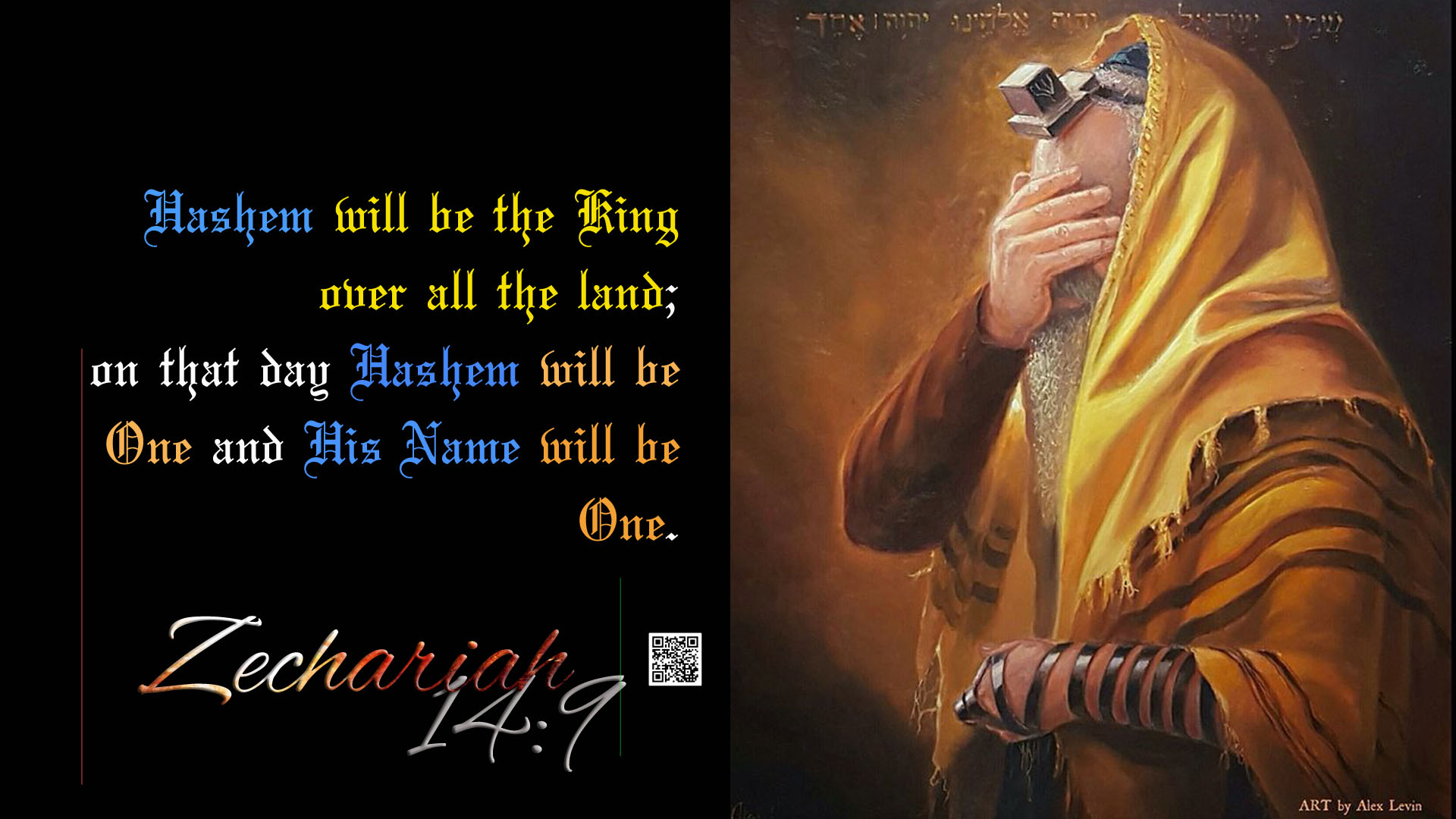
This is why Zechariah of the Bible is a staple in Christmas and Easter services. He is the most quoted minor prophet in the New Testament. If you’ve ever wondered why Jesus rode into Jerusalem on a donkey, look at Zechariah 9:9.
"Rejoice greatly, Daughter Zion! Shout, Daughter Jerusalem! See, your king comes to you, righteous and victorious, lowly and riding on a donkey, on a colt, the foal of a donkey."
It wasn't a random choice. It was a deliberate, "I am that guy" statement.
Zechariah also talks about the "thirty pieces of silver." He talks about the "one they have pierced." He talks about the shepherd being struck and the sheep scattering. When the Gospel writers—Matthew, Mark, Luke, and John—were trying to make sense of the crucifixion, they didn't just look at the Psalms. They looked at Zechariah.
He predicted a King who would be a Priest. In the ancient world, those were two very separate roles. You were either a king (political/military) or a priest (religious). You didn't cross the streams. But Zechariah insisted they would meet in one person.
The Problem of the "Two Zechariahs" in the Gospels
There is a weird moment in the Gospel of Matthew where things get confusing. In Matthew 23:35, Jesus mentions "Zechariah son of Berekiah," whom you "murdered between the temple and the altar."
Now, if you look at the Old Testament book of Chronicles, there is a Zechariah (son of Jehoiada) who was stoned to death in the Temple court. But the prophet Zechariah (the one we're talking about) was the son of Berekiah.
Did Jesus mix up the names? Did Matthew? Or was the prophet Zechariah also murdered in a way the Old Testament doesn't record? Some Jewish traditions, like those found in the Targum Lamentations, suggest the prophet was indeed killed in the Temple. It’s a bit of a historical mystery. It shows that being a prophet in Jerusalem was a high-risk, low-reward job description.
The Hard Truths About Ritual
People in Zechariah’s time were big on fasting. They had all these scheduled days to mourn the destruction of the old Temple. They asked Zechariah, "Should we keep doing this?"
His answer was pretty blunt.
He basically asked them, "When you were fasting, were you doing it for God, or just because you felt sorry for yourselves?" He told them that what God actually wanted wasn't more hungry people sitting in ashes. He wanted them to:
- Administer true justice.
- Show mercy and compassion.
- Stop oppressing widows and orphans.
- Stop plotting evil against each other in their hearts.
It’s a classic prophetic "gut check." It’s easy to skip lunch for a religious reason. It’s much harder to stop being a jerk to your neighbor or to fix a broken legal system. Zechariah pushed the people to realize that a new Temple was pointless if the people inside it hadn't changed.
Why Zechariah Matters Right Now
We live in a world that feels a bit like post-exilic Jerusalem. Everything is a bit fractured. People are cynical. We’re tired of "construction" that never seems to finish.
Zechariah’s message is about the "day of small things." He famously asked, "Who dares despise the day of small things?" He knew that big shifts start with small, seemingly insignificant acts of faithfulness. Rebuilding a wall. Laying a single stone. Choosing mercy over a grudge.
He also reminds us that the world is bigger than what we see. His visions of "chariots between two mountains of bronze" and "measuring lines" suggest a spiritual reality that is active, even when the physical world looks like a stagnant mess.
How to Actually Read the Book
If you want to tackle the book of Zechariah, don't try to read it like a novel. You’ll get a headache.
Start with the historical context. Read Ezra chapters 1-6 first. That gives you the "set" for the play. Then, when you get to the visions in Zechariah, don't obsess over every single detail of the "flying scroll." Look for the big picture.
- Visions 1-3: God is returning to Jerusalem.
- Visions 4-5: The leadership is being cleansed.
- Visions 6-8: Evil is being removed from the land.
Once you get past the visions, pay attention to the shift in Chapter 9. That’s where the "Messianic" stuff kicks into high gear. It’s poetic, it’s intense, and it’s meant to give hope to people who feel like they’re stuck in a dead-end street of history.
Taking Action: Applying the Zechariah Mindset
You don't have to be a religious scholar to get something out of this. The themes are universal.
Don't despise your "small start." Whatever you’re building—a career, a relationship, a habit—the beginning is usually ugly and unimpressive. Zechariah says that’s okay. The finish line is guaranteed if the foundation is right.
Audit your "why." Like the people asking about fasting, ask yourself if your routines are actually doing anything. Are you just going through the motions, or is there actual "mercy and compassion" behind your actions?
Look for the "Wall of Fire." In a world where we’re obsessed with security—passwords, fences, insurance—Zechariah suggests that true protection is often invisible. It’s about being aligned with something bigger than yourself.
Read the source material. Seriously. Go read Zechariah 3 and 9. See if you recognize the imagery. It’s some of the most vivid writing in human history.
Zechariah of the Bible isn't just a relic of the Persian Empire. He’s a reminder that even in the middle of ruins, there’s a blueprint for something better. You just have to be willing to see the horses in the trees.