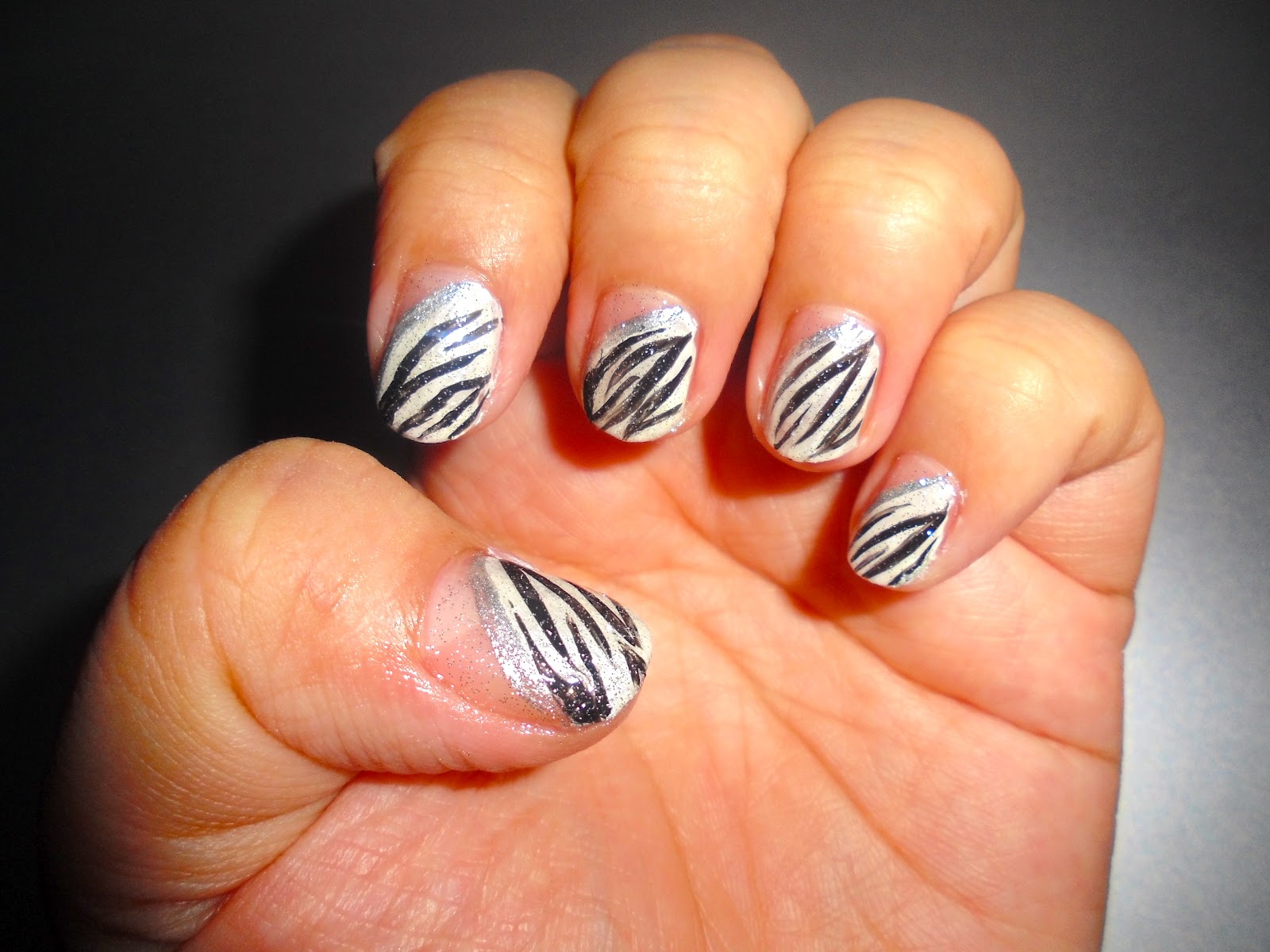
You’ve probably seen it. That striking, high-contrast wiggle of black and white that somehow manages to look expensive and chaotic at the same time. Zebra print nail art has this weird reputation for being "too much," but honestly? It’s basically a neutral. Just like a leopard print coat or a pair of white sneakers, these stripes go with everything because they aren’t trying to compete with your outfit. They’re just there, being iconic.
Trends cycle fast. One minute we are all obsessed with "clean girl" sheer pinks, and the next, everyone wants 3D chrome claws that look like they belong in a sci-fi movie. But animal prints, specifically the zebra variety, occupy a strange, permanent middle ground in the nail world. They never really leave the chat.
The Science of the Stripe (And Why Your Brain Likes It)
There is actually a reason why we find these patterns so satisfying to look at. In nature, a zebra's stripes aren't just for fashion; they create something called "motion dazzle." This confuses predators by making it hard to track the outline of the animal. On your nails, that same visual trickery works in your favor. It hides imperfections. If your nail shape is slightly off or you have a tiny chip, a busy zebra pattern masks it perfectly.
The most interesting thing about zebra print nail art is that it doesn't have to be black and white. While the classic monochrome is the gold standard—think Y2K vibes and 90s nostalgia—modern versions are leaning heavily into "jelly" polishes and velvet finishes.
Imagine a deep forest green stripe over a mint base. It’s still zebra, but it feels grounded. Or, if you’re feeling particularly experimental, try holographic stripes over a matte black base. The contrast in textures is usually what separates a "cheap" looking DIY job from a high-end salon finish.
Getting the Lines Right Without Losing Your Mind
If you’ve ever tried to paint these yourself, you know the struggle is real. You start with one thin line, it looks a bit shaky, so you try to fix it, and suddenly your whole nail is just... black.
The secret that professional nail techs like Betina Goldstein or Chaun Legend (who has worked with the Kardashians) often emphasize is the "organic" nature of the line. Zebras aren't perfect. Their stripes aren't uniform. They taper. They fork. They stop abruptly.
- Start with your base color and let it dry completely. If you’re using gel, cure it.
- Use a long, thin striper brush. Not the brush that comes in the bottle. That thing is way too chunky for this.
- Apply very little pressure at the start of the stroke, press down slightly in the middle to thicken the line, and flick it away at the end to create that sharp, tapered point.
- Vary the direction. Some stripes should come from the left sidewall, others from the right. A few should just float in the middle.
If you make them too straight, they look like a barcode. If you make them too wiggly, they look like tiger stripes. Zebra stripes are "pointy." Think of them as long, stretched-out triangles rather than just lines.
Variations That Actually Work
Sometimes a full set of animal print is a bit much for the office. I get it. If you want the vibe without the commitment, the "Zebra French" is your best friend. Instead of a solid white tip, you do a zebra pattern just on the free edge of the nail. It’s sophisticated but shows you have a personality.
Another huge trend in late 2025 and heading into 2026 is the "mismatched" hand. You might do solid red on one hand and a full zebra set on the other. Or, more subtly, just one accent nail. But please, don't do the ring finger accent nail. It’s a bit dated. Try the thumb or the pinky for a more modern, "accidental" aesthetic.
Why the "Micro-Trend" Label is Wrong
People love to call everything a "core" or a "trend" these days. Mob Wife Aesthetic. Indie Sleaze. Whatever. But zebra print nail art predates the internet's obsession with naming things.
Look back at the 80s. It was everywhere. It was loud. Then the 90s hit, and it became part of that "supermodel off-duty" look. It’s cyclical because it relies on the most basic element of design: contrast.
When you put high-contrast black against a crisp white, your eye can't help but look. It’s a biological response. This is why brands like Dolce & Gabbana or Roberto Cavalli basically built entire empires on animal patterns. They know it triggers a sense of luxury and "wildness" that humans are naturally drawn to.
The Tools You Actually Need (No Fluff)
Stop buying those massive 50-piece nail art kits from random sites. You won't use 48 of those things. To master zebra print nail art, you really only need three specific items:
- A High-Pigment "Painting" Gel: Regular polish is often too sheer. You want a "one-coat" black or white that won't run.
- A 15mm or 20mm Striper Brush: The length of the bristles helps stabilize your hand. Short brushes pick up every little tremor in your fingers. Long bristles act like a rudder.
- A Matte Top Coat: Even if you like shine, try a matte finish on zebra print at least once. It makes the pattern look like actual fabric or skin rather than plastic.
Common Mistakes to Avoid
One of the biggest blunders is overcrowding. You need "negative space"—or in this case, "base color space." If you pack the stripes too close together, the design loses its shape and just looks like a dark blob from a distance.
Also, watch your edges. Many people stop the stripe just before the edge of the nail. Don't do that. Wrap the stripe around the side and over the tip. It makes the design look like it’s part of the nail rather than a sticker stuck on top.
Another thing? Don't be afraid of "imperfections." Real zebra hides have scars, breaks, and weird wonky bits. If your line wobbles, just make it a "fork" in the stripe. Nobody will know. Honestly, it probably looks more authentic that way anyway.
Taking it Beyond Black and White
We’re seeing a massive shift toward "earthy" zebras. Think chocolate brown stripes over a cream base. It’s much softer on the eyes and looks incredible with gold jewelry.
If you're into the "aura nail" trend, try doing a blurred colorful center (maybe a soft purple or pink) and then layering black zebra stripes over the top. It adds a layer of complexity that looks like you spent hours in the chair, even if it only took an extra ten minutes.
The "Chrome Zebra" is also having a moment. You paint the stripes with a no-wipe top coat over a matte base, rub on some silver chrome powder, and suddenly you have 3D metallic stripes that catch the light every time you move your hands. It's distracting. In a good way.
Maintenance and Longevity
Animal prints are surprisingly hardy. Because the pattern is so busy, regrowth at the cuticle isn't as obvious as it is with a solid color, especially if you go for a nude or clear base. You can usually squeeze an extra week out of a zebra mani.
If you’re using regular polish, make sure you’re sealing those ends. Since zebra designs involve a lot of layered pigment, they can be prone to chipping if the top coat isn't thick enough to level everything out.
Actionable Steps for Your Next Manicure
If you're ready to try this, don't just wing it.
Start by pulling up a photo of an actual zebra. Not a cartoon, a real one. Look at how the stripes move around the joints of the animal. Now, treat your nail's C-curve like that joint. Let the stripes follow the natural curve of your finger.
If you’re going to a salon, ask for "hand-painted" work. Decals are fine, but they look flat. A real artist will vary the thickness of the lines to suit your nail shape. If you have short, square nails, thinner stripes will help elongate the look. If you have long stilettos, you can go much bolder and thicker with the pattern.
Go for a high-gloss finish if you want that "editorial" look, or go matte if you want something that feels a bit more "quiet luxury" (as much as zebra can be quiet, anyway). Either way, it’s a power move. It says you aren't afraid of being looked at, which is exactly what good nail art should do.
Check your current polish stash for a solid, opaque black and a long-haired brush. If you don't have a dedicated striper brush, you can actually trim a few bristles off an old eyeliner brush to get that ultra-fine point. Practice on a piece of paper first. Draw ten stripes. Make them all different. Once you feel the "flick" of the wrist, you're ready for the nails.
Stick to the "rule of threes." Usually, three main stripes per nail is the sweet spot for balance, with maybe two smaller "filler" lines near the edges. Any more than that, and you're entering barcode territory. Keep it organic, keep it messy, and it’ll look perfect.



