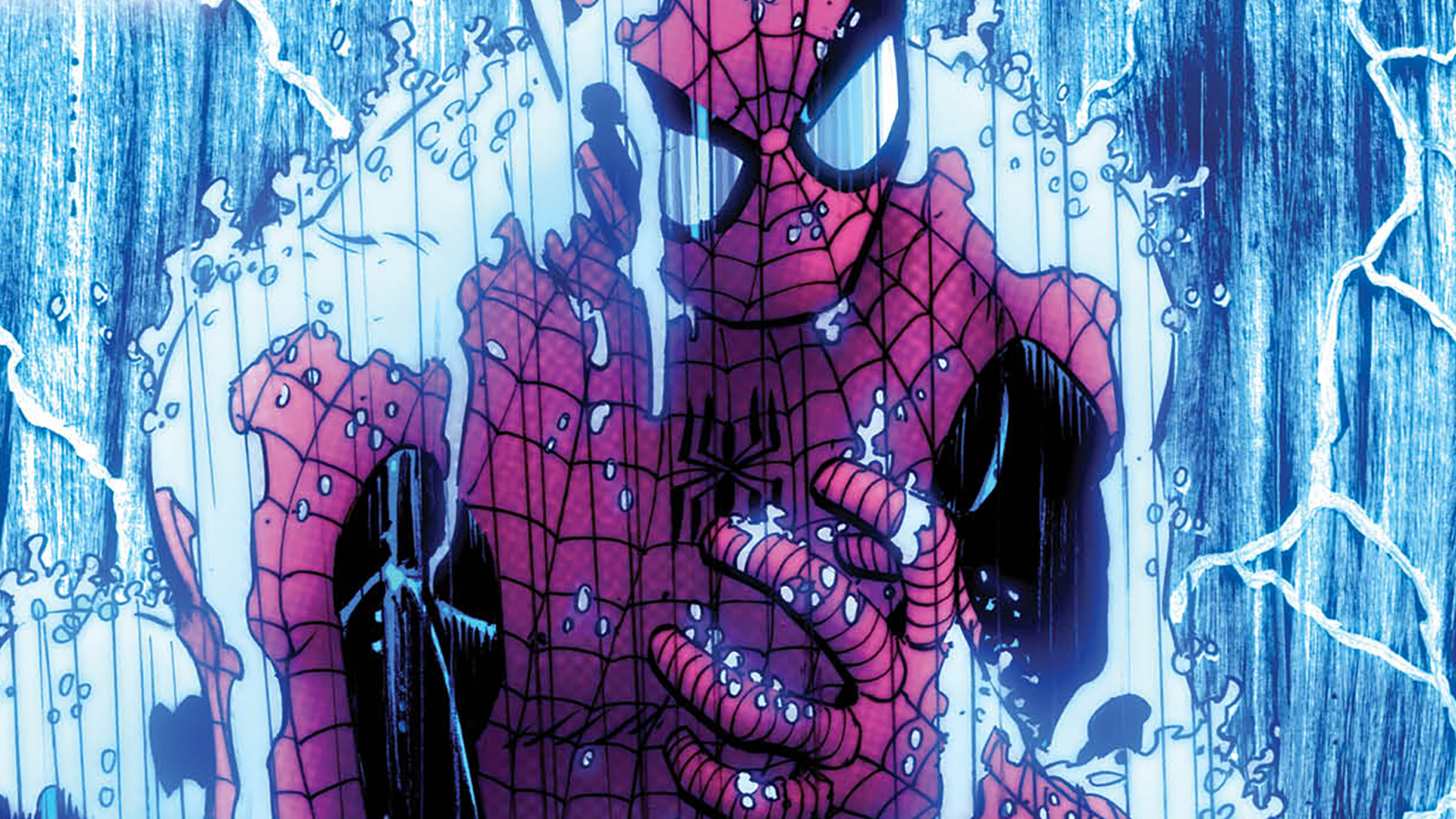
If you walked into a comic shop anytime between 2022 and late 2024 and whispered the name "Paul," you’d probably trigger a three-hour heated debate or a very deep, weary sigh. Honestly, that pretty much sums up the Zeb Wells Spider-Man era. It was a wild, exhausting, and undeniably high-selling period for The Amazing Spider-Man (ASM) that left the fan base more divided than a Peter Parker checkbook.
Wells took over the flagship title in April 2022, following the "Beyond" era. He didn't just walk in; he detonated a narrative bomb. The very first issue skipped six months of time, showing Peter Parker as a social pariah, broke, and—most shockingly—separated from Mary Jane Watson. This wasn't just a breakup. MJ was living with a new guy named Paul and two kids.
People lost their minds.
The Mystery Box That Lasted Too Long
The "What did Peter do?" mystery loomed over the book for over a year. It was a classic JJ Abrams-style mystery box. Why did the Fantastic Four hate him? Why was Aunt May disappointed? For 26 issues, readers were teased with the idea that Peter had committed some unforgivable sin.
When the truth finally came out in the "Dead Languages" arc, the payoff felt... thin. It turned out Peter had been trapped in another dimension with MJ and a man named Paul. To save MJ, Peter returned to Earth, causing an explosion in Pennsylvania that the superhero community blamed him for. Meanwhile, MJ stayed behind in that alternate world where time moved faster. Four years passed for her; only a few days passed for Peter.
By the time he got her back, she had built a life with Paul and "their" children.
Who is Paul Rabin?
You can't talk about Zeb Wells Spider-Man without talking about Paul. He became the ultimate avatar for fan frustration. Paul wasn't a villain (mostly), but he represented the editorial wall Marvel keeps building between Peter and MJ.
Later, we found out Paul was the son of an alternate-universe version of the villain Rabin and had inadvertently helped destroy his own world. The kids? They weren't even real. They were magical constructs created by Rabin to tether MJ to that dimension. When the kids vanished, MJ didn't run back to Peter. She stayed with Paul.
It was a bold choice. Some called it character assassination; Wells likely saw it as exploring how trauma changes people.
The Death of Ms. Marvel: A Turning Point
Then came The Amazing Spider-Man #26. This issue is infamous. Not only did it reveal the truth about Paul and the kids, but it also featured the death of Kamala Khan, aka Ms. Marvel.
Kamala had been a background character in the run, working as an intern at Oscorp to keep an eye on a "reformed" Norman Osborn. She sacrificed herself to save MJ from Rabin. The backlash was immediate. Fans felt her death was "fridging"—killing a popular female character (who wasn't even a Spider-Man regular) to further Peter's grief.
The fact that she was resurrected in the X-Men books as a mutant shortly after only made the initial death in Zeb Wells Spider-Man feel more like a cynical editorial mandate than a meaningful story beat.
The "Good" Norman Osborn Experiment
One of the more interesting, yet polarizing, aspects of the run was Peter working for Norman Osborn. After having his "sins" removed during the Nick Spencer run, Norman became a genuinely repentant man. He gave Peter a job, a high-tech suit (the Oscorp suit with the egg-shaped drones), and tried to be a mentor.
- The Conflict: Seeing Peter interact with the man who killed Gwen Stacy was inherently uncomfortable.
- The Payoff: It led to the "Spider-Man's First Hunt" arc, where Peter briefly inherited Kraven the Hunter's spirit and Norman’s sins. Watching a "dark" Peter Parker hunt down the Sinister Six was a visual treat, thanks to artists like Patrick Gleason and Ed McGuinness.
Wells clearly enjoyed writing the villains. His version of Tombstone was arguably the best the character has ever been. He turned Lonnie Lincoln into a terrifying, cold, and calculated mob boss who actually felt like a threat to the entire city during the "Gang War" event.
Why the Sales Stayed High Despite the Hate
Here is the weird part: despite the constant "I’m dropping this book" posts on Reddit, the Zeb Wells Spider-Man run was a massive commercial success. It consistently sat at the top of the sales charts.
Why? Because Zeb Wells knows how to write a "page-turner." Even if you hated the Paul subplot, you wanted to know what happened next. The art team was also world-class. Having legendary artist John Romita Jr. return to the title gave it a "prestige" feel that was hard to ignore.
The run also leaned heavily into the "misery porn" that has defined modern Spider-Man. There is a segment of the audience that, for better or worse, expects Peter Parker to be a loser. Wells took that to the absolute limit. Peter was beaten down physically, emotionally, and socially in almost every single issue.
The Conclusion of the Wells Era
The run officially ended with issue #60 in late 2024. The finale tried to wrap up several loose ends, giving Peter a moment of peace with Aunt May and a final, bittersweet interaction with MJ.
Wells didn't give fans the "big win" many were hoping for. Peter and MJ didn't get back together. Paul didn't disappear into a void. Instead, the book ended on a quiet note, emphasizing that Peter would just... keep going. Because that's what he does.
Joe Kelly took over the title in 2025, starting the "8 Deaths of Spider-Man" arc involving Doctor Doom. The transition felt like a hard pivot away from the grounded, soap-opera misery of Wells and back into high-concept superhero action.
Actionable Insights for Readers
If you're looking to revisit this era or understand its impact on the current 2026 landscape of Marvel Comics, keep these things in mind:
- Read the "Tombstone" Arcs: If you want the best of Wells, look for the issues involving the Rose and Tombstone. This is where his writing is most sharp and the character voices feel most authentic.
- Contextualize the Controversy: Most of the "hated" elements (MJ's breakup, Kamala's death) are now widely understood as editorial decisions rather than just one writer's whim.
- Check Out "Ultimate Spider-Man" (2024): If the Zeb Wells Spider-Man run left you frustrated by the lack of a Peter/MJ marriage, Jonathan Hickman's Ultimate Spider-Man was specifically designed as the "antidote" to this run. It features an older, married Peter with kids.
Ultimately, the Wells era will be remembered as the "Paul Era." It was a time when Marvel tested exactly how much pressure they could put on Peter Parker before the fans snapped. Love it or hate it, it’s one of the most significant chapters in Spidey’s 60-year history.
To truly understand where Peter Parker is going next under Joe Kelly, you have to look back at the wreckage Wells left behind. The current status quo—a more isolated Peter who is weary of the superhero community—is a direct result of the bridge-burning that happened over those 60 issues. Start by picking up the "Tombstone" trade paperbacks to see where the run actually found its footing before the multiverse madness took over.



