You’ve probably seen the trope a thousand times. A traveler stumbles into a dusty village, looks completely helpless, and then—shing—the bad guys are on the floor before they even realize he’s drawn his sword. It’s a classic. But before Marvel’s Daredevil or the various "blind master" archetypes in modern gaming, there was Zatoichi the Blind Swordsman. He’s not just a character; he’s a massive piece of Japanese cultural history that somehow turned a low-ranking masseur into the most feared man in the underworld.
Honestly, it’s kinda wild how long this franchise has lasted. We're talking 26 original films, a long-running TV series, and various reboots. The character was birthed from the mind of novelist Kan Shimozawa, but it was Shintaro Katsu who truly gave him life. Katsu didn't just play the role; he owned it. He brought this weird, endearing, and terrifying complexity to Ichi that most action stars today couldn't dream of pulling off. He's a man who gambles, drinks, and apologizes for his existence, right up until the moment he has to cut you in half.
What People Get Wrong About the Blind Swordsman
Most newcomers think Zatoichi is a samurai. He isn't. Not even close. In the rigid hierarchy of the Edo period, Ichi is a zato—the lowest rank of the guild for blind men, typically reserved for masseurs, acupuncturists, or musicians. He's a commoner. A "nobody." That’s actually the whole point of the character's enduring appeal. He represents the bottom of the social ladder kicking the teeth out of the corrupt elite.
People also assume he has some mystical "radar sense." While later films leaned into his heightened hearing, the early entries like The Tale of Zatoichi (1962) kept it grounded. He’s just a guy who practiced until his reflexes became supernatural. He uses a shikomi-zue, which is basically a straight-edged blade hidden inside a cane. Because the blade is concealed, it doesn't have a tsuba (handguard), which makes his reverse-grip fighting style both a necessity and a stroke of genius. It’s messy. It’s fast. It’s definitely not the "honorable" way a samurai would fight, which makes it all the more effective against the Yakuza thugs he constantly runs into.
The Shintaro Katsu Factor
You can't talk about Zatoichi the Blind Swordsman without talking about Shintaro Katsu’s lifestyle. The man was a legend off-camera, often getting into trouble with the law or blowing through production budgets. This "bad boy" energy seeped into the character. Ichi isn't a saint. He cheats at dice. He’s been known to use his disability to trick people.
But then you see his face when he realizes he's had to kill someone who wasn't truly evil, and you see the tragedy. Katsu played Ichi with a constant twitch, a rolling of the eyes, and a shuffling gait that made him look vulnerable. It was a masterclass in physical acting. He spent time studying how blind people actually moved in 1960s Japan to ensure it didn't look like a caricature. If you watch the 1962 original, notice how he uses his feet to feel the texture of the ground to know where he is in a room. That's the kind of detail that makes the character feel real.
The Famous Crossover That Almost Broke the Internet
Long before the MCU gave us crossovers, Zatoichi met Toshiro Mifune’s "Yojimbo" character in Zatoichi meets Yojimbo (1970). It was the 1970s equivalent of Batman v Superman. Fans argued for years about who would win. The film is actually pretty cynical and focuses on how these two "gods of death" are basically just tired of fighting. It’s a great example of how the series wasn't just about swordplay; it was about the burden of being a living weapon.
Why the Formula Never Got Stale
You might think 26 movies would get boring. "Oh look, Ichi goes to a new town, finds a kid or a woman in trouble, wins at the gambling den, and kills the boss." Sure, that's the skeleton. But the series experimented constantly. Some entries are straight-up comedies. Others are bleak tragedies where everyone Ichi tries to help ends up dead.
The cinematography in the Daiei Film era was also remarkably ahead of its time. They used bold colors, weird camera angles, and rhythmic editing during the fights. They weren't just making "B-movies." They were making art. The 1967 film Zatoichi the Fugitive is a perfect example of how they used the widescreen format to emphasize Ichi's isolation. He’s always at the edge of the frame, surrounded by a world he can't see but understands better than anyone else.
- The Sound Design: This is the secret sauce. Because Ichi relies on sound, the movies make us rely on sound. The "clack" of the dice, the "swish" of the grass, the subtle "click" of the sword being unsheathed. It creates an immersive experience that most modern action movies ignore in favor of loud explosions.
- The Moral Ambiguity: Ichi often laments his "blood-stained hands." He knows he's a monster in a way. This self-loathing keeps him human. You're not just rooting for a hero; you're watching a man try to find a scrap of peace in a world that won't let him.
- The Supporting Cast: The series frequently featured the best actors in Japan. From Takashi Shimura (the lead in Seven Samurai) to various Kabuki stars, the quality of the acting was always top-tier.
The Modern Reboots: Takeshi Kitano and Beyond
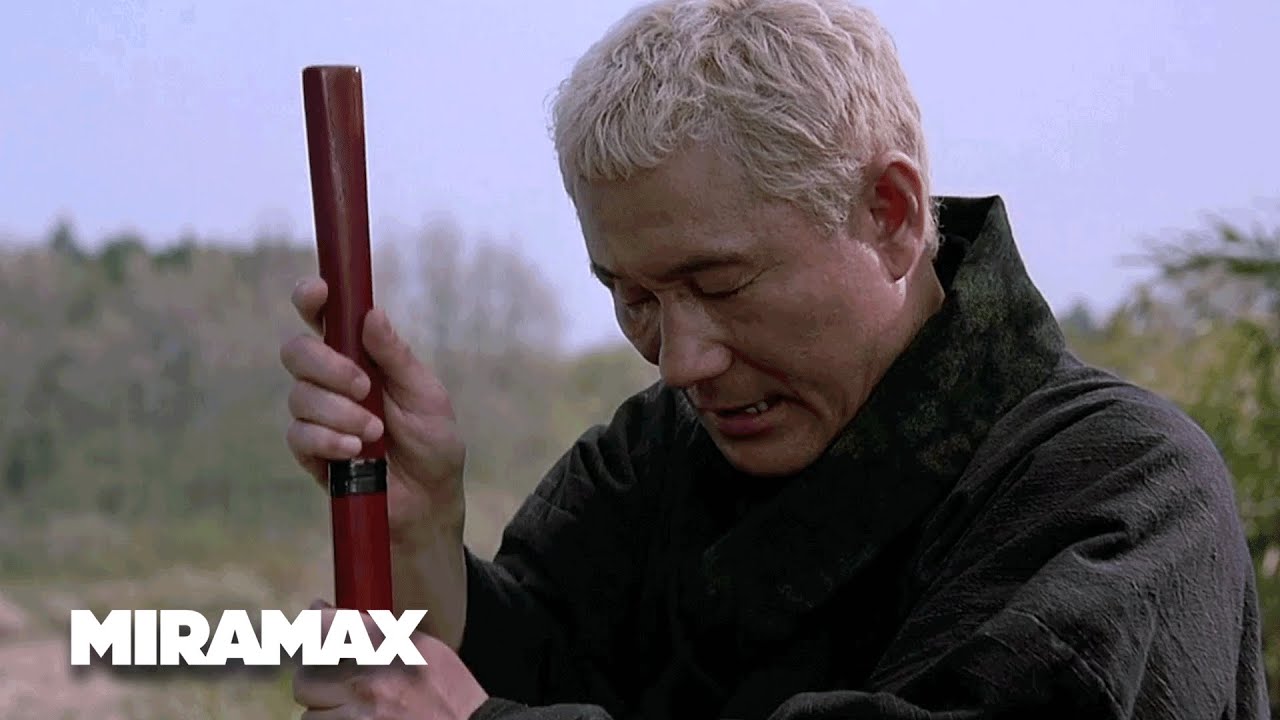
In 2003, the legendary "Beat" Takeshi Kitano took a crack at the character. He dyed Ichi's hair blonde and added a tap-dancing finale. It was weird. It was polarizing. But it proved that Zatoichi the Blind Swordsman could survive without Shintaro Katsu. Kitano’s version was colder, more of a "slasher" movie villain for the bad guys. It lacked the warmth of Katsu’s performance but captured the terrifying efficiency of the character.
There was even a female version, Ichi, in 2008 starring Haruka Ayase. It tried to ground the story in a more realistic, gritty drama. While it didn't have the staying power of the original series, it showed that the "Blind Swordsman" concept is a flexible archetype that can be molded to fit any era.
How to Actually Watch Zatoichi Today
If you’re looking to dive in, don’t feel pressured to watch all 26 films in order. They aren't strictly serialized. You can jump around. The Criterion Collection has a massive box set of the original films, and it’s basically the gold standard for restoration.
The Tale of Zatoichi (1962) is the essential starting point. It sets the tone and introduces his rival, a sickly but brilliant swordsman named Hirate. Their mutual respect is one of the best tropes in the genre. If you want something more "high octane," skip to Zatoichi and the Chest of Gold. The action choreography starts to get really wild around the mid-60s.
Honestly, the best way to enjoy these is to pay attention to the quiet moments. The scenes where Ichi is just eating rice or joking with a shopkeeper are just as important as the sword fights. That’s where the "human quality" lives. He’s a man who loves life, even though his life consists of being hunted by every two-bit yakuza in Japan.
Practical Steps for the Aspiring Cinephile
If you want to understand why this matters for modern storytelling or just want to enjoy a killer movie marathon, here is how you should handle it.
- Start with the First Three: These establish the "Black and White" roots and the transition to color. You see the character evolve from a serious swordsman to the more eccentric figure he became.
- Watch for the "Iaijutsu": This is the art of quick-drawing the sword. Zatoichi is the king of this. Notice how he never "poses" with his sword out. He draws, strikes, and sheathes in one fluid motion. It’s about efficiency, not flair.
- Compare to Lone Wolf and Cub: If you like Zatoichi, you’ll likely find yourself in the world of Itto Ogami. Seeing how these two franchises handle violence and wandering heroes is a great way to understand the 70s Japanese "Chambara" (sword fighting) boom.
- Listen to the Foley Work: If you have a good sound system or headphones, pay attention to the foley. The way the series uses ambient noise to tell the story is a masterclass for any aspiring filmmaker or writer.
Zatoichi isn't just some old movie character. He’s the blueprint. Every time you see a character use their perceived weakness as their greatest strength, you’re seeing a bit of Ichi. He taught us that being underestimated is a superpower. Just remember: if you're ever in a Japanese gambling den in the 1840s and a blind guy starts winning every round, it’s probably time to leave through the back door. Fast.



