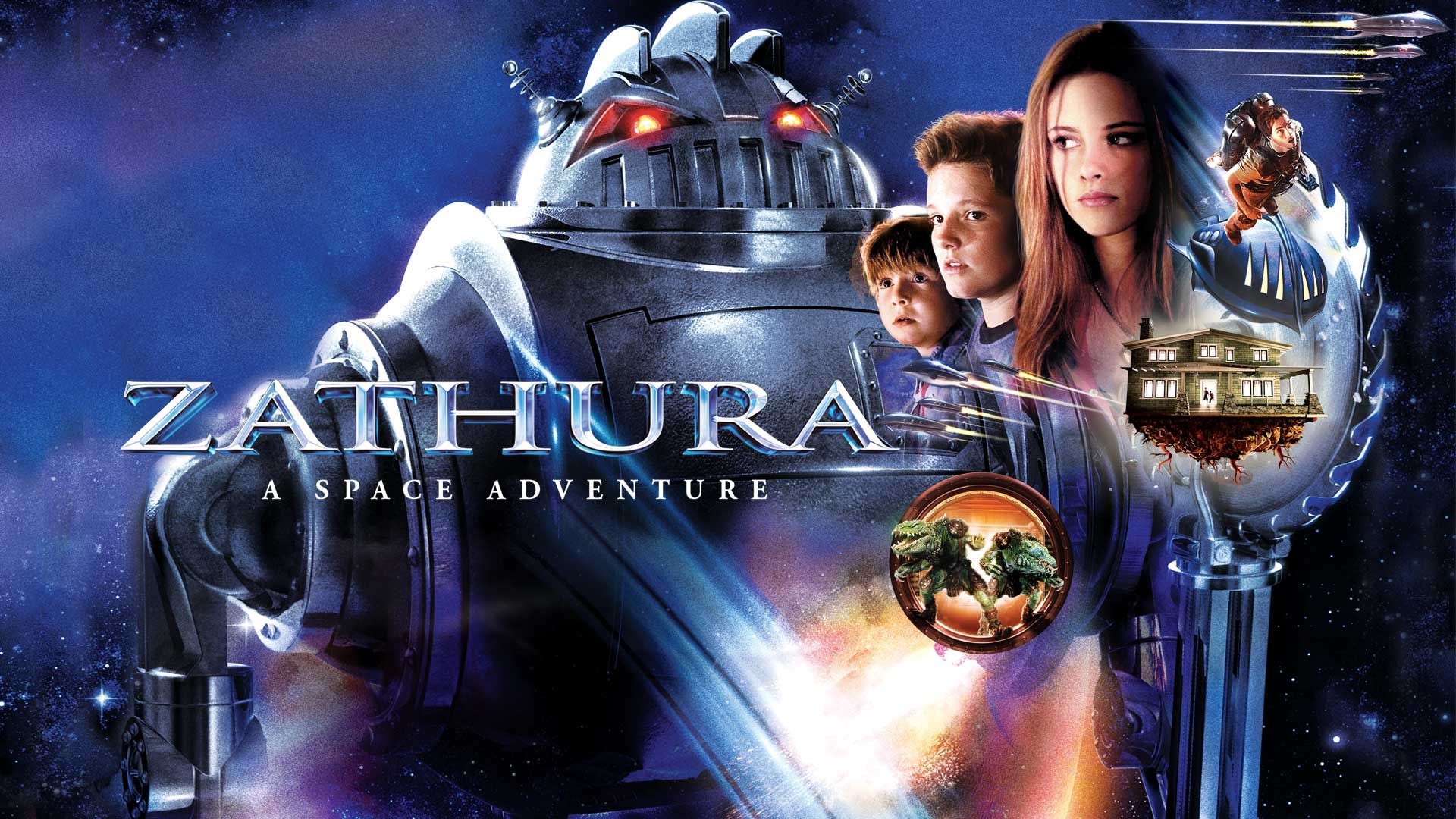
Back in 2005, a movie hit theaters that should have been a massive, world-conquering hit. It had a star-studded cast, a director on the verge of becoming a Hollywood titan, and a connection to one of the most beloved franchises in history. Yet, Zathura A Space Adventure basically vanished.
You probably remember it as "that space Jumanji movie."
Honestly, that’s a bit of a tragedy. While everyone was obsessing over the magical jungle drums of the 90s, Jon Favreau was busy quietly crafting a sci-fi gem that, in many ways, actually outshines its predecessor. It’s a film about two brothers, a basement board game, and a house that gets ripped out of its foundation and hurled into the deep, dark void of space.
The Jumanji Connection Nobody Understood
Most people don’t realize that Zathura A Space Adventure isn't just a rip-off. It is based on the 2002 book by Chris Van Allsburg, who—surprise—also wrote the original Jumanji. In the books, they are direct sequels. The kids from Jumanji actually leave the board game behind, and a new set of brothers finds it.
But the movie version? It’s complicated.
Sony marketed it as being "from the world of Jumanji," but the film itself never mentions the jungle game. Director Jon Favreau actually wasn't a huge fan of the original Jumanji movie’s heavy use of early CGI. He wanted something that felt more "real." Because of that, the film stands on its own two feet as a spiritual successor rather than a narrative one.
Why the Effects Still Look Incredible Today
Have you seen a Marvel movie lately? Sometimes the CGI looks like a blurry mess of pixels.
Zathura A Space Adventure doesn't have that problem. Why? Because Favreau was obsessed with practical effects. He hired the legendary Stan Winston Studio—the same guys who did Jurassic Park and Terminator—to build real things.
When you see the Zorgons (those terrifying lizard-like aliens), they aren't just digital ghosts. They were real actors in suits. The robot that chases the kids through the house? A massive, heavy hunk of metal and wires that actually existed on set. Even the meteor shower at the beginning involved small explosives hidden in the floor of the house.
- The Kristen Stewart "Ice" Model: To create the scene where the older sister, Lisa, gets frozen in "cryonic sleep," the crew didn't just use a filter. They built a full-scale, 1:1 frozen statue of Kristen Stewart. It had every freckle and detail perfectly replicated.
- The Tilting House: They built the entire interior of the house on a massive gimbal. If a planet's gravity was pulling the house to the side, the crew literally tilted the entire set. The actors weren't "acting" like they were falling; they were actually trying to stay upright.
This tactile feel is why the movie holds up. It feels dangerous. When a wall gets ripped out by a Zorgon harpoon, you’re seeing real wood and plaster splintering.
A Cast of Future Superstars
Looking back at the cast list now is kinda wild.
You’ve got a young Josh Hutcherson before he became Peeta in The Hunger Games. There’s Jonah Bobo as the younger brother, Danny. Then you have Kristen Stewart, years before Twilight made her a household name, playing the grumpy, perpetually annoyed older sister.
And then there's Dax Shepard.
He plays the Astronaut, a mysterious figure who shows up to help the kids survive. His performance is surprisingly grounded. He brings this weird, frantic energy that eventually makes total sense once you realize the movie’s big "twist" regarding his identity.
What Really Happened at the Box Office?
If the movie was so good, why did it flop?
The numbers are pretty grim. It had a budget of $65 million and only made about $65.1 million worldwide. Basically, it barely broke even on production costs, not even accounting for the millions spent on marketing.
The culprit? A boy wizard.
Zathura A Space Adventure was released on November 11, 2005. Exactly one week later, Harry Potter and the Goblet of Fire arrived in theaters. It was like a bicycle trying to race a freight train. The "Potter" hype was at an all-time high, and every family chose the Triwizard Tournament over a space-bound board game.
The Themes That Make It Last
Beyond the aliens and the rocket ships, the movie is really a character study about sibling rivalry.
Walter (Hutcherson) is a jerk. Let’s be real. He’s mean to his younger brother because he’s dealing with his parents' divorce and his own insecurities. The game of Zathura isn't just a series of obstacles; it’s a psychological test. The only way to win the game is for the brothers to actually like each other.
It’s a bit cliché, sure, but it’s handled with a lot more grit than your average Disney flick. There’s a scene where Walter almost wishes his brother away into the vacuum of space. It’s dark. It’s heavy. And it makes the eventual reconciliation feel earned.
Actionable Takeaways for Movie Fans
If you haven't seen this movie in a decade, or if you skipped it because you thought it was a "Jumanji clone," here is how to appreciate it now:
- Watch it for the "Favreau DNA": You can see the seeds of Iron Man in this movie. The way he handles technology, the pacing of the action, and the focus on "real" feeling sets are all there.
- Look for the "Jumanji" Easter eggs: Even though it’s not a direct sequel, keep an eye on the background. The way the game is designed—the clockwork gears and the "snapping" cards—is a direct homage to the 1995 film.
- Appreciate the Sound Design: The sound of the Zathura game "winding up" is iconic. It sounds like an old 1950s toy mixed with a ticking time bomb.
The movie is currently available on most streaming platforms and is a staple of "underrated" movie lists for a reason. It captures a specific moment in time when Hollywood was still trying to balance the magic of practical stunts with the possibilities of digital tech. It’s a high-stakes, claustrophobic, and surprisingly emotional ride that deserves a second chance.
Go back and watch the Zorgon attack scene. Compare it to a modern CGI-heavy blockbuster. You’ll see exactly why this "flop" is actually a masterpiece of the genre.



