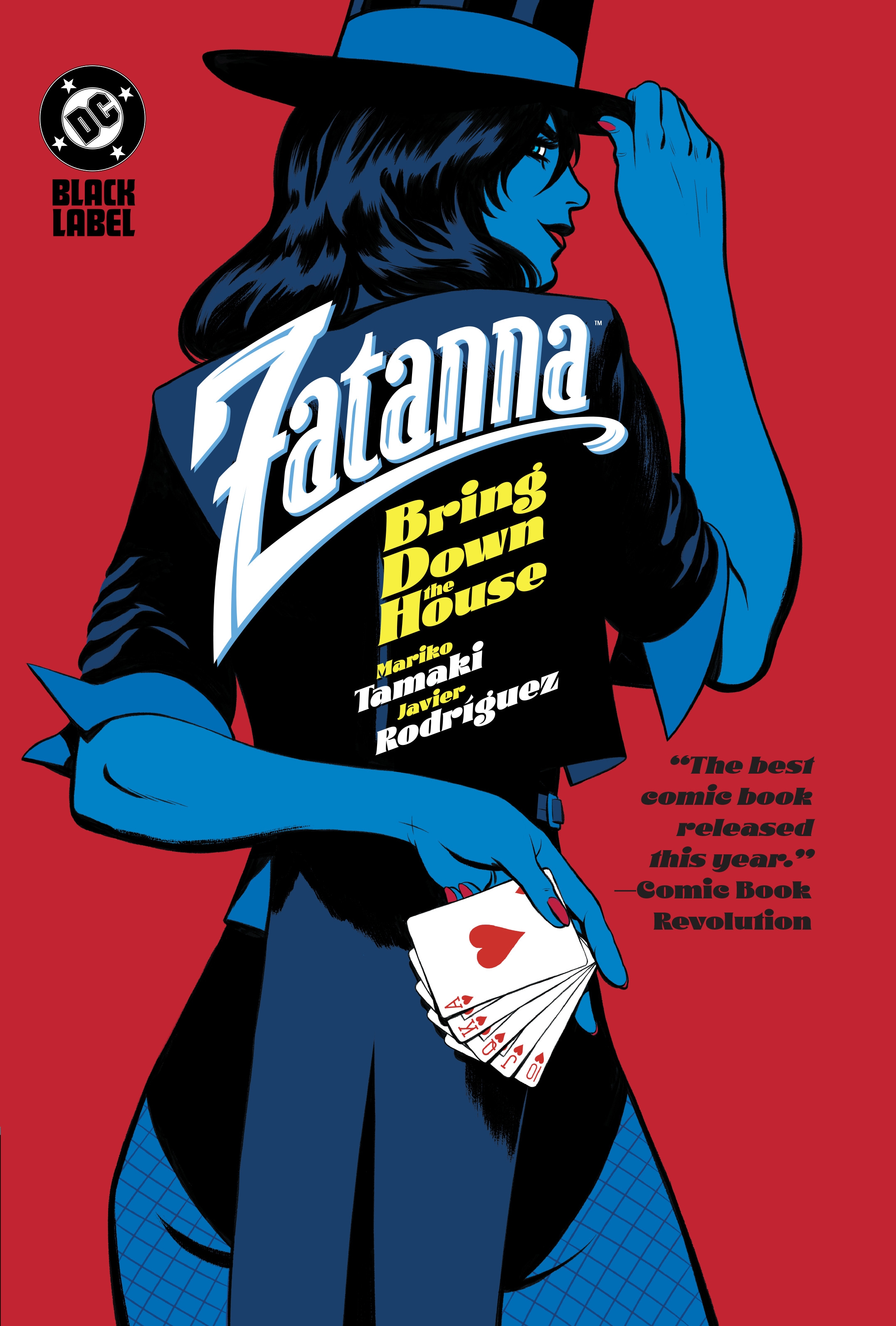
If you’ve spent any time in the DC magical neighborhood, you probably know the drill with Zatanna. She shows up, says something like "pots s'ti!" and saves the day with a wink and a top hat. Usually, she’s the one holding the team together. But the 2024 Black Label series Zatanna Bring Down the House decided to throw all that out the window and give us a version of Zee who is, frankly, a bit of a mess. And honestly? It’s the best she’s been in years.
Written by Mariko Tamaki with art by Javier Rodríguez, this five-issue run isn’t just another superhero story. It’s a surrealist psychodrama. It’s also kinda terrifying in a way that regular DC books rarely manage to be.
The Story We Didn’t Expect
The premise is basically "what if Zatanna was too scared to use real magic?" We find her in Las Vegas, but not at the MGM Grand or some flashy residency. She’s stuck at "The Golden Dice," a total dive where she performs cheap sleight-of-hand tricks because she’s terrified of what happens when she opens her mouth to speak real spells.
There’s a deep trauma here. As a kid, she tried to show off for a bully, things went sideways, and she ended up hurting people. It’s a "Year One" style reimagining that feels grounded despite the literal interdimensional rifts. When a demon eventually crawls out of the stage during her act, she can’t just "magic" it away. She has to actually deal with the fact that she’s been running from her own bloodline for decades.
Why Javier Rodríguez Is the MVP
Look, I’m a fan of Tamaki’s writing, but the art in Zatanna Bring Down the House is the real star. Rodríguez does things with panel layouts that shouldn’t work. He uses these vibrant, almost neon colors that make the magic feel like a physical, oily substance rather than just "energy beams."
- Panels slip and slide across the page like a deck of cards.
- The dream sequences involve a homicidal giant rabbit with demonic teeth.
- Shadows have claws that reach out from under Zatanna’s feet.
It’s trippy. It’s beautiful. It’s also very retro—think Darwin Cooke meets a fever dream. If you’re just flipping through the trade paperback, you’ll stop every three pages just to stare at how he draws a simple run through the desert.
The Elephant in the Room: John Constantine
You can’t have a DC magic book without John Constantine showing up, right? Some fans find it annoying that he’s always there, and yeah, he pops up here too. But his role in this series is actually quite interesting. Instead of the usual "I'm the coolest guy in the room" vibe, he’s more of a catalyst for Zatanna to stop being her own worst enemy.
The relationship between them is complicated. It’s messy. It’s sort of a "will they, won't they" that acknowledges they are both deeply broken people. Constantine knows things about her father, Zatara, that she isn't ready to hear. And let's be real—the version of Zatara we get here isn't the saintly mentor from the 1960s. He’s presented as a much more imposing, almost frightening figure whose legacy is a heavy weight on his daughter’s shoulders.
What Most People Get Wrong About the Ending
There’s been some chatter online about the ending being "rushed." I get that. Five issues is a tight squeeze for a story this dense. However, I think people miss the point if they’re looking for a massive Justice League-style showdown.
This isn't about Zatanna becoming the most powerful sorceress in the multiverse. It’s about a woman finally being able to look in the mirror without flinching. The "big bad" is less important than the internal shift that happens when she finally chooses to use her voice. It’s a character study first, and a magic battle second.
Why You Should Care
If you're tired of the same old superhero tropes, this is the book. It’s self-contained. You don't need to know forty years of continuity to understand it. You just need to understand what it feels like to be afraid of your own potential.
How to approach the series:
- Read it for the art first: Seriously, just soak in the visuals.
- Don't expect a typical "origin": This isn't a beat-by-beat remake of her first appearance.
- Pay attention to the rabbits: They aren't just stage props; they're weirdly central to the psychological horror elements.
- Grab the Hardcover: The colors pop way more on the high-quality paper used in the Black Label collected editions.
If you haven't picked it up yet, Zatanna Bring Down the House is a reminder that DC's Black Label is at its best when it lets creators get weird. It’s dark, it’s stylish, and it treats its lead character like a human being rather than a plot device.
To get the full experience, track down the collected hardcover edition released in early 2025. It includes all five issues plus the variant cover gallery, which features some incredible work by Jorge Jiménez and Artgerm. This is the definitive way to see why this specific run redefined the character for a modern audience.



