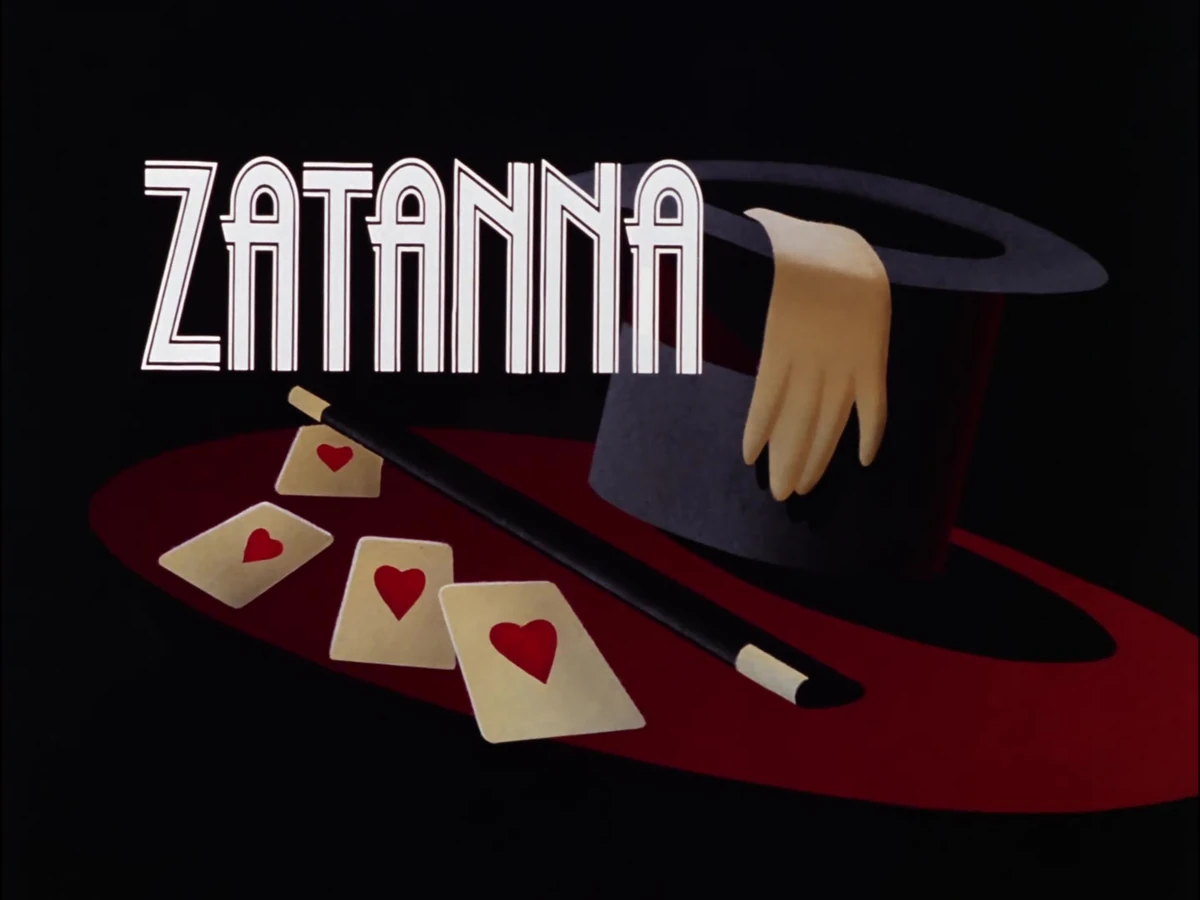
Batman isn’t exactly a "magic" guy. He likes gadgets, chemistry, and punching criminals in the jaw. But back in 1993, Batman: The Animated Series (BTAS) did something bold. It introduced Zatanna, the fishnet-wearing stage magician, and completely rewrote how we view Bruce Wayne’s early training years.
It’s honestly one of the best episodes in the whole run.
Most people think of Zatanna as a powerhouse sorceress who speaks backwards. In the comics, she’s basically a demi-god. But the animated series took a much more grounded approach. Here, she’s just a world-class illusionist. No real magic. Just smoke, mirrors, and a whole lot of history with the Dark Knight.
Why the "Zatanna" Episode Still Matters
The episode, simply titled "Zatanna," serves as episode 54 of the first season. It’s written by Paul Dini, who, if you didn't know, has a massive, well-documented obsession with the character.
In this version, Bruce Wayne didn't just learn to fight in a cave. He spent time as an apprentice to Giovanni Zatara, Zatanna’s father and the greatest escape artist of his era. Bruce wasn't "Bruce" then. He went by the alias John Smith. Super original, right?
Zatara knew Bruce wasn't there to join the circus. He sensed the kid’s inner turmoil. He taught him the "art of escape" anyway, sharing secrets he never told anyone else.
The Romance That Almost Was
While Bruce was learning to slip out of handcuffs, a teenage Zatanna (voiced by Julie Brown) was falling hard for him. They were "Zanna" and "John." It was cute. It was also tragic.
Bruce eventually left for Japan to continue his training, leaving Zatanna behind. He didn't even say a proper goodbye. He just disappeared. That’s the Batman way, I guess.
When they reunite in the present day, she’s a famous performer in Gotham. She gets framed for a $10 million theft by a magic-debunker named Montague Kane. Batman shows up to clear her name, but he doesn't tell her who he is. Not at first.
What Most People Get Wrong About This Version
If you grew up watching Justice League Unlimited, you might be confused. In that show, Zatanna does have real magic. She’s turning people into pigs and fighting gods.
But in Batman: The Animated Series, the creators made a specific choice.
No "Spookies" Allowed
Producer Alan Burnett famously had a rule: "No spookies." He wanted the show to stay grounded in science and noir. In fact, they originally wanted the Gentleman Ghost to be the villain of the Zatanna episode, but Burnett nixed it. He felt ghosts didn't fit the vibe.
Because of this, Zatanna in BTAS is purely a human being with incredible skills.
- She’s a master of sleight of hand.
- She’s a world-class escape artist.
- She uses misdirection as a weapon.
Honestly, it makes her connection to Batman stronger. They aren't different species; they are both people who trained their bodies and minds to do the impossible.
The Animation Struggle: The Missing Fishnets
Have you ever noticed her costume in this episode is a bit... different?
In the comics, Zatanna is famous for her fishnet stockings. In the show, she wears solid grey/black tights. This wasn't a censorship thing. It was a budget thing.
Paul Dini confirmed that fishnets are a nightmare to animate. If the lines don't stay perfectly aligned with the character's legs during movement, they "shimmer" and look like a glitchy mess. To keep the animation fluid, the fishnets had to go.
A Villain Who Actually Sucked
Let’s be real: Montague Kane is a boring villain. He’s a guy who hates magic and wants money. That’s it.
The real "villain" of the episode is the tension between Bruce and his past. When they’re trapped in a room with closing spiked walls, Batman has to use the very tricks Zatara taught him to save them. It’s a literal manifestation of his past coming back to bite him.
How the Show Changed DC Continuity Forever
Before this episode, Zatanna and Batman didn't really have a "childhood friends" vibe in the comics. They were just teammates in the Justice League.
Paul Dini’s writing was so influential that DC eventually moved this backstory into the main comic book canon. Years later, in the Detective Comics run by James Tynion IV, their childhood friendship became a core part of the lore.
It’s a rare case where a Saturday morning cartoon dictated the "official" history of 80-year-old characters.
The Ending That Hits Hard
The episode ends with a classic "shipping" moment. Zatanna finally realizes Batman is her old flame "John Smith" because he uses her nickname, "Zanna."
She tells him her father would have been proud of the man he became.
Batman doesn't say much. He rarely does. But you can see it on his face—or what's left of it under the cowl. He misses that life. He misses being just a guy learning magic tricks.
Actionable Insights for Fans and Writers
If you’re revisiting this episode or looking to understand why it’s a masterclass in character building, keep these things in mind:
- Watch the Flashbacks: Pay attention to how young Bruce carries himself. He’s already "Batman" in spirit—paranoid, driven, and focused.
- Notice the Music: The score by Peter Tomashek and Nerida Tyson-Chew uses whimsical, "magical" motifs that contrast sharply with the dark, moody Shirley Walker themes we usually get in Gotham.
- Check the Voice Acting: Vincent Schiavelli (who played the Penguin’s henchman in Batman Returns) voices Zatara. His voice has this perfect, weary wisdom.
Batman: The Animated Series remains the gold standard for superhero storytelling because it treated its guest stars like real people with real baggage. Zatanna wasn't just a "guest of the week." She was a mirror reflecting a version of Bruce Wayne that he buried a long time ago.
If you're looking for more DCAU history, check out the Justice League Unlimited episode "This Little Piggy" to see how their relationship evolved once actual magic entered the picture. It’s a much more comedic take, but the chemistry established in 1993 is what makes it work.



