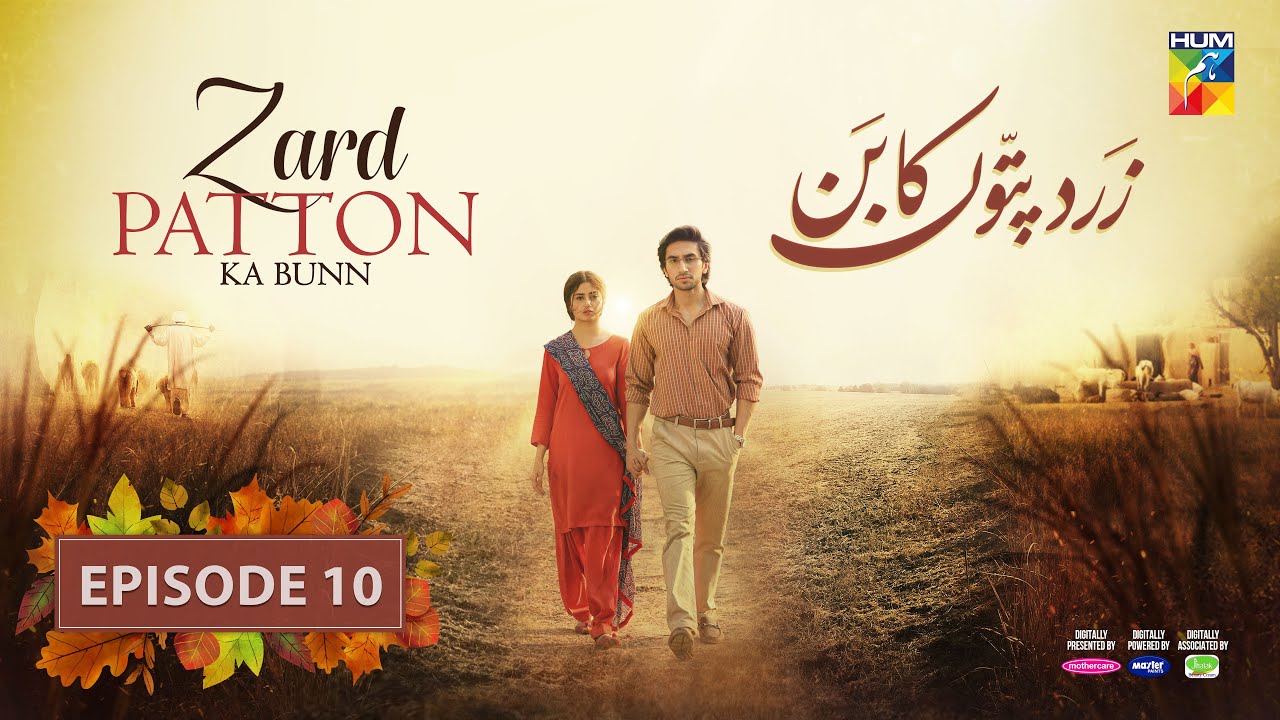
Honestly, if you're tired of the same old "cousin marriage" tropes and toxic mother-in-law sagas that seem to dominate Pakistani television, you’ve probably stumbled upon Zard Patton Ka Bunn. It’s different. Like, really different. Most people think it's just another "social message" show—the kind that feels like a lecture you didn't sign up for. But that’s where they get it wrong.
Mustafa Afridi and Saife Hassan basically teamed up to create something that feels more like a lived-in reality than a scripted TV show. Set in the fictional (but very real-feeling) village of Kesar Kalan, it follows Meenu, played by the powerhouse that is Sajal Aly. She’s a girl who wants to be a doctor. Simple enough, right? Except she lives in a place where the local elite would rather keep people uneducated to maintain their grip on power.
What Really Happened in Zard Patton Ka Bunn
The story isn't just about Meenu’s textbooks. It’s about the chaos of a large, messy family and a village struggling with things no one likes to talk about. We're talking overpopulation, a crumbling healthcare system, and the sheer audacity of a girl wanting more than just a kitchen to call her own.
Then comes Dr. Nofil. Hamza Sohail plays him with this quiet, grounded energy that honestly balances out Meenu’s high-octane personality perfectly. He’s a doctor who gets posted to this rural outpost and realizes that medicine isn't just about pills; it's about fighting the system.
The Characters That Stole the Show
While the leads are great, the supporting cast is what makes the world feel full.
- Rehan Sheikh as Meenu's Father: Finally, a dad in a drama who isn't a "heart-attack-on-command" trope. He’s supportive, flawed, and genuinely loves his daughter’s ambition.
- Mubashir Mehmood as Roshan: The bond between Meenu and her brother Roshan is probably one of the most wholesome things aired in 2024.
- Adnan Shah Tipu: He plays the village Maulana, but not the stereotypical one we usually see. He's nuanced.
The drama doesn't shy away from the dark stuff. The Nasreen case, which dealt with maternal health and the horrific consequences of unplanned, back-to-back pregnancies, was hard to watch. But it was necessary. Some viewers felt this track dragged a bit toward the end, but it drove home the point that in many parts of the country, a woman's body isn't her own.
Why the Ending Felt Different
The finale of Zard Patton Ka Bunn aired in late October 2024, and yeah, social media had thoughts. Some felt it was a bit rushed. We wanted to see more of Meenu's actual journey through medical school, rather than the time jump we got. But even with the fast-forward, the emotional payoff was there.
The "yellow leaves" (which is what the title literally translates to) represent the old, dying traditions that need to fall away for new growth to happen. It's a bit poetic, kinda heavy, but it works.
One thing that really stands out is how the romance was handled. It wasn't the "love at first sight" or "stalking is romantic" vibe. It was built on mutual respect and shared goals. Nofil didn't just fall for Meenu's face; he fell for her grit. That's a rarity in PTV dramas.
Addressing the Misconceptions
A lot of people skipped this because they thought it would be too "depressing." It’s not. There’s actually a ton of humor. Meenu’s antics, her banter with her brothers, and the village politics provide plenty of laughs. It’s a "dramedy" in the truest sense.
Another misconception? That it’s only for a rural audience. The issues of maternal health and the lack of quality education are universal in Pakistan. Whether you’re in a penthouse in Karachi or a hut in a remote village, the systemic failures Nofil and Meenu fight against affect everyone.
The Kashf Foundation Influence
You can tell this was a collaboration with the Kashf Foundation. They have a history of doing this—taking "boring" social issues and turning them into "must-watch" TV (think Udaari or Kuch Ankahi). They focus on "solution-oriented" storytelling.
Instead of just showing a girl suffering, they show her finding allies. They show the men—like Meenu’s father and the local compounder played by Ali Tahir—stepping up. It’s a blueprint for what a progressive society could actually look like.
Actionable Insights for Your Next Binge
If you haven't watched it yet, here is how to approach Zard Patton Ka Bunn to get the most out of it:
- Watch for the subtext: The dialogues are simple, but Mustafa Afridi is a master of saying a lot between the lines. Pay attention to how the characters talk about "tradition."
- Don't expect a typical romance: If you're looking for intense shiddat and toxic jealousy, this isn't it. This is a slow-burn about two people trying to do good.
- Check out the OST: The music is incredibly atmospheric and fits the rural setting without feeling "folk-lite."
- Prepare for a marathon: Since the show has completed its run, it's much better watched in chunks. The pacing feels more natural when you aren't waiting a week between the heavier "village politics" episodes.
If you’re looking for a story that respects your intelligence and actually leaves you feeling like there’s hope for change, this is the one. It’s a reminder that while the old leaves must fall, the forest stays alive.



