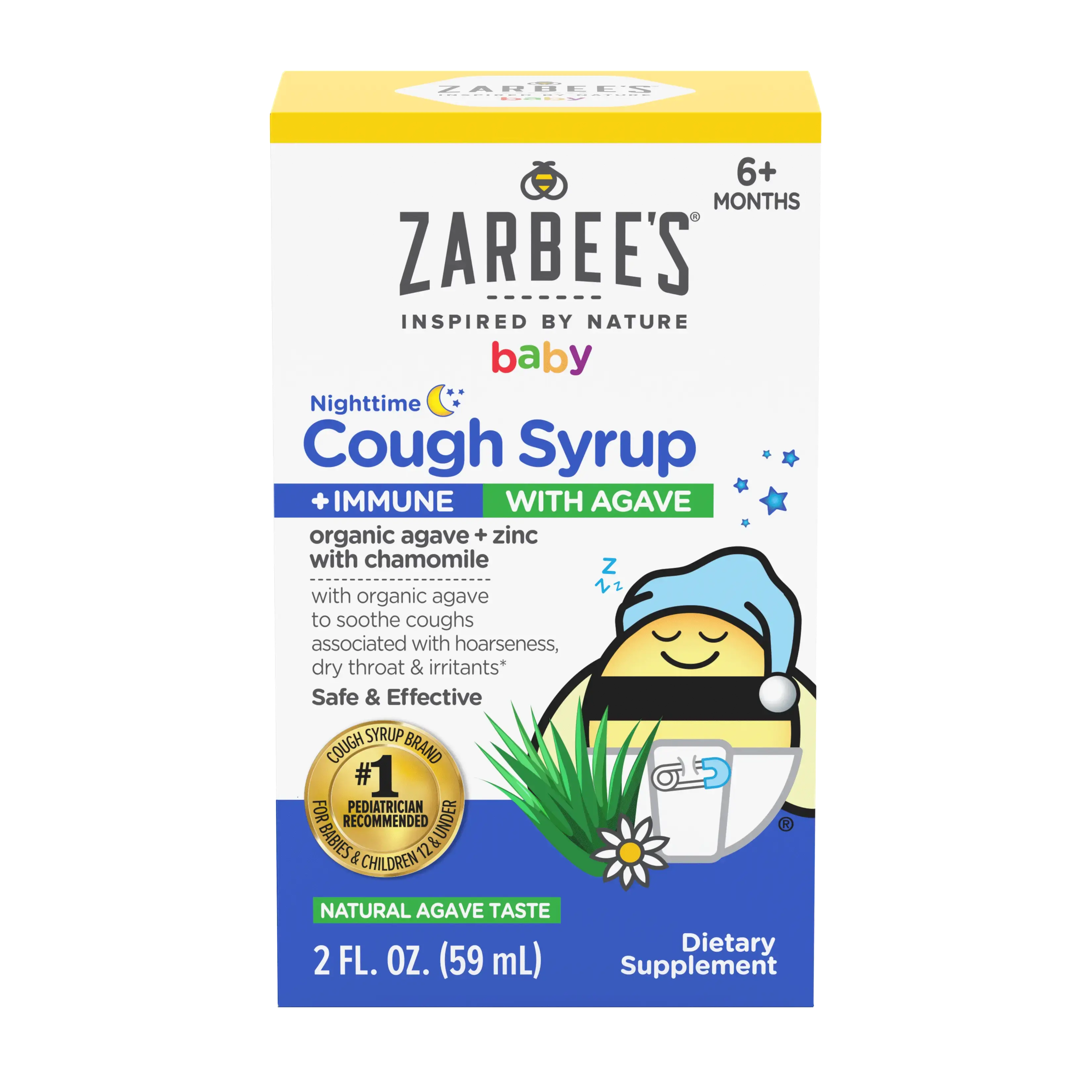
You're standing in the pharmacy aisle at 2:00 AM. Your toddler is barking like a seal in the stroller, and your brain is basically mush from three days of no sleep. You see the yellow bottle with the cute bee. It says "natural." It says "drug-free." You grab it. But then you wonder: is Zarbee's children's cough syrup actually doing anything, or are you just paying twenty bucks for fancy honey?
Honestly, it’s a bit of both.
The story of Zarbee’s didn't start in a corporate boardroom with a bunch of suits looking at market trends. It started with Dr. Zak Zarbock, a pediatrician who was genuinely frustrated. Back in 2008, the FDA dropped a bombshell, basically saying that over-the-counter (OTC) cough and cold medicines weren't safe—or even effective—for kids under four. Suddenly, parents had nothing. Zarbock looked at the clinical data and pivoted to something ancient: dark honey.
Why Honey is More Than Just a Sweetener
Most people think honey is just a "granola" alternative to "real" medicine. That’s actually wrong.
In 2007, a landmark study from Penn State College of Medicine, led by Dr. Ian Paul, pitted buckwheat honey against dextromethorphan (the "DM" in most cough syrups). The results were wild. Honey actually performed better at reducing the severity and frequency of nighttime coughing in children. It’s about viscosity. The thick texture of Zarbee's children's cough syrup coats the irritated mucus membranes in the throat. This is what doctors call a "demulcent." It creates a physical barrier.
It’s not magic. It’s physics.
But here is the catch. Zarbee's children's cough syrup isn't a one-size-fits-all product, and the label matters more than you think. If you buy the "Cough & Throat" version, you’re mostly getting honey and vitamin C. If you buy the "Nighttime" version, you’re often getting melatonin. Mixing those up is a mistake you don't want to make at 10:00 AM before preschool.
The Ingredients You Actually Need to Watch
Let’s look at what’s actually inside that bottle. It’s surprisingly simple, but there are nuances.
- Dark Honey: Specifically used because it has higher antioxidant levels than your standard light clover honey from the grocery store bear.
- English Ivy Leaf Extract: You’ll see this on the label of many "natural" syrups. It’s used to help thin out mucus. The idea is to turn a dry, hacking cough into a "productive" one.
- Zinc and Elderberry: These are the "immune support" twins. While elderberry is popular, the clinical evidence for it shortening a cold is still a bit debated in the medical community. Some studies suggest it helps; others are less conclusive.
- Melatonin: This is the big one. Some Zarbee’s formulations for nighttime include 1mg or less of melatonin.
You’ve got to be careful here. While melatonin can help a sick, restless kid fall asleep, it’s a hormone. Many pediatricians, including those at the American Academy of Pediatrics (AAP), suggest using it sparingly. It’s not a "fix" for the cough; it’s a "fix" for the fact that the cough is keeping everyone in the house awake.
The Safety Reality Check
There is one hard, fast rule that some parents forget in the heat of a feverish night: Never give any honey-based product to an infant under 12 months old.
Period.
It doesn't matter if it’s "medical grade" or organic. Infant botulism is a rare but terrifyingly real risk caused by Clostridium botulinum spores that can exist in honey. A baby’s digestive system isn't developed enough to handle them. Zarbee’s makes a specific "Baby" line that uses agave syrup instead of honey for this exact reason. If you’re staring at the shelf, check the age range. If it says "12 months +," and your kid is ten months, put it back.
Also, let’s talk about the "natural" label. Just because it’s drug-free doesn't mean it’s side-effect free. Honey is pure sugar. If your child has specific blood sugar issues or certain allergies, you still need to clear it with your doctor.
Does It Actually Work?
If you're expecting Zarbee's children's cough syrup to stop a cough instantly like a light switch, you're going to be disappointed. That’s not how it works.
What it does do is soothe the "tickle." It calms the physical irritation that leads to the cough reflex. Think of it as a protective coat for a raw throat. For many parents, the value isn't just in the honey, but in what isn't there. No artificial flavors. No dyes (which some kids are sensitive to). No alcohol. No high fructose corn syrup.
However, if your child has a barking cough that sounds like a seal (croup) or is wheezing, no amount of honey will help. That’s a lung or airway issue, not a throat irritation issue. In those cases, the "natural" route is a distraction from the medical intervention they actually need, like a nebulizer or steroids.
Navigating the Different Versions
Zarbee’s has expanded so much that the "Cough" section of the pharmacy looks like a yellow wall. It’s confusing.
The "Daily Immune Support" is basically a multivitamin. It’s not going to do much for an active cough. The "Complete" versions usually add the ivy leaf. The "Soothing" versions are often just honey and water with some electrolytes.
When you’re buying, look for the specific symptom you want to treat. If the cough is dry and scratchy, stick to the basic honey formulas. If they are congested and "rattly," look for the ivy leaf. And seriously, check for that "Nighttime" label. Giving a kid melatonin before a long car ride might seem like a "pro-tip," but it can really mess with their internal clock if you aren't careful.
What Most People Miss: The "Placebo by Proxy" Effect
There’s a fascinating psychological element here called placebo by proxy. When a parent gives a child a "medicine"—even a natural one—the parent feels less anxious. The child picks up on that calm. The child feels cared for. Often, the cough "improves" because the child is more relaxed.
Is that a bad thing? Not necessarily. In the world of pediatrics, comfort is a valid clinical goal. If Zarbee's children's cough syrup makes a kid feel better enough to sip some water and drift off to sleep, it has done its job.
Practical Steps for Parents
Before you pour that next dose, keep these steps in mind to get the most out of it without overdoing it.
- Check the Age: Agave for under 1, Honey for over 1. No exceptions.
- Hydration First: No syrup can replace water. Thinning mucus requires internal hydration. Use the syrup as a topper, not the primary cure.
- The Spoon Test: Don't use a kitchen spoon. They vary wildly in size. Use the measuring cup that comes with the bottle to avoid giving too much melatonin or zinc.
- Watch the Clock: Honey coats the throat, but it washes away. If they drink water right after taking the syrup, you’ve basically washed the "medicine" down. Let it sit for a few minutes.
- Know When to Fold: If the cough lasts more than seven days, if there’s a high fever (over 102°F), or if the child is struggling to breathe, the honey bottle belongs in the cabinet while you call the pediatrician.
Zarbee's children's cough syrup occupies a unique space in the medicine cabinet. It isn't a "cure-all," and it isn't "fake medicine." It's a standardized, safer way to deliver a remedy that grandmothers have been using for centuries, backed by modern data that shows honey is surprisingly effective for upper respiratory relief.
Focus on the ingredients, respect the age limits, and use it as one tool in a larger kit that includes rest, fluids, and a whole lot of patience. If the cough is just a standard cold-weather nuisance, a bit of dark honey is often exactly what the doctor ordered.
Actionable Insights for Parents
- Audit your cabinet: Throw away any bottles that have been open for more than 3 months or are past their expiration date; the preservatives in natural syrups are often weaker than synthetic ones.
- Temperature matters: If the syrup is too thick for your child to swallow easily, you can slightly warm the spoon (not the bottle) to make it more fluid.
- Targeted use: Save the honey-based syrup for right before bed or right after a coughing fit starts to maximize the "coating" effect when it's needed most.
- Document the dose: Use a piece of masking tape on the bottle to write down the time of the last dose so you don't accidentally double-up on melatonin during a chaotic night.

/i.s3.glbimg.com/v1/AUTH_08fbf48bc0524877943fe86e43087e7a/internal_photos/bs/2025/H/e/ewwgKCQCSopdUJUwy6DA/imagem-2025-04-27-114802986.png)

