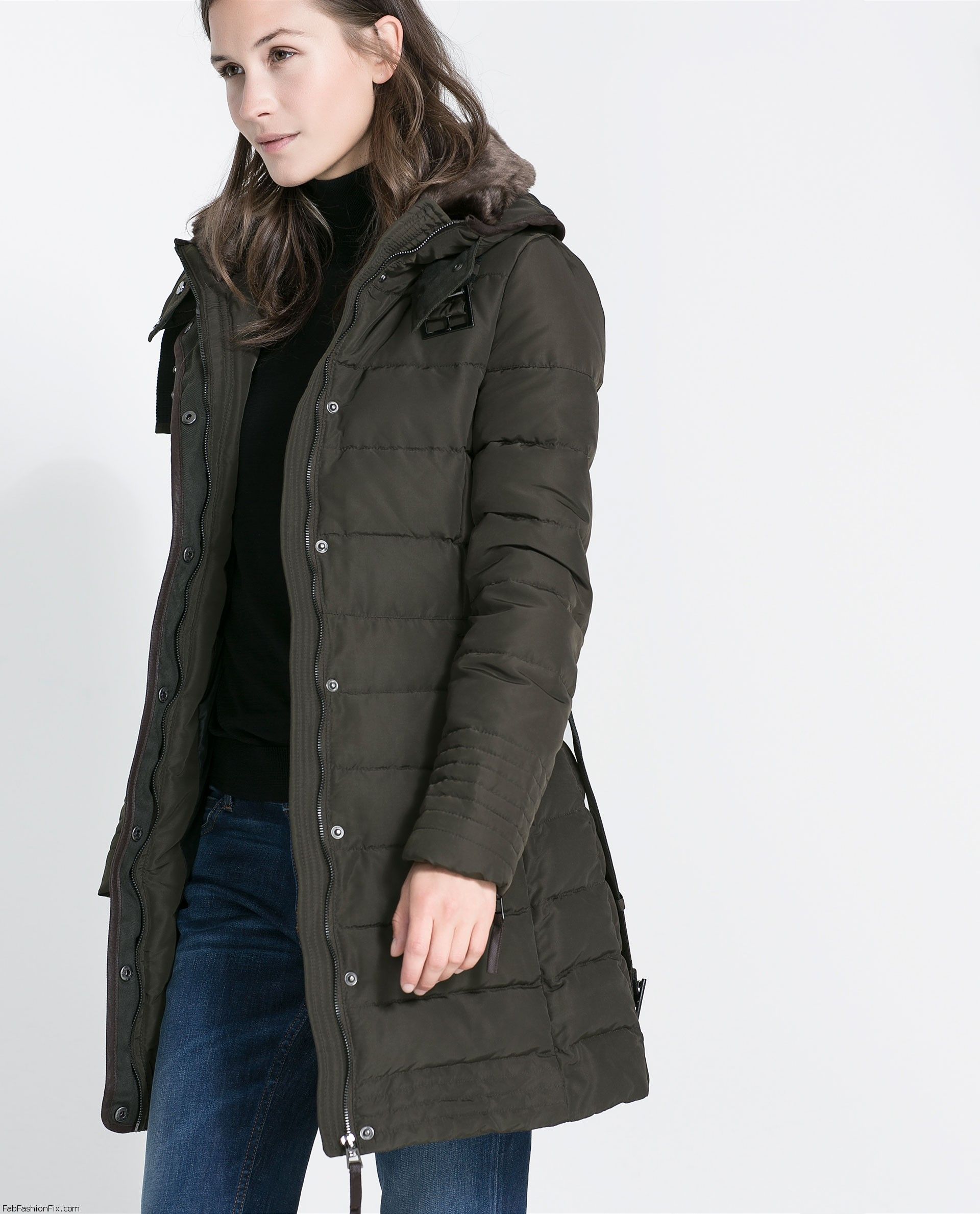
You know that feeling when you walk into a Zara in mid-November and it’s just a sea of puffer coats and wool blends? It’s overwhelming. Honestly, finding the right zara winter jackets for women is less about what looks good on the mannequin and more about understanding how their manufacturing cycle actually works. If you wait until the first snow to buy, you’ve already lost. The good stuff—the 80% down fills and the heavy Manteco wool—usually drops in late September and vanishes by the time you actually need a heater.
Most people think Zara is just fast fashion junk. They're wrong. While a lot of it is polyester-heavy, Zara has these "Premium Selection" and "ZW Collection" lines that actually compete with mid-range designer brands like Aritzia or Massimo Dutti. But you have to know what to look for on the tag.
The Secret of the Manteco Label
If you’re hunting for a wool coat, look for the Manteco tag. It’s not a Zara brand; it’s an Italian textile mill. They’ve been around since the 1940s. When you see that label inside zara winter jackets for women, you’re getting recycled wool that has a specific density and "hand" you won't find in their $60 bargain bin options. These coats usually retail between $150 and $250. It sounds steep for Zara, but compared to a $600 coat from a luxury boutique using the exact same fabric, it’s a steal.
Why does the wool matter? Cheap wool blends are scratchy. They pill after three wears. Manteco wool is processed to be smoother and more resilient. I’ve seen people complain that Zara coats aren't warm enough, but usually, they’ve bought the 100% polyester "felt effect" jacket because it looked cute. Those aren't jackets. They're oversized shirts. If the tag doesn't say at least 60% wool, you're going to freeze when the wind hits 30 degrees.
Puffer Jackets: Down vs. Synthetic
Zara’s puffer game is chaotic. One year they’re doing cropped metallic jackets that look like space suits, and the next it’s all "Water Repellent" longline parkas. Here’s the deal with their insulation.
Zara uses a lot of "Puffer-Polyester" which is basically recycled plastic bits. It’s fine for a quick trip to the grocery store. However, for a real winter—the kind where your eyelashes freeze—you need to hunt for the "Down and Feather" fill. Look at the inner side-seam tag. You want to see a ratio, usually 70/30 or 80/20 down to feathers. The "Heat Sealed" puffers are particularly good because they don't have stitched seams for the wind to whistle through.
- Check the temperature rating. Zara has started printing "Tested to -20°C" on some of their heavy-duty parkas. Believe them, but only if you're layering.
- The zippers. Zara is notorious for "sticky" zippers on their cheaper puffers. Test it three times in the store. If it snags once, it will break in a month.
- The hood. Some are just decorative. If it doesn't have a drawstring, it’ll blow off your head the second you step outside.
The Oversized Trap
We need to talk about sizing because Zara sizing is a fever dream. A "Medium" in their oversized wool coat could easily fit two people and a Golden Retriever. Meanwhile, their "TRF" (Trafaluc) line jackets run tiny.
When shopping for zara winter jackets for women, the "oversized" trend is still going strong. If you want that clean, Scandinavian influencer look, don't size up. Stick to your true size or even go down one. If the shoulder seam is hanging halfway down your tricep, the coat is going to wear you. You want it to look intentional, not like you’re wearing your dad’s blazer.
Leather and Faux Shearling: The "Aviator" Obsession
Every single year, without fail, Zara releases a version of the faux leather aviator jacket. You know the one—buckles at the neck, faux shearling lining, usually in black or tan. It’s a staple. But is it actually a winter jacket?
Sorta.
It’s a great transitional piece. It blocks wind like a champ. But since the "shearling" is almost always 100% polyester, it doesn't breathe. You’ll be cold outside and then immediately start sweating the second you step into the subway or a shop. If you’re going to buy one, make sure it has the "Double Faced" label. It means the lining and outer shell are bonded, making it much more durable than the cheap versions where the fluff starts shedding onto your black sweaters.
Why Everyone Chases the "Special Edition" Drops
A few times a year, Zara does these high-end collaborations or "Special Edition" drops. These are the zara winter jackets for women that end up on Resale sites for double the price. They often use higher-grade leathers or heavy-duty toggles.
The trick to catching these is the Zara app. Save your favorites to a wishlist. The inventory system is real-time. If an item says "Back Soon," it usually means a return is being processed. Refreshing at 8:00 AM on a Tuesday is often more productive than going to a physical store where the floor stock is picked over by teenagers.
Maintenance That No One Does
People treat Zara clothes like they're disposable. If you buy a $200 wool coat, don't just throw it on a wire hanger. The weight of the wool will misshape the shoulders within weeks. Use a wide wooden hanger. And for the love of everything, buy a fabric shaver. Even the best Manteco wool will pill where your purse rubs against your hip. Five minutes of "shaving" your coat makes it look brand new again.
Water Resistance vs. Water Repellent
This is where they get you.
- Water Repellent: The water beads off for about ten minutes, thenaks in. Fine for light snow.
- Water Resistant: Can handle a decent drizzle but isn't a raincoat.
- Waterproof: Zara rarely does true waterproof jackets unless it's in their specific "Rainy Series."
If you live in a place like Seattle or London where winter is just "cold rain," do not buy a Zara wool coat as your primary outer layer. It will end up smelling like a wet dog and getting incredibly heavy. Stick to their rubberized parkas or technical fabrics.
Buying for Longevity
It sounds like an oxymoron to talk about "longevity" and Zara in the same sentence. But it's possible. I have a Zara camel coat from 2018 that still looks incredible. The secret was choosing a classic silhouette—the masculine-cut overcoat—and checking the fiber content.
Avoid the "trend" jackets. The ones with the giant faux fur collars that look like a Muppet? Those look dated by February. The ones with the weird cut-outs or neon colors? You'll hate them by next year. Stick to navy, charcoal, camel, or forest green. These colors in zara winter jackets for women always look more expensive than they are.
Real Talk on the "Heat Power" Ratings
Zara has started including "Fill Power" numbers on some of their technical down jackets. Usually, they hover around 600-700. For context, a high-end North Face or Patagonia is usually 800+. So, Zara is perfectly fine for city living. If you’re planning to climb a mountain, maybe don't wear Zara. But for walking to the office or grabbing coffee? It’s more than enough insulation.
How to Win at the Zara Winter Sale
The Zara winter sale usually starts right after Christmas. It is a war zone. If you want a specific jacket, don't wait for the second or third price drop. The "outerwear" category is always the first to sell out.
The best strategy is to buy the jacket you want in November, keep the tags on, and keep an eye on the price. Zara doesn't do price matching, but if it's still in stock when the sale hits, you can buy the sale one and return the full-price one. It’s a lot of legwork, but for a $200 coat, saving $80 is worth the trip to the mall.
Your Winter Jacket Action Plan
To get a jacket that actually lasts through the season and keeps you warm, follow these steps:
- Check the "Join Life" label: This usually indicates more sustainable materials, but more importantly, these items tend to be part of their higher-quality production runs.
- Prioritize natural fibers: Open the app and filter by "Wool" or "Down." Ignore anything that is 100% "Felt Effect" or "Polyester Blend" if you live in a climate that actually gets cold.
- The "Arm Test": Zara jackets are notorious for having narrow sleeves. If you can't comfortably bend your arm while wearing a sweater underneath, size up. You'll regret the "perfect fit" the second you try to wear a hoodie.
- Inspect the lining: A good winter coat should be fully lined. If you can see the raw seams on the inside, the wind will cut right through it.
- Look for storm cuffs: On puffers, check if there's an elasticated ribbing at the wrist. This keeps the heat in. If the sleeve is open and wide, you're going to lose 30% of your body heat through your arms.
Skip the fluff and the fast-trend pieces. Focus on the Manteco wools and the high-fill-power puffers, and you'll actually end up with a coat that survives until spring without falling apart.