You’re standing in the middle of a crowded Zara on a Tuesday afternoon, staring at a pair of sleek leather loafers that look like they belong on a runway in Milan. You grab your usual size 39. You slide your foot in. It’s a struggle. You try the 40, and suddenly you’re clunking around like you’ve borrowed your dad’s shoes. It's frustrating. Honestly, the Zara shoe size guide is one of those things that feels like a riddle wrapped in an enigma, mostly because the brand operates on a global scale with a heavy European influence that doesn't always translate perfectly to US or UK standards.
Zara is the king of fast fashion, but their footwear is notoriously inconsistent. One season, the boots run narrow; the next, the ballet flats are practically falling off your heels. This isn't just you. It's a systemic quirk of how the Inditex group (Zara’s parent company) designs its lasts. If you want to stop returning half of your online orders, you have to look past the basic "Size 8 equals 39" logic.
The European Root of the Problem
Zara is a Spanish brand. That matters. European sizing—the "Paris Point" system—is based on increments of 6.67 millimeters. Contrast that with the US system, which uses thirds of an inch. When you convert $39 EU$ to a US size, you’re often landing in a "dead zone" between a $7.5$ and an $8$.
The brand's official Zara shoe size guide usually suggests a direct conversion, but that doesn't account for the volume of the shoe. Zara shoes are often built on "lasts" (the foot-shaped molds used to make shoes) that are quite narrow through the midfoot. If you have a wider foot, the length might be right, but the pinch is real. This is why people often claim Zara shoes "run small." They don't necessarily run short; they just lack internal volume.
Take their leather boots, for example. I've seen customers swear they needed to size up twice, only to realize the toe box was empty while the bridge of their foot was being strangled. It’s a geometry problem, not just a length problem.
Navigating the Zara Shoe Size Guide Like a Pro
If you’re shopping online, the "Find Your Size" tool is your best friend, yet most people ignore it or rush through the prompts. It’s actually surprisingly sophisticated. It asks for your height, weight, and how you prefer your shoes to fit (tight vs. loose).
But here is the secret: Look at the "Product Details" or "Composition" section.
If a shoe is made of 100% cow leather, it’s going to stretch. Buying those slightly snug is usually okay. However, if the composition says "polyurethane" or "polyester," stop right there. Synthetic materials have zero give. If a synthetic heel feels tight in the store, it will feel like a torture device three hours into a wedding.
Why Material Changes Everything
Let's get technical for a second. Leather is a natural fiber with a protein structure that relaxes with heat and moisture (like the sweat from your feet). Zara’s "Real Leather" line is actually decent quality for the price point, but their "Vinyl" or "Mery-Jane" styles are rigid.
- Leather Sandals: Stick to your true size. They’ll mold to you within three wears.
- Vinyl/Clear Heels: Size up. Always. The plastic won't stretch, and your feet will swell as the day goes on.
- Pointed Toe Flats: These are the trickiest part of the Zara shoe size guide. Because the point starts before your toes actually end, you lose about half an inch of usable space. Most people need to go up at least half a size here.
Comparing Zara to the Rest of the High Street
If you usually wear a 38 in H&M, don't assume you're a 38 in Zara. H&M tends to follow a more "vanity" sizing model, where things are a bit roomier to make the customer feel better. Zara is more "true-to-atelier," meaning they stick to the stricter European measurements.
Compared to luxury brands like Gucci or Prada, Zara's sizing is surprisingly similar because they both follow the Italian/Spanish sizing tradition. If you’re a 41 in a designer loafer, you’re almost certainly a 41 in a Zara loafer. But if you’re coming from Nike or Adidas, forget everything you know. Athletic sneakers are padded to the brim, which masks the true size of the foot. You’ll likely find your Zara size is one full number lower than your sneaker size.
The "Secret" Measurement Hack
If you really want to nail the Zara shoe size guide, you need to measure your foot in centimeters. Forget inches. Since Zara is designed in centimeters, the conversion is more accurate.
Trace your foot on a piece of paper. Measure from the heel to the tip of your longest toe (which isn't always the big toe!).
- A $24.3\text{ cm}$ foot is a Zara 38.
- A $24.9\text{ cm}$ foot is a Zara 39.
- A $25.5\text{ cm}$ foot is a Zara 40.
Notice the tiny gaps? Just 6 millimeters can be the difference between a perfect fit and a blister. If you are $25.1\text{ cm}$, you are technically between sizes. In this case, the style of the shoe dictates the choice. Open back? Go smaller. Closed boot? Go bigger.
Men’s vs. Women’s Sizing Discrepancies
Zara Men's shoes tend to be a bit more consistent than the women's line. The men’s collection relies heavily on classic European sizing (40-45). However, the "Home" or "Athleisure" lines for men often use S-M-L-XL sizing for slippers or soft-soled shoes. Avoid these if you have a specific arch requirement. They are essentially "generic" fits that don't offer the precision of the standard Zara shoe size guide.
For women, the "Kids" section (Zara Kids) actually goes up to size 40 (US 9). If you have smaller or narrower feet, the "Girls" leather boots are often half the price of the women’s version and fit remarkably well. It’s a budget hack that many fashion editors use, though the soles are sometimes thinner and provide less support for adult weights.
The Reality of Online Returns
Zara’s return policy has changed in many regions recently, often charging a small fee for mail-in returns. This makes getting the size right the first time more important than ever.
One thing to watch for: the "Reviews" section on the Zara app isn't as robust as Amazon. You have to rely on the "Fit" bar. This bar is crowdsourced from thousands of other buyers. If the bar is leaning towards "Large," believe it. Zara's customers are brutally honest about when a shoe feels like a boat.
Actionable Steps for Your Next Purchase
Stop guessing and start measuring. The most effective way to handle the Zara shoe size guide is to treat every shoe category as its own entity.
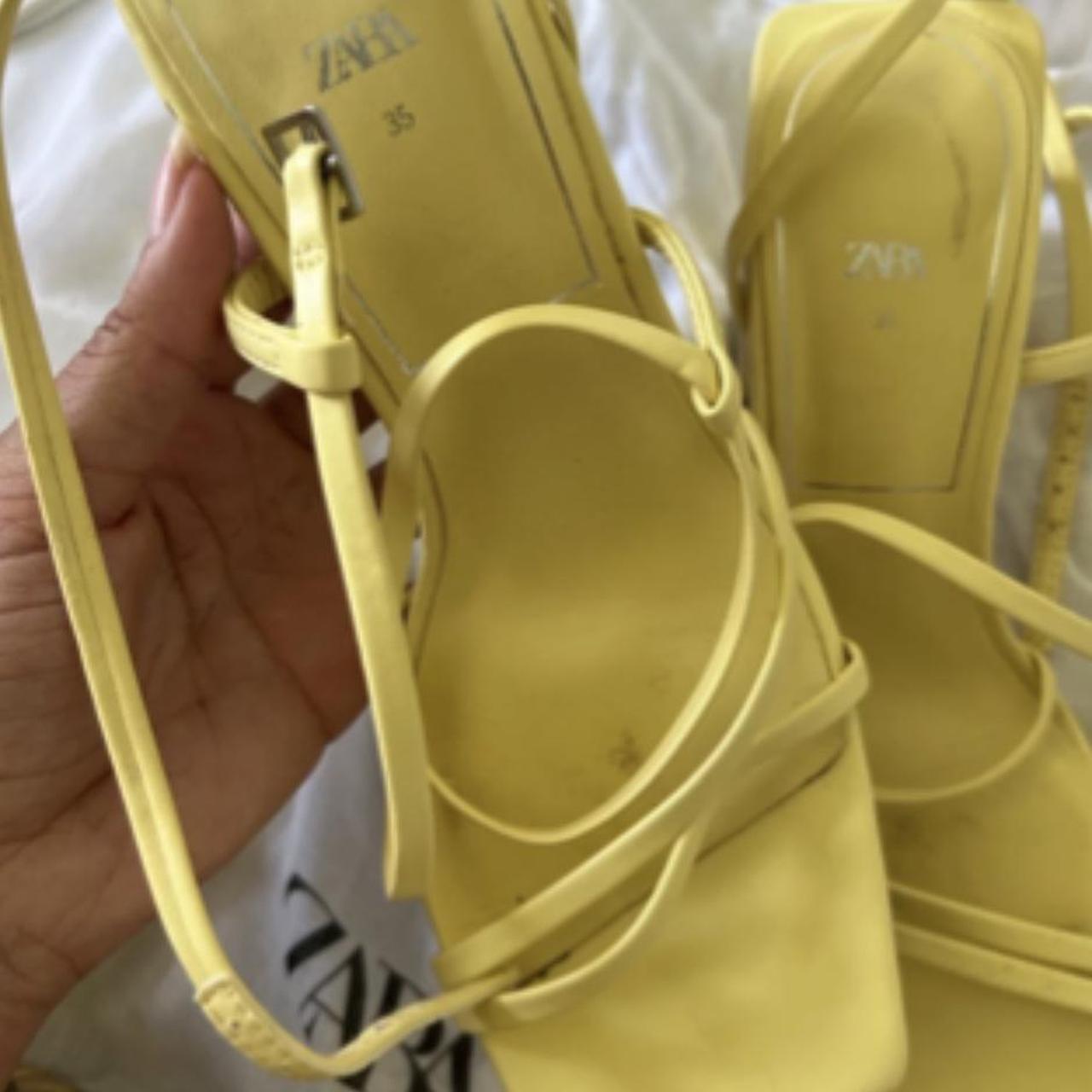
Check the sole. When you get your shoes, look at the bottom. Zara lists the EU, UK, and US sizes there. Sometimes, the sticker on the box is wrong, but the stamp on the sole is rarely lying. If you ordered a US 8 and the bottom says 39, that’s the standard. If it says 38, you’ve been sent the wrong size regardless of what the box says.
The "End of Day" Rule. Always try on Zara shoes in the late afternoon. Your feet expand throughout the day. A Zara 37 might feel great at 9:00 AM but feel like a vice grip by 4:00 PM.
Invest in a shoe stretcher. Since Zara uses real leather for many of their premium pieces, a $20$ wooden shoe stretcher can turn a "slightly-too-tight" 39 into a custom-fit masterpiece. This is especially helpful for their tall boots, which can be notoriously tight around the calf and instep.
Verify the "Special Edition" lines. Zara often collaborates or releases "Studio" collections. These pieces are frequently made in different factories with slightly different sizing standards. Always size up in "Studio" collections, as they tend to favor a very slim, high-fashion silhouette that isn't particularly forgiving for the average foot.
Don't let the numbers discourage you. If you usually wear an 8 and you have to buy a 40 (which converts to a 9), it doesn't mean your feet grew. It just means Zara's Spanish heritage is showing. Focus on the fit, not the tag. Your heels will thank you later.