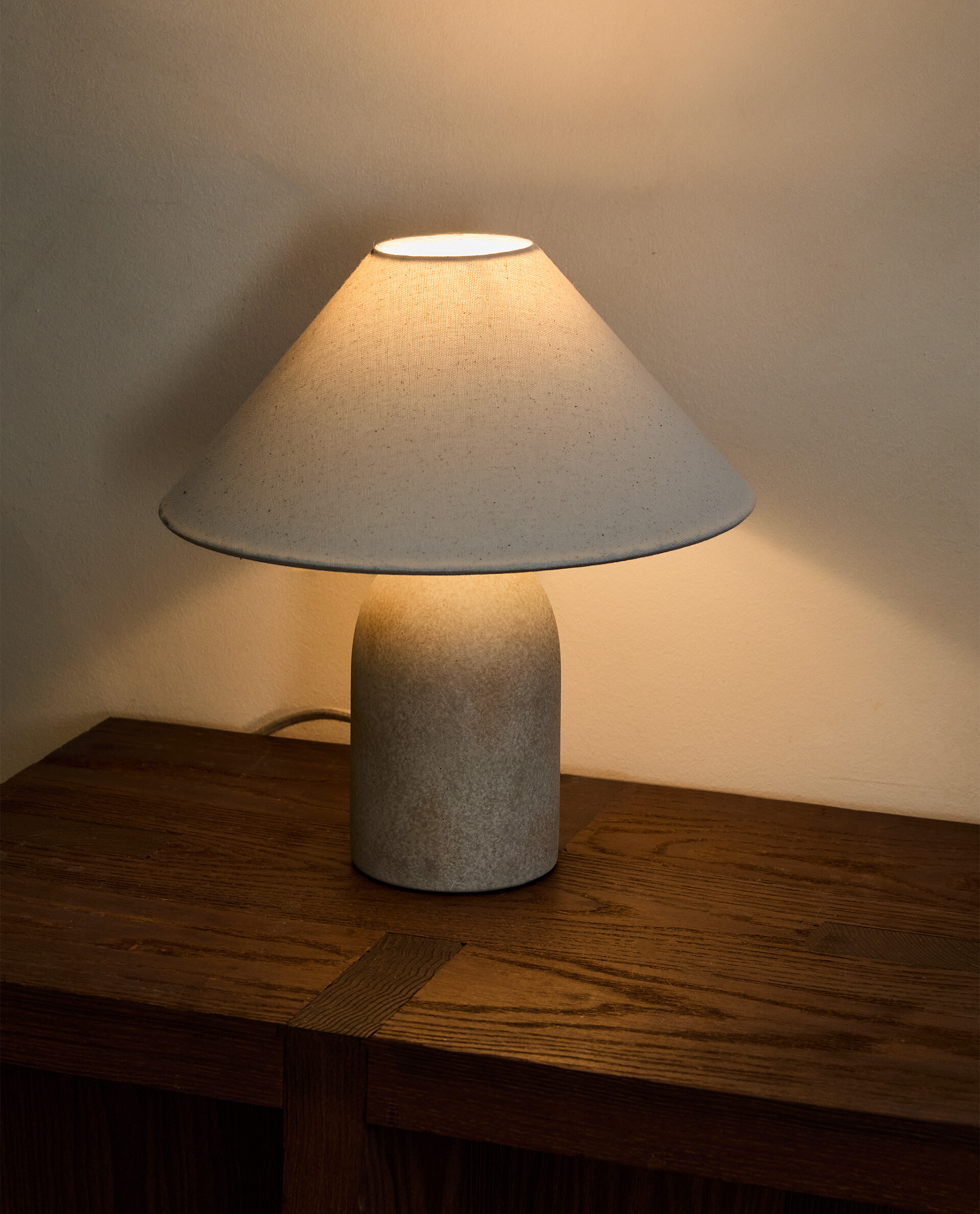
Walk into any high-end apartment in Madrid or a coastal retreat in the Hamptons and you’ll likely spot a Zara Home table lamp perched on a marble console. It’s weirdly consistent. Most people think of Zara as fast fashion for their closets, but their homeware division has quietly become the "it" source for interior designers who want the high-end Belgian aesthetic without the four-figure price tag.
Honestly, the appeal isn't just about the price. It’s the texture. While most big-box retailers are still churning out shiny chrome and cheap plastic, Zara Home leans hard into alabaster, linen, and "lived-in" ceramics.
You've probably seen that one mushroom-shaped lamp on TikTok. Or the heavy stone bases that look like they were pulled from an archaeological dig. These pieces don't just light up a room; they change the vibe of the whole space. But there’s a catch. Buying a Zara Home table lamp isn't always as straightforward as it seems, especially when you realize how quickly their best stuff vanishes from the site.
Why the Zara Home Table Lamp is Currently Winning the Design War
The secret sauce is Inditex’s supply chain. They can take a trend from a luxury boutique in Milan and have a version of it in their warehouses in weeks. But unlike their clothing, which can sometimes feel a bit flimsy, the lamps have some serious heft.
Take their alabaster collection. Real alabaster is a translucent mineral. It’s heavy, cold to the touch, and every single piece has different veining. When you turn on a Zara Home table lamp made of this stuff, the light glows through the stone, not just under the shade. It’s an old-school luxury trick.
Designers like Kelly Wearstler have used stone lighting for decades to add "soul" to modern rooms. Zara basically democratized that look.
Then there’s the ceramic obsession. We’re seeing a massive shift away from "Perfect Minimalist" toward "Wabi-Sabi." This means people want things that look slightly broken or handmade. Zara’s designers have leaned into irregular shapes and "crackle" glazes. If you buy a lamp there today, it likely has a terracotta base that looks like it was thrown on a wheel in a small village, even if it was actually produced on a larger scale.
The Problem with the "Fast Furniture" Label
Some critics argue that buying from Zara Home contributes to a throwaway culture. It’s a fair point. However, when it comes to their lighting, the materials often tell a different story. Many of their premium lamps use solid wood, marble, or 100% linen shades.
If you compare a $150 Zara Home table lamp to a $40 one from a budget big-box store, the difference is usually in the wiring and the weight. The Zara piece is less likely to tip over when your cat breathes on it.
The downside? The stock levels are a nightmare. Because they operate on a "drop" model, once a specific ceramic jug lamp goes viral, it’s gone. You’ll see them pop up on resale sites for double the price. It's frustrating.
Spotting the Gems: Materials That Actually Last
If you're browsing the site or a physical store, you need to know what to look for. Not everything is a winner. Some of the painted metal pieces can feel a bit light.
What to look for:
- Solid Stone: If the description says "100% marble" or "alabaster," it's usually a solid investment. These materials don't age; they just exist.
- Linen Shades: Plastic-lined shades look cheap when the light is on. Zara often uses real linen, which diffuses light much more softly.
- Braided Cables: Check the cord. Lately, they’ve been using fabric-covered cords instead of ugly plastic ones. It’s a small detail that makes a huge difference in how "expensive" the lamp looks on your nightstand.
Let's Talk About Scale
One mistake I see people make constantly is misjudging the size. Zara Home’s photography is beautiful, but it's also deceptive. They use very low furniture in their shoots, which makes the lamps look massive.
Always, always check the "Product Details" tab for the height. A lamp that looks like a floor-standing giant might actually be 12 inches tall. That’s fine for a bookshelf, but it’ll look ridiculous next to a king-sized bed.
The Viral Pieces You Should Know About
Right now, the "Mushroom Lamp" is the king of the mountain. It's usually a single piece of glass or a matte metal dome. It mimics the iconic Verner Panton designs from the 70s. It’s a great way to add a mid-century feel without spending $800 on an original.
Then there's the raffia trend. Braided straw and raffia shades are everywhere. They add a "vacation home" texture to a standard bedroom. The light they cast is "moody"—you get these cool little patterns of shadow on the walls. It’s not great for reading a technical manual, but it’s perfect for winding down with a glass of wine.
How to Style Your New Find
Don't just stick it in the middle of a table. Layering is key. A Zara Home table lamp works best when it’s paired with a few books and maybe a small tray.
If you have a large ceramic lamp, put it on a stack of coffee table books. This gives it extra height and makes it feel like an intentional "objet d'art" rather than just a utility item.
Mixing metals is also encouraged. If your room has gold accents, a matte black or stone lamp from Zara can ground the space so it doesn't feel too "matchy-matchy."
Maintenance and Technical Realities
Standard Zara Home lamps usually take an E27 or E14 bulb. This is important because European brands sometimes have different socket sizes than what you might find at a local US hardware store.
Generally, in the US, Zara Home ships products with the correct voltage and plugs, but if you’re ordering from their international sites or buying secondhand from Europe, you might need a converter.
A pro tip for lighting: Never use the "Daylight" blue-toned bulbs. They make even the most expensive Zara lamp look like a hospital fixture. Go for "Warm White" (2700K). It brings out the tones in the ceramic and stone.
What Most People Get Wrong About Zara Home
The biggest misconception is that it’s "cheap." It’s actually more expensive than H&M Home or IKEA. You're paying for the specific "European Organic" aesthetic.
Another thing? The shipping. These lamps are heavy and fragile. Zara Home is usually pretty good with packaging, but alabaster is brittle. If you see a hairline crack in a stone lamp you just received, don't ignore it. That stone is thousands of years old, but shipping couriers are notoriously rough. Get a replacement immediately.
Why Designers Keep Coming Back
I spoke with a stager recently who buys these by the dozen. Why? Because they "photograph expensive." The matte finishes don't create harsh glares in professional photos. For someone trying to sell a house or grow an Instagram following, that matters more than the internal wiring.
The Actionable Verdict: How to Actually Get One
Since the best pieces sell out, you can't just "wait for a sale." Here is the tactical way to handle it:
- Use the "Check In-Store" Feature: If it’s sold out online, the physical stores often have a few hidden in the back or on the high shelves.
- The Tuesday/Thursday Rule: Zara typically refreshes their stock on these days. If you've been eyeing a specific stone lamp, check the site around 9:00 AM.
- Buy the Shade Separately: Sometimes Zara sells a base you love but a shade that's "just okay." You can easily swap a Zara shade for a custom pleated one from Etsy to make the lamp look like a $2,000 designer piece.
- Check the Weight: If a lamp is under 2kg, it's likely hollow plastic or thin metal. If it's 5kg+, it's the real deal (stone or solid ceramic).
If you’re looking to elevate a room without a full renovation, lighting is the fastest way to do it. A heavy, textured Zara Home table lamp creates a focal point that makes people ask, "Where did you get that?" And honestly, isn't that the whole point of decorating?
Go for the natural materials—stone, wood, linen—and avoid the overly trendy "neon" or plastic experiments. Stick to the earthy tones and you'll have a piece that looks just as good five years from now as it does today.